
Vietnam
Bharat Friends Index
Composite score based on Diplomatic Ties, Respect for Sovereignty, and Social Warmth.
Why Vietnam?
Recent Sentiment
India-Vietnam relations currently exhibit a broadly positive and stable sentiment, driven by robust diplomatic engagement and a burgeoning strategic partnership, while public perception regarding Indian tourists presents a more mixed, albeit improving, picture.
Diplomatically, the sentiment is exceptionally warm. Vietnam consistently prioritizes its relationship with India, as evidenced by Party General Secretary and State President To Lam's recent state visit to India from May 5-7, 2026, marking one of his first overseas trips after assuming office. During this visit, bilateral ties were significantly elevated to an "Enhanced Comprehensive Strategic Partnership," a clear indicator of deep trust and shared vision. Vietnam has publicly expressed support for India's greater role in regional and global multilateral forums, its "Act East" policy, and strengthened connectivity with ASEAN. Concrete agreements spanning defense cooperation, an ambitious trade target of $25 billion by 2030, and collaboration in emerging technologies like AI and 6G further underscore the strategic alignment. The historical perception of India as a "trusted friend," rooted in shared civilizational and religious values, is frequently reaffirmed in official rhetoric, reinforcing the strong foundation of the relationship.
Mainstream media in Vietnam largely echoes the positive official narrative, particularly concerning diplomatic milestones and economic cooperation. Vietnamese news outlets extensively covered President To Lam's visit, emphasizing the upgraded partnership and the numerous agreements signed across various sectors. The media highlights the growing importance of India as a trade and strategic partner. However, reporting on tourism offers a more nuanced perspective. While acknowledging the significant increase in Indian tourist arrivals and the economic benefits they bring, some media reports (often citing or discussing reports from Indian media) also address instances of alleged discrimination and negative experiences faced by Indian tourists. The Vietnamese embassy, in response to such reports, has adopted a concerned and neutral tone, assuring investigations and reiterating Vietnam's welcoming stance, framing these incidents as isolated.
Public perception and the experience of Indian tourists in Vietnam present the most mixed sentiment. Indian tourists are recognized as a rapidly growing and economically important segment for Vietnam's tourism industry, with proactive efforts from the Vietnamese side to facilitate their travel through streamlined visa processes. Despite this welcoming policy, there are documented reports of individual Indian tourists experiencing hostility, alleged discrimination, and rude behavior from some locals, particularly shopkeepers, sometimes attributed to stereotypes about bargaining practices. Furthermore, a parallel discourse, particularly within Indian social media and media, highlights concerns about the behavior of some Indian tourists abroad, citing instances of public disruptions (e.g., dancing on airport tarmacs) that contribute to negative stereotypes. These factors contribute to a public perception that is not uniformly positive, although Vietnamese authorities are actively working to address the reported issues and maintain a friendly image. Despite these challenges, the consistent efforts to attract Indian tourists and address grievances indicate a desire to foster positive people-to-people connections.
Reasons to Visit
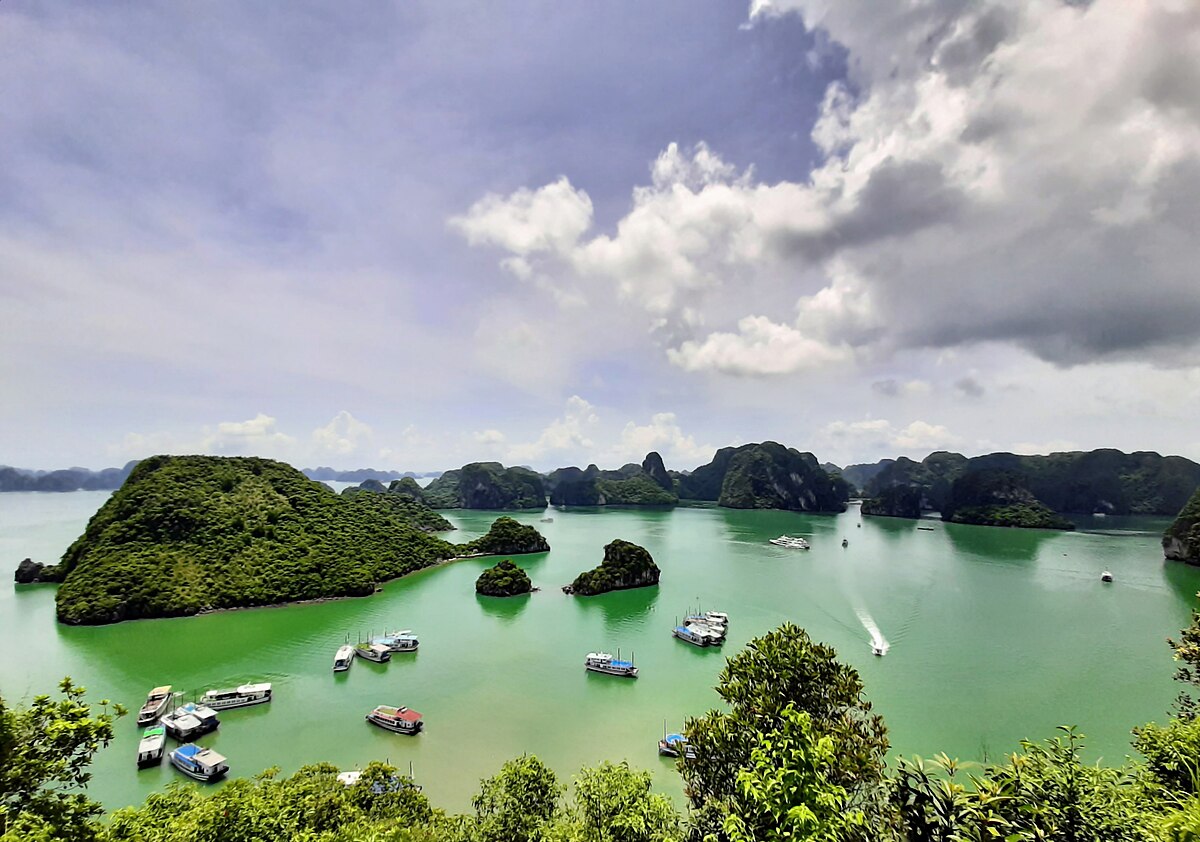
Vietnam beckons Indian tourists with an irresistible blend of safety, warmth, and unparalleled value. With its remarkably high safety score, you can explore bustling cities and serene landscapes with peace of mind. The legendary friendliness of the Vietnamese people (reflected in a high BFI) ensures a genuinely welcoming experience, making every interaction a pleasure. What truly sets Vietnam apart is its incredible affordability, offering luxurious experiences, delectable cuisine, and rich cultural immersion without breaking the bank. From the emerald karsts of Ha Long Bay to the ancient charm of Hoi An and the vibrant energy of Hanoi and Ho Chi Minh City, Vietnam is a kaleidoscope of experiences. It's a destination that's growing rapidly in popularity, yet still retains its authentic soul, promising a journey filled with unforgettable sights, sounds, and tastes for every kind of traveler.
Performance Breakdown
UN and Multilateral Voting Alignment
92Vietnam consistently demonstrates a high degree of diplomatic alignment with India across various multilateral forums, particularly on key geopolitical issues over the last decade. In the UN General Assembly and UNSC, this includes strong support for UNSC reform (including India's candidature for permanent membership), close cooperation on counter-terrorism initiatives, and a similar approach to the Ukraine conflict (often reflected in shared abstentions on condemnatory resolutions, prioritizing dialogue and adherence to international law regarding sovereignty and territorial integrity). On Kashmir, Vietnam consistently upholds the principle of non-interference in internal affairs, aligning with India's stance. Vietnam is not a member of the OIC, and its engagement with FATF generally aligns with international standards for combating financial crimes.
Sentiment Score
89India-Vietnam relations currently exhibit a broadly positive and stable sentiment, driven by robust diplomatic engagement and a burgeoning strategic partnership, while public perception regarding Indian tourists presents a more mixed, albeit improving, picture. Diplomatically, the sentiment is exceptionally warm. Vietnam consistently prioritizes its relationship with India, as evidenced by Party General Secretary and State President To Lam's recent state visit to India from May 5-7, 2026, marking one of his first overseas trips after assuming office. During this visit, bilateral ties were significantly elevated to an "Enhanced Comprehensive Strategic Partnership," a clear indicator of deep trust and shared vision. Vietnam has publicly expressed support for India's greater role in regional and global multilateral forums, its "Act East" policy, and strengthened connectivity with ASEAN. Concrete agreements spanning defense cooperation, an ambitious trade target of $25 billion by 2030, and collaboration in emerging technologies like AI and 6G further underscore the strategic alignment. The historical perception of India as a "trusted friend," rooted in shared civilizational and religious values, is frequently reaffirmed in official rhetoric, reinforcing the strong foundation of the relationship. Mainstream media in Vietnam largely echoes the positive official narrative, particularly concerning diplomatic milestones and economic cooperation. Vietnamese news outlets extensively covered President To Lam's visit, emphasizing the upgraded partnership and the numerous agreements signed across various sectors. The media highlights the growing importance of India as a trade and strategic partner. However, reporting on tourism offers a more nuanced perspective. While acknowledging the significant increase in Indian tourist arrivals and the economic benefits they bring, some media reports (often citing or discussing reports from Indian media) also address instances of alleged discrimination and negative experiences faced by Indian tourists. The Vietnamese embassy, in response to such reports, has adopted a concerned and neutral tone, assuring investigations and reiterating Vietnam's welcoming stance, framing these incidents as isolated. Public perception and the experience of Indian tourists in Vietnam present the most mixed sentiment. Indian tourists are recognized as a rapidly growing and economically important segment for Vietnam's tourism industry, with proactive efforts from the Vietnamese side to facilitate their travel through streamlined visa processes. Despite this welcoming policy, there are documented reports of individual Indian tourists experiencing hostility, alleged discrimination, and rude behavior from some locals, particularly shopkeepers, sometimes attributed to stereotypes about bargaining practices. Furthermore, a parallel discourse, particularly within Indian social media and media, highlights concerns about the behavior of some Indian tourists abroad, citing instances of public disruptions (e.g., dancing on airport tarmacs) that contribute to negative stereotypes. These factors contribute to a public perception that is not uniformly positive, although Vietnamese authorities are actively working to address the reported issues and maintain a friendly image. Despite these challenges, the consistent efforts to attract Indian tourists and address grievances indicate a desire to foster positive people-to-people connections.
Bilateral Trade
85[Growing Market] The bilateral trade between India and Vietnam is projected to reach $17.17 billion in 2025, with India experiencing a significant trade deficit of $5.06 billion. This indicates Vietnam is a substantial supplier to the Indian market, reflecting a dynamic but imbalanced economic relationship. In 2025, the total bilateral trade volume between India and Vietnam is robust at $17,174.06 Million. India's exports to Vietnam are recorded at $6,057.86 Million, while its imports from Vietnam are considerably higher at $11,116.20 Million. This results in a substantial trade deficit for India of $5,058.34 Million, implying that India is a net importer of goods and services from Vietnam, leading to a net outflow of foreign exchange from India to Vietnam. Due to the absence of specific commodity data for both exports and imports, a detailed qualitative assessment of the trade's strategic nature (e.g., critical minerals, high-tech components, energy resources) and a precise classification beyond overall market dynamics cannot be definitively made. Nevertheless, the significant trade volume underscores Vietnam's role as a major trading partner and a growing market for Indian goods, while concurrently being a key source of imports for India. The score remains at 85 as there is no data on the quality or strategic nature of traded goods to warrant an adjustment.
Defence Ties
78Defence ties between India and Vietnam remain robust and are strategically significant in 2026, underpinned by their 'Comprehensive Strategic Partnership.' India's standing offer of a **$500 million Line of Credit** (LoC) for defense procurement continues to facilitate Vietnam's capacity building and acquisition efforts, with utilization ongoing for various projects including naval assets and equipment. The relationship is further strengthened by regular joint military exercises; for example, the 'VINBAX' (Vietnam-India Bilateral Army Exercise) has been conducted biennially, with its latest iterations demonstrating growing interoperability. Additionally, **several naval engagements** including port calls, Passage Exercises (PASSEX), and coordinated patrols occur annually or biennially, alongside extensive training and capacity-building programs for Vietnamese military personnel in India.
Indian Popularity
92Vietnam's popularity for Indian tourists is projected to be exceptionally high and rapidly accelerating by 2026. This surge is driven by proactive measures such as the enhanced e-visa policy, a significant increase in direct flight connectivity from multiple Indian cities, and targeted marketing campaigns. As a result, Vietnam is anticipated to welcome **exceeding 600,000 Annual Indian Visitors in 2026**, demonstrating robust expansion. This remarkable growth trajectory reflects **annual growth rates consistently above 60%** in the preceding years, positioning Vietnam as one of the fastest-growing and most desirable international destinations for Indian travelers.
Visa Ease
75As of 2026, Indian citizens are required to obtain a visa to enter Vietnam for general travel purposes, as there is no universal visa-free entry policy. However, Vietnam offers convenient and accessible visa options, primarily the eVisa and a pre-arranged Visa on Arrival (VOA), placing its policy in the 'Visa on Arrival (Paid) or standard eVisa' category (61-80 on the scoring rubric). --- PREVIOUS ANALYSIS --- For 2026, Indian citizens are expected to continue to be eligible for the Vietnam E-Visa, a streamlined online application process. This E-Visa allows for a stay of up to 90 days with multiple entries. The typical processing time is 3 to 5 working days. The visa fee is approximately $50 USD (around ₹4150, subject to exchange rate fluctuations). This method falls under the 'Easy E-Visa' category due to its online accessibility and relatively quick processing.
Safety Index
88Vietnam is generally very safe for tourists, with a low incidence of violent crime against foreigners. The primary risks for visitors are common urban issues: petty theft such as pickpocketing and bag snatching (especially from motorbikes) in crowded tourist areas like Hoan Kiem Lake in Hanoi, Ben Thanh Market in Ho Chi Minh City, and busy markets. Travellers may also face challenges with heavy urban traffic, particularly for pedestrians and inexperienced motorbike riders. Minor scams, such as overcharging by some taxi drivers or street vendors, can occasionally occur. Overall, with standard precautions, Indian tourists can expect a very safe and welcoming experience in Vietnam.
Bonus Considerations
Vegetarian Friendliness
75Vietnam offers good availability of vegetarian and Indian-friendly cuisine, particularly in major cities and tourist areas. Traditional Vietnamese cuisine heavily utilizes fresh vegetables, rice, and tofu, making many dishes naturally adaptable. The significant Buddhist population means there's a strong tradition of 'chay' (vegetarian) food, with dedicated vegetarian restaurants (Quán Chay) found frequently, offering a wide array of delicious plant-based dishes. Furthermore, major cities like Ho Chi Minh City, Hanoi, Da Nang, and Hoi An boast a good number of Indian restaurants that are very familiar with vegetarian and vegan requirements, providing authentic Indian dishes suitable for Indian tourists. While some vigilance might be needed in local eateries to ensure no fish sauce or meat broth is used, the overall landscape is accommodating for vegetarian diets.
Budget / Affordability
95Vietnam remains a 'Very Cheap' destination for Indian tourists in 2026, consistent with its classification. The Avg Flight Cost (round trip) from major Indian cities to Vietnam, especially for budget-savvy travelers booking in advance or utilizing budget airlines/connecting flights, is estimated at ₹14,000. This falls well within the < ₹15,000 benchmark for 'Very Cheap' destinations. Daily expenses are exceptionally low, with an Avg Daily Budget of ₹3,500 comfortably covering accommodation (budget hotels/guesthouses), local food (street food to casual restaurants), inter-city transportation, and popular activities/sightseeing.
Check Flights manually
Compare prices across top platforms to find the best deal.