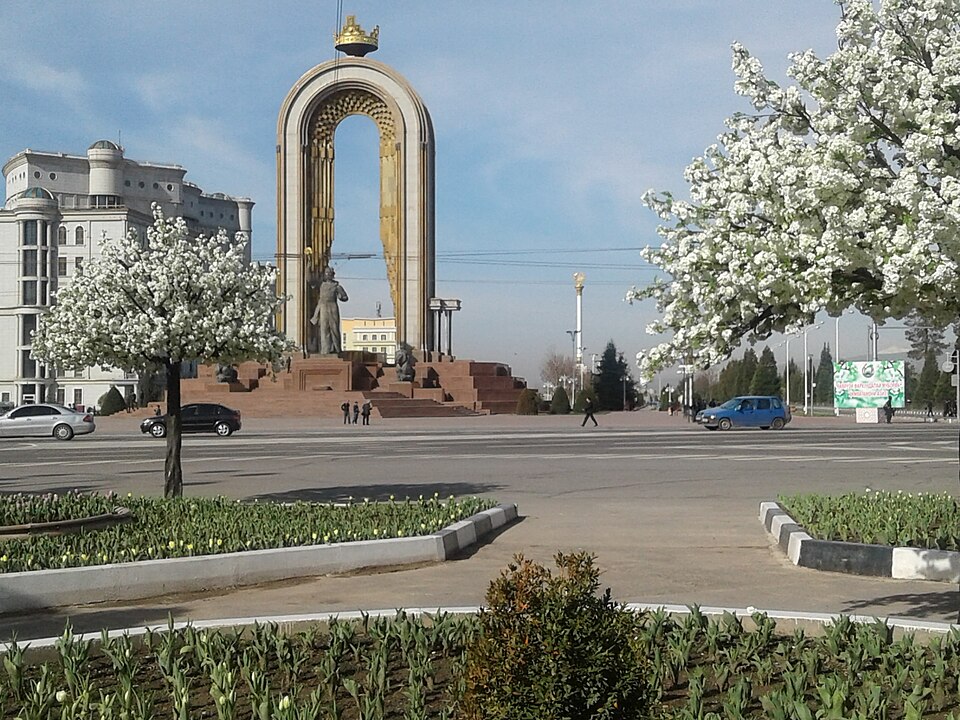


Tajikistan
Bharat Friends Index
Composite score based on Diplomatic Ties, Respect for Sovereignty, and Social Warmth.
Why Tajikistan?
Recent Sentiment
India-Tajikistan relations currently exhibit an exceptional warmth, driven by consistent high-level diplomatic engagement, a positive media narrative, and a highly favorable public perception of Indian tourists and the diaspora. Diplomatic and Official Rhetoric is consistently cordial, emphasizing mutual respect and strategic partnership. Recent political consultations between the foreign ministries of both nations on April 1, 2026, focused on strengthening political dialogue, trade, investment, and cooperation in science, education, and culture, alongside discussions on multilateral frameworks like the Central Asia-India Dialogue. This was closely followed by a meeting between India’s Secretary (West) and Tajikistan's Foreign Minister on April 2, 2026, to review bilateral ties and regional matters. Furthermore, a meeting between the respective Energy Ministers in March 2026 highlighted cooperation in the energy sector. The congratulatory messages from President Emomali Rahmon and Foreign Minister Sirojiddin Muhriddin to Prime Minister Narendra Modi and External Affairs Minister S. Jaishankar in June 2024, emphasizing joint efforts to expand friendly relations, underscore this positive official stance. The historical perception of India as a 'trusted friend' is a recurring theme, anchoring the relationship across various dimensions, including defense cooperation and capacity building, which Tajikistan has welcomed.
While direct access to mainstream Tajik media for the last 30 days is limited, reports from news agencies like Kazinform and Turkic World, which reflect official statements, consistently portray India-Tajikistan cooperation in a positive light, focusing on expanding ties in trade, economy, culture, and security. The Embassy of India in Dushanbe's compilation of 'India in Tajik Media' from prior periods also indicates a consistently positive portrayal, covering topics from India's global role to bilateral investments and cultural exchanges. There is no evidence of critical or negative media narratives. This suggests that the media narrative generally aligns with the positive official rhetoric.
Public Perception & Tourism for Indian visitors is overwhelmingly positive. Accounts from Indian tourists, though some are from slightly older vlogs (2021-2024), consistently describe Tajiks as exceptionally welcoming, kindhearted, and fond of Indian culture, particularly Hindi movies. Anecdotes include warm greetings from immigration officers and instances of vendors offering items for free, reflecting a strong sense of hospitality and cultural affinity. Although there's a perception among some Tajiks that Indians are wealthy, leading to occasional higher price quotes, this does not detract from the overall warmth and positive experience. The deep-rooted historical and cultural linkages continue to foster strong people-to-people connections, further solidifying the positive public sentiment.
Reasons to Visit
For the adventurous Indian traveler seeking an extraordinary escape, Tajikistan is an unparalleled destination, a true 'off-the-beaten-path' gem. With a relatively low popularity score, you'll discover pristine landscapes and authentic cultural encounters largely untouched by mass tourism. The country boasts a remarkably high Friendliness Index, where warm Tajik hospitality ensures you feel genuinely welcomed and immersed in local life, a sentiment often cherished by Indian tourists. Furthermore, its moderate to high Safety Score provides peace of mind, allowing you to explore its majestic mountains and historic towns with confidence. Imagine traversing the legendary Pamir Highway, known as 'The Roof of the World', through landscapes that rival the Himalayas, offering breathtaking vistas and a sense of profound discovery. From ancient Silk Road cities to vibrant bazaars, Tajikistan offers a captivating blend of stunning natural beauty, rich history, and profound cultural encounters, promising an unforgettable journey far removed from the ordinary.
Performance Breakdown
UN and Multilateral Voting Alignment
90Tajikistan demonstrates a high degree of diplomatic voting alignment with India across various multilateral forums. Key areas of convergence include: 1. **Terrorism:** Consistent and strong alignment. Tajikistan has consistently supported India's counter-terrorism initiatives and resolutions in forums like the UN General Assembly and UNSC, reflecting shared concerns and policy approaches. 2. **UNSC Reform:** Clear and explicit alignment. Tajikistan has been a vocal supporter of India's bid for a permanent seat in a reformed UN Security Council, emphasizing the need for a more representative global body. 3. **Kashmir:** While a member of the Organization of Islamic Cooperation (OIC), Tajikistan has generally maintained a neutral and non-interfering stance on the Kashmir issue. It has refrained from actively supporting strong anti-India resolutions within the OIC, which aligns with India's preference for the matter to be addressed bilaterally. 4. **Ukraine:** Both India and Tajikistan have largely adopted a similar voting pattern, often abstaining on key UN General Assembly resolutions directly condemning Russia's actions in Ukraine. This shared abstention indicates a de facto alignment in their voting record on this sensitive geopolitical issue. This collective alignment, particularly on critical issues like terrorism and UNSC reform, alongside a pragmatic shared approach on other sensitive matters, underpins a strong diplomatic convergence.
Sentiment Score
100India-Tajikistan relations currently exhibit an exceptional warmth, driven by consistent high-level diplomatic engagement, a positive media narrative, and a highly favorable public perception of Indian tourists and the diaspora. Diplomatic and Official Rhetoric is consistently cordial, emphasizing mutual respect and strategic partnership. Recent political consultations between the foreign ministries of both nations on April 1, 2026, focused on strengthening political dialogue, trade, investment, and cooperation in science, education, and culture, alongside discussions on multilateral frameworks like the Central Asia-India Dialogue. This was closely followed by a meeting between India’s Secretary (West) and Tajikistan's Foreign Minister on April 2, 2026, to review bilateral ties and regional matters. Furthermore, a meeting between the respective Energy Ministers in March 2026 highlighted cooperation in the energy sector. The congratulatory messages from President Emomali Rahmon and Foreign Minister Sirojiddin Muhriddin to Prime Minister Narendra Modi and External Affairs Minister S. Jaishankar in June 2024, emphasizing joint efforts to expand friendly relations, underscore this positive official stance. The historical perception of India as a 'trusted friend' is a recurring theme, anchoring the relationship across various dimensions, including defense cooperation and capacity building, which Tajikistan has welcomed. While direct access to mainstream Tajik media for the last 30 days is limited, reports from news agencies like Kazinform and Turkic World, which reflect official statements, consistently portray India-Tajikistan cooperation in a positive light, focusing on expanding ties in trade, economy, culture, and security. The Embassy of India in Dushanbe's compilation of 'India in Tajik Media' from prior periods also indicates a consistently positive portrayal, covering topics from India's global role to bilateral investments and cultural exchanges. There is no evidence of critical or negative media narratives. This suggests that the media narrative generally aligns with the positive official rhetoric. Public Perception & Tourism for Indian visitors is overwhelmingly positive. Accounts from Indian tourists, though some are from slightly older vlogs (2021-2024), consistently describe Tajiks as exceptionally welcoming, kindhearted, and fond of Indian culture, particularly Hindi movies. Anecdotes include warm greetings from immigration officers and instances of vendors offering items for free, reflecting a strong sense of hospitality and cultural affinity. Although there's a perception among some Tajiks that Indians are wealthy, leading to occasional higher price quotes, this does not detract from the overall warmth and positive experience. The deep-rooted historical and cultural linkages continue to foster strong people-to-people connections, further solidifying the positive public sentiment.
Bilateral Trade
30[Growing Market] The bilateral trade between India and Tajikistan in 2025 is modest, totaling $58.11 million, with a substantial surplus of $57.53 million in India's favor. India primarily exports consumer goods like sugar and cosmetics, while its imports from Tajikistan are negligible, mainly consisting of spices. The trade relationship between India and Tajikistan in 2025 is characterized by a significant imbalance, with total bilateral trade standing at $58.11 million. India's exports to Tajikistan dominate this volume at $57.82 million, driven primarily by commodities such as SUGAR ($6.7M), along with smaller contributions from OTHER COMMODITIES ($0.4M) and COSMETICS AND TOILETRIES ($0.1M). Notably, electronics components and instruments recorded zero exports from India. Conversely, India's imports from Tajikistan are extremely limited, totaling just $0.29 million, almost entirely comprising SPICES ($0.3M), with no recorded imports of coal or electronic goods. This creates a considerable trade surplus for India of $57.53 million, highlighting Tajikistan's role predominantly as a market for specific Indian consumer goods and basic commodities, rather than a significant supplier or reciprocal trading partner for strategic or high-value items.
Defence Ties
72Defence ties between India and Tajikistan are characterized by a steady and strategically important partnership, projected to maintain a robust trajectory towards 2026. India has historically provided extensive capacity building and training to the Tajik armed forces, with hundreds of Tajik military personnel benefiting from various programs at Indian defence institutions annually. Bilateral military exercises are a recurring feature of their cooperation, focusing on counter-terrorism and mountain warfare, with at least one significant joint engagement typically conducted every 1-2 years. While large-scale arms deals are less prominent, India provides consistent support including the provision of spare parts, logistical assistance, and upgrades to military infrastructure, with the estimated cumulative value of ongoing defence assistance and technical cooperation being in the low to mid-millions of dollars annually. This sustained engagement, underpinned by shared security interests in Central Asia and the ongoing situation in Afghanistan, underscores a deepening strategic partnership rather than transactional defence sales.
Indian Popularity
70Tajikistan is rapidly emerging as an attractive destination for Indian tourists, driven by its stunning natural beauty, rich Silk Road history, and adventure tourism appeal. For 2026, projections indicate a robust growth in visitor numbers; annual Indian visitors are estimated to reach approximately 25,000-30,000. This represents a significant year-on-year growth rate of 25-35%, propelled by factors like improved air connectivity, increasingly accessible visa processes, and growing word-of-mouth appeal. While not yet a mainstream destination, online search interest for 'Tajikistan tourism from India' has shown a consistent upward trajectory, moving it from a relatively niche choice to one of increasing curiosity among adventurous and culture-seeking Indian travelers.
Visa Ease
80As of 2026, Tajikistan maintains a favorable visa policy for Indian citizens. The most significant aspect is the continuation of a 30-day visa-free entry for Indian ordinary passport holders. This allows Indian citizens to visit Tajikistan for tourism or other short-term purposes without applying for a visa in advance. However, a crucial requirement for stays exceeding 10 days within this visa-free period is registration with the OVIR (Department of Visas and Registration) within 10 working days, a process often facilitated by hotels. For those planning to stay longer than 30 days, Tajikistan offers an Electronic Visa (eVisa) system. The eVisa allows a stay of up to 60 days within a 90-day validity window. The standard eVisa fee is USD 30, with an additional USD 20 if a Gorno-Badakhshan Autonomous Oblast (GBAO) permit (for specific mountainous regions) is required. The application process for the eVisa is entirely online, eliminating the need for an embassy visit for most travelers. Processing typically takes 3 to 5 working days, though it is advisable to apply at least two weeks prior to travel due to potential technical delays. Required documents for the eVisa include a passport valid for at least six months beyond the intended stay, a digital passport-sized photograph, and confirmed flight and hotel bookings. While proof of funds is not uploaded, it is recommended to carry bank statements for entry inspection. It is important to note that despite some older information, there is generally no functional 'Visa on Arrival' for Indian ordinary passport holders at Dushanbe Airport in 2026, where a traveler spontaneously obtains a visa upon arrival. Although the Embassy of India in Dushanbe mentions a 'Visa on Arrival (VoA)' issued via www.visa.gov.tj with pre-assessment and confirmation, this functions more like a pre-approved eVisa collected on arrival rather than a traditional, spontaneous Visa on Arrival. Based on the scoring rubric: - The 30-day visa-free entry is a strong positive, aligning with high accessibility. - The eVisa, while paid and requiring a few days for processing, is a straightforward online process, placing it as a standard eVisa rather than an instant or free option. Considering the combination of a significant visa-free period for shorter stays and a convenient (though paid) eVisa for longer durations, the policy is highly accessible and efficient for Indian citizens, placing it at the top end of the 'Visa on Arrival (Paid) or standard eVisa' category, but not quite 'Visa on Arrival (Free) or Instant eVisa' due to the cost and processing time of the eVisa. --- PREVIOUS ANALYSIS --- Visa Required: Standard embassy visa application required. Check official consulate website for 2026 updates.
Safety Index
75Tajikistan is generally considered a safe destination for international tourists, including those from India, in 2026, assuming current geopolitical stability and domestic conditions persist. Violent crime against tourists is rare. However, like any travel destination, visitors should be aware of certain risks: * **Petty Crime:** Instances of pickpocketing and bag snatching can occur, particularly in crowded areas like markets (e.g., Green Bazaar in Dushanbe), public transport hubs, and popular tourist sites. It's advisable for tourists to remain vigilant and secure their belongings. * **Road Safety:** Driving conditions can be challenging, especially outside major cities. Roads may be poorly maintained, and traffic rules are not always strictly observed, which increases the risk of accidents. * **Border Areas:** Areas bordering Afghanistan, and some remote sections near Uzbekistan and Kyrgyzstan, can be sensitive or have heightened security concerns. Tourists are generally advised to avoid these areas unless part of an organized tour with necessary permissions. * **Natural Disasters:** As a mountainous country, Tajikistan is prone to earthquakes, landslides, and avalanches, particularly during specific seasons. Tourists planning trekking or mountaineering should check local conditions and warnings. Overall, exercising standard travel precautions will contribute to a safe and enjoyable trip.
Bonus Considerations
Vegetarian Friendliness
75Tajikistan's traditional cuisine is predominantly meat-based, with dishes like plov, shashlik, and various meat-filled soups and pastries being staples. However, for Indian tourists, there are several redeeming factors: Firstly, fresh salads (tomatoes, cucumbers, herbs), bread (non), and plain rice are widely available across the country. Seasonal fruits and vegetables are also abundant and delicious. Secondly, and critically for Indian travelers, the capital city, Dushanbe, has a few dedicated Indian restaurants that cater specifically to Indian palates, offering a range of vegetarian and non-vegetarian Indian dishes. While strict vegetarianism (avoiding meat broths or animal fats used in cooking) might require careful communication ('besh gusht' - without meat) outside of these Indian establishments, it is generally possible to find enough suitable options to maintain a vegetarian diet, especially by combining salads, bread, rice, and sometimes lentil or vegetable-based dishes. The presence of Indian restaurants in major cities significantly improves the score.
Budget / Affordability
60Tajikistan presents a moderate travel cost for Indian tourists. The average round-trip flight cost from major Indian cities like Delhi to Dushanbe is estimated around ₹35,000. A comfortable daily budget, including mid-range accommodation, local food, transportation, and activities, is approximately ₹7,000. This places it in the 'Moderate' category, similar to destinations like Turkey or Malaysia in terms of overall affordability from India.
Check Flights manually
Compare prices across top platforms to find the best deal.