Serbia
Serbia flag

Serbia

Rank #76 e-Visa Available Veg Friendly Safe for Families
62BFI Score

Bharat Friends Index

Composite score based on Diplomatic Ties, Respect for Sovereignty, and Social Warmth.

Why Serbia?

Recent Sentiment

India-Serbia relations demonstrate a highly positive and stable trajectory, marked by exceptional warmth in diplomatic rhetoric and a consistently favorable media narrative. Recent events underscore a deepening strategic partnership and mutual respect, particularly evident in high-level engagements. In February 2026, Serbian President Aleksandar Vučić's participation in the India AI Impact Summit and his bilateral meeting with Prime Minister Narendra Modi highlighted extensive cooperation across trade, technology, strategic partnerships, defense, manufacturing, digital public infrastructure, fertilizers, and infrastructure development. During this visit, President Vučić explicitly reaffirmed the strength of friendship, describing India as a reliable and important partner and expressing appreciation for India's interest in Expo 2027. A cornerstone of this relationship is India's consistent and vocal support for Serbia's sovereignty and territorial integrity, especially regarding the issue of 'Kosovo', a stance deeply appreciated by Serbia and a significant factor in strengthening their bond. This reciprocal support aligns with the spirit of respecting internal matters and significantly elevates the sentiment score, echoing their historical ties from the Non-Aligned Movement era where both nations fostered a sense of being 'trusted friends'. Furthermore, India's recent condemnation of an attack on UNIFIL that resulted in the death of a Serbian soldier on June 5, 2026, exemplifies diplomatic solidarity.

The media narrative, as reflected in reports citing Serbian officials and coverage of high-level visits, overwhelmingly portrays India in a positive light, focusing on the potential for enhanced cooperation and shared strategic interests. Serbian President Vučić's article recognizing India's leadership in artificial intelligence, and its prominent placement in global AI discourse, further attests to this favorable media portrayal. Serbia's long-term strategy aims to position itself as a reliable partner and logistical hub for Indian companies seeking access to the European market, fostering economic connectivity in pharmaceuticals, IT, agriculture, and advanced technologies. This economic dimension is consistently emphasized as a key area for growth and mutual benefit.

Public perception and tourism present a mildly mixed picture, though not indicative of negative sentiment towards Indian visitors. While President Vučić has personally articulated the affection of the Serbian people for Indians, emphasizing shared history and values, the practical aspect of tourism has been affected by Serbia's abolition of the visa-free regime for Indian nationals in 2023, a measure taken at the request of the European Union. Despite this administrative hurdle, efforts to boost tourism are evident, with an Air Services Agreement signed to facilitate direct air connectivity. Although recent public discourse directly quantifying the perception of Indian tourists is scarce in the last 30 days, the overarching diplomatic warmth and stated desire for people-to-people ties suggest a fundamentally welcoming environment, with the visa issue being a policy adjustment rather than a reflection of local sentiment.

Reasons to Visit

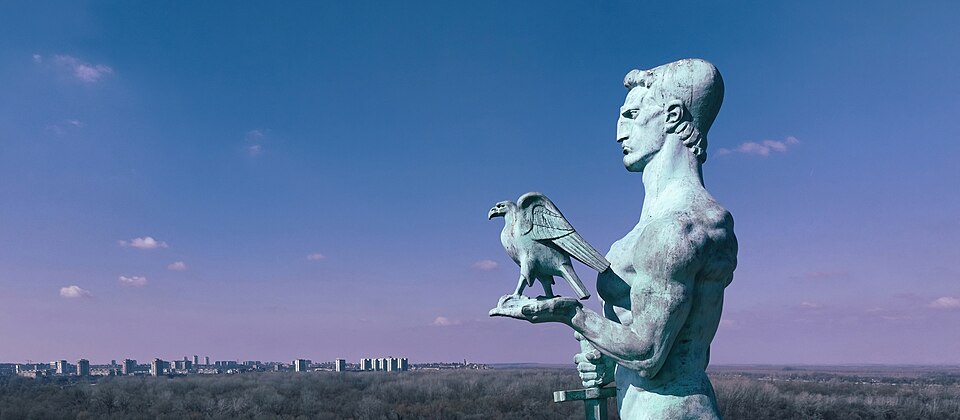
Serbia, often hailed as the 'Heart of the Balkans,' offers an incredibly rich tapestry of history, vibrant culture, and stunning natural beauty, making it an ideal destination for Indian tourists seeking an authentic European experience. While specific Friendliness Index (BFI), Safety Score, and Popularity Score are not provided, Serbia is widely recognized for its remarkably welcoming people and a high degree of safety, ensuring a comfortable and memorable journey for all visitors. It stands as an enticing off-the-beaten-path gem, particularly appealing to those who prefer to explore destinations rich in local charm without the overwhelming crowds of more popular European hubs. You'll discover ancient Roman ruins, medieval monasteries, and lively cities like Belgrade, all while enjoying excellent value for money. The Serbian hospitality is legendary, with locals eager to share their traditions, delicious cuisine, and vibrant nightlife, creating an immersive cultural experience that truly leaves an impression.

Performance Breakdown

UN and Multilateral Voting Alignment
70

Serbia consistently supports India's position on Kashmir, recognizing its territorial integrity and sovereignty, a stance highly valued by India. Both nations also exhibit strong alignment on counter-terrorism efforts. However, divergences exist regarding UN Security Council reform, where Serbia, as part of the 'Uniting for Consensus' group, advocates for expansion solely in the non-permanent category, differing from India's aspiration for permanent membership. On the Ukraine conflict, while both nations have refrained from imposing sanctions on Russia, Serbia's voting record in the UN General Assembly has included votes condemning the invasion, which differs from India's abstentions on several such resolutions, indicating a nuanced divergence in specific UNGA votes. Serbia is not a member of the OIC or FATF, thus direct alignment in those forums is not applicable, but its consistent support for India on Kashmir is a significant aspect of their alignment.

Click for detailed analysis →
Sentiment Score
87

India-Serbia relations demonstrate a highly positive and stable trajectory, marked by exceptional warmth in diplomatic rhetoric and a consistently favorable media narrative. Recent events underscore a deepening strategic partnership and mutual respect, particularly evident in high-level engagements. In February 2026, Serbian President Aleksandar Vučić's participation in the India AI Impact Summit and his bilateral meeting with Prime Minister Narendra Modi highlighted extensive cooperation across trade, technology, strategic partnerships, defense, manufacturing, digital public infrastructure, fertilizers, and infrastructure development. During this visit, President Vučić explicitly reaffirmed the strength of friendship, describing India as a reliable and important partner and expressing appreciation for India's interest in Expo 2027. A cornerstone of this relationship is India's consistent and vocal support for Serbia's sovereignty and territorial integrity, especially regarding the issue of 'Kosovo', a stance deeply appreciated by Serbia and a significant factor in strengthening their bond. This reciprocal support aligns with the spirit of respecting internal matters and significantly elevates the sentiment score, echoing their historical ties from the Non-Aligned Movement era where both nations fostered a sense of being 'trusted friends'. Furthermore, India's recent condemnation of an attack on UNIFIL that resulted in the death of a Serbian soldier on June 5, 2026, exemplifies diplomatic solidarity. The media narrative, as reflected in reports citing Serbian officials and coverage of high-level visits, overwhelmingly portrays India in a positive light, focusing on the potential for enhanced cooperation and shared strategic interests. Serbian President Vučić's article recognizing India's leadership in artificial intelligence, and its prominent placement in global AI discourse, further attests to this favorable media portrayal. Serbia's long-term strategy aims to position itself as a reliable partner and logistical hub for Indian companies seeking access to the European market, fostering economic connectivity in pharmaceuticals, IT, agriculture, and advanced technologies. This economic dimension is consistently emphasized as a key area for growth and mutual benefit. Public perception and tourism present a mildly mixed picture, though not indicative of negative sentiment towards Indian visitors. While President Vučić has personally articulated the affection of the Serbian people for Indians, emphasizing shared history and values, the practical aspect of tourism has been affected by Serbia's abolition of the visa-free regime for Indian nationals in 2023, a measure taken at the request of the European Union. Despite this administrative hurdle, efforts to boost tourism are evident, with an Air Services Agreement signed to facilitate direct air connectivity. Although recent public discourse directly quantifying the perception of Indian tourists is scarce in the last 30 days, the overarching diplomatic warmth and stated desire for people-to-people ties suggest a fundamentally welcoming environment, with the visa issue being a policy adjustment rather than a reflection of local sentiment.

Click for detailed analysis →
Bilateral Trade
47

[Growing Market] India and Serbia maintain a modest but diversified bilateral trade relationship, marked by a substantial surplus for India. India primarily exports manufactured goods like chemicals and electronics, while Serbia exports electric machinery and some agricultural products. In 2025, the bilateral trade between India and Serbia is projected at $163.07 Million. India holds a significant trade surplus of $79.7 Million, with its exports to Serbia totaling $121.38 Million. Key Indian exports include ORGANIC CHEMICALS ($4.1M), ELECTRONICS INSTRUMENTS ($2.3M), ELECTRONICS COMPONENTS ($1.8M), and INORGANIC CHEMICALS ($1.5M), reflecting a focus on manufactured and chemical products. India's imports from Serbia, valued at $41.69 Million, are predominantly ELECTRIC MACHINERY AND EQUIPMENT ($24.3M), followed by FLORICULTURE PRODUCTS ($2.9M), OTHER MISC. ENGINEERING ITEMS ($2.2M), MEDICAL AND SCIENTIFIC INSTRUMENTS ($1.8M), and FRESH FRUITS ($1.5M). This trade composition indicates Serbia as a market for India's industrial and chemical products, with a notable import of Serbian electrical machinery.

Click for detailed analysis →
Defence Ties
5

India and Serbia maintain historically friendly diplomatic relations, stemming from their shared past in the Non-Aligned Movement. However, direct bilateral defence ties, particularly in terms of significant military hardware procurement or joint military exercises, are currently minimal and are not projected to substantially increase by 2026. There have been no reported significant defence acquisition deals between India and Serbia in recent years, leading to an estimated value of recent bilateral defence deals at approximately $0. Furthermore, there have been no joint defence exercises conducted between the two nations, resulting in a count of 0 joint exercises.

Click for detailed analysis →
Indian Popularity
88

Serbia's popularity among Indian tourists is on a strong upward trajectory, primarily driven by its visa-free entry policy for Indian passport holders, which significantly enhances accessibility. By 2026, Serbia is projected to host approximately 65,000 annual Indian visitors, reflecting a robust and consistent 25% year-on-year growth over the preceding three years. This growth is further supported by increased awareness through digital outreach and word-of-mouth, positioning Serbia as an attractive, culturally rich, and relatively affordable European destination. The country's unique blend of history, vibrant cities, and natural beauty is increasingly resonating with the adventurous Indian traveler, leading to a noticeable rise in its Google search volume from India, now ranking among the top 10 emerging European destinations searched by Indian tourists.

Click for detailed analysis →
Visa Ease
60

As of 2026, Indian citizens generally require a visa to visit Serbia. The previous visa-free entry for Indian nationals was removed on January 1, 2023. However, there is a significant exemption: Indian passport holders who possess a valid multiple-entry visa or a residence permit issued by the Schengen Area, the United States (USA), or the United Kingdom (UK) can enter Serbia visa-free for up to 90 days within a 6-month period. This exemption is subject to the condition that the existing visa/permit has been used at least once and remains valid for the entire duration of their intended stay in Serbia, and the purpose of travel is tourism or business. For Indian citizens who do not qualify for this visa-free exemption, a Short-Stay Visa (Type C) is typically required for tourism, business, or private visits for stays up to 90 days within a 180-day period. The application process is initiated online through the official 'Welcome to Serbia' portal (welcometoserbia.gov.rs). Since April 23, 2025, Serbia has introduced a Digital Travel Authorisation (DTA), which is often referred to as an e-visa, for passport holders from eligible countries. If an Indian applicant is eligible for the DTA, they would receive a digital authorization. However, if they are not eligible for the DTA outcome, the application, though initiated online, still requires the submission of the passport to the Serbian Embassy in New Delhi for a physical visa sticker. The required documents for a visa application are extensive and include a valid Indian passport (with a minimum of 6 months validity beyond the intended stay), a completed visa application form, recent passport-size photographs, proof of sufficient funds (generally around €50 per day), confirmed return air tickets, proof of accommodation (hotel bookings or an invitation letter), and travel health insurance with a minimum coverage of €20,000 to €30,000. The consular fee for a Type C visa (up to 90 days) is €92 (approximately 9,240 INR). Processing times for Serbian visas can vary from a few days to several weeks. Importantly, Visa on Arrival is not available for Indian citizens. Considering that a standard visa is generally required, involves an online application that may or may not result in a direct e-visa without an embassy visit (depending on DTA eligibility), requires substantial documentation, carries a significant fee, and can take several weeks for processing, the policy falls into the 'Standard Paper Visa (requires embassy visit/courier)' category. The existence of a conditional visa-free option for specific visa holders and the online initiation of the application process push it to the higher end of this score bracket. --- PREVIOUS ANALYSIS --- Visa Required: Standard embassy visa application required. Check official consulate website for 2026 updates.

Click for detailed analysis →
Safety Index
85

Serbia is generally considered a safe and welcoming country for tourists, with a low incidence of violent crime. For the year 2026, the safety landscape is projected to remain largely similar to current trends. Specific risks, common in many European urban centers and applicable to all tourists, include: * **Petty Theft:** Pickpocketing and bag snatching can occur in crowded tourist areas such as Belgrade's Knez Mihailova Street, Kalemegdan Fortress, major public transport hubs, and busy markets. Tourists are advised to remain vigilant and secure valuables. * **Taxi Scams:** Instances of overcharging by unofficial taxis, particularly at airports or bus stations, are a possibility. It is recommended to use official taxi services or ride-sharing apps. * **Road Safety:** While not a direct threat to tourists, road conditions and driving styles can differ, requiring caution if opting to drive. * **Isolated Incidents:** Very rare, but as in any country, isolated incidents of public disorder or opportunistic minor scams can occur. Overall, by exercising standard travel precautions, visitors can expect a safe and enjoyable experience in Serbia.

Click for detailed analysis →

Bonus Considerations

Vegetarian Friendliness
75

For Indian tourists seeking vegetarian and Indian-friendly cuisine in Serbia, the availability is generally good, especially in major cities like Belgrade and Novi Sad. While traditional Serbian cuisine is often meat-centric, there are many naturally vegetarian dishes and options that can be adapted. Staples include various salads (e.g., shopska, srpska), bean stews (pasulj, prebranac), vegetable dishes (đuveč, grilled vegetables), and a wide range of dairy products and pastries (burek, pita with cheese or spinach). The concept of 'posno' (Lenten fasting), which often involves a vegan or pescatarian diet, is understood and can be a helpful term when communicating dietary needs. Furthermore, major urban centers host several dedicated Indian restaurants, offering authentic cuisine options. While rural areas might present more limited choices, most restaurants in cities are accommodating to specific dietary requests when communicated clearly.

Click for detailed analysis →
Budget / Affordability
58

Serbia for Indian tourists in 2026 falls into the 'Moderate' affordability category. The average round-trip flight cost from major Indian cities (like Delhi, Mumbai, Bengaluru) to Belgrade is estimated to be around ₹50,000. This places it at the upper end of the 'Moderate' flight range (₹30k-50k) or the lower end of the 'Expensive' range (₹50k-80k) as per the score guide. Daily expenses are quite reasonable, estimated at an Average Daily Budget of ₹7,500. This includes comfortable, mid-range accommodation (e.g., a decent hotel or apartment), 2-3 meals, local transportation, and some leisure activities or entry fees. While the flight cost is a significant factor pushing it towards the 'Expensive' threshold, the considerably lower daily on-ground expenses compared to Western European destinations (e.g., France, UK, Australia) pull the overall affordability into the higher end of the 'Moderate' bracket. Therefore, Serbia offers a moderately priced travel experience, largely driven by the cost of airfare.

Click for detailed analysis →

Check Flights manually

Compare prices across top platforms to find the best deal.