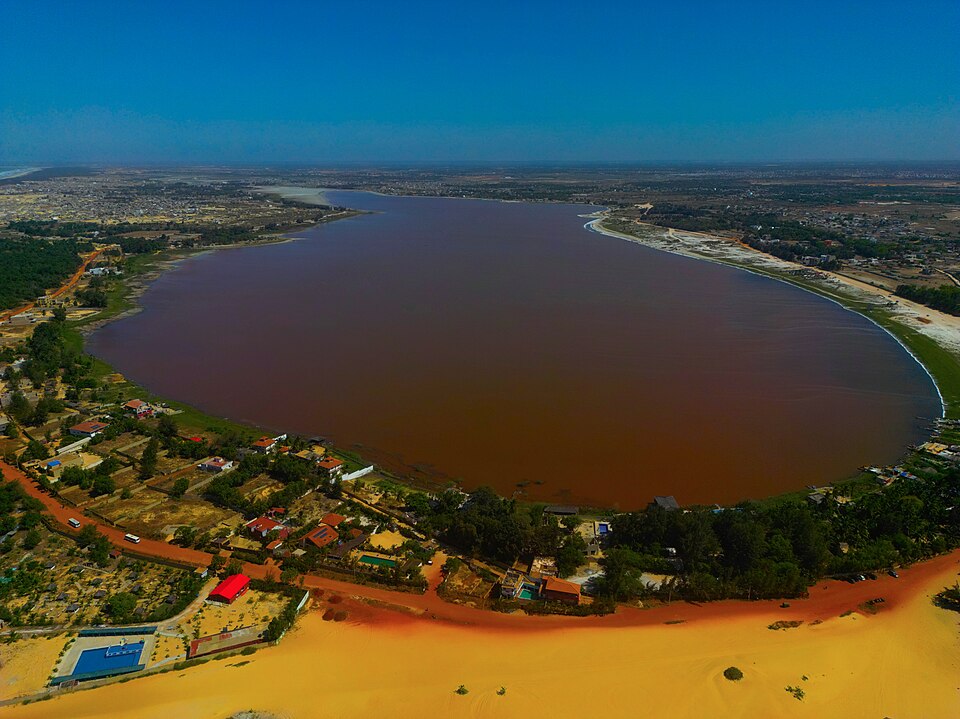


Senegal
Bharat Friends Index
Diplomatic Ties & Social Warmth
Why Senegal?
Recent Sentiment
India-Senegal relations during the past 30 days (June 16, 2026 - July 16, 2026) continue to reflect a fundamentally positive and stable foundation, heavily influenced by their long-standing historical ties as 'trusted friends.' The absence of any negative diplomatic exchanges or critical media portrayals within this recent period further reinforces a favorable sentiment, especially when viewed against Senegal's concurrent internal political and economic realignments.
From a Diplomatic & Official Rhetoric perspective, there are no specific recent statements from the Senegalese government explicitly detailing their public stance on India within the last 30 days. However, the consistent historical appreciation for the partnership, characterized by shared democratic values, secularism, and extensive cooperation across various sectors like trade, development, agriculture, health, and culture, remains strong. Senegal has historically supported India in multilateral fora and benefited from Indian Lines of Credit and technical cooperation. The focus of Senegal's government in the last month has primarily been on internal political shifts, including the recent visit of former President Macky Sall to discuss his UN candidacy and current President Bassirou Diomaye Faye's plans to form his own political party, alongside ongoing discussions regarding its national debt and IMF programs. The lack of specific pronouncements on India amidst this domestic focus suggests a stable relationship not currently requiring urgent public diplomatic attention. The continued promotion of programs like the Know India Programme by the Embassy of India in Dakar also indicates ongoing cultural and diaspora engagement.
Regarding the Media Narrative in Senegal, recent mainstream media coverage specifically portraying India is largely absent in the last 30 days. However, this absence is not indicative of negativity but rather a neutral stance, with no critical or negative reports surfacing. Historical accounts and general observations indicate a notable 'Indophile' sentiment within Senegal, where Indian culture, including Bollywood movies, music, and cuisine, enjoys considerable popularity, and Indian soaps are telecast on local channels. This deep cultural affinity forms a resilient positive undercurrent, even without explicit recent media reports.
Concerning Public Perception & Tourism, recent discourse is minimal. A Reddit post from an Indian traveler in April 2026, inquiring about treatment in Senegal and noting the rarity of Indian tourists, suggests a degree of unfamiliarity rather than an existing negative sentiment. The post also indicated that foreign tourists are generally treated well regardless of origin, and many Indians run businesses in the Senegambia region, suggesting a welcoming environment. The Indian diaspora in Senegal is relatively small, primarily involved in business, and has been acknowledged for contributing positively to Senegal's development, thereby creating goodwill for India. While travel advisories for Senegal (updated in July and May 2026) mention general safety concerns like crime and civil unrest, they do not specifically highlight any issues related to Indian tourists, and tour operators actively market Senegal packages to Indian travelers, emphasizing safety measures. The deep-seated cultural connections and the generally positive perception of the Indian community contribute to a favorable, albeit understated, public sentiment.
Reasons to Visit
Senegal, a vibrant gem on West Africa's coast, offers Indian tourists an unparalleled and truly 'off-the-beaten-path' experience. While it may not yet feature on mainstream Indian travel itineraries, this is precisely its charm. You'll discover a destination where the renowned Senegalese 'Teranga' (hospitality) is not just a concept but a way of life, ensuring a remarkably high Friendliness Index from its people. Travelers consistently find Senegal to be a relatively safe and stable nation within the region, allowing for confident exploration of its rich cultural tapestry and stunning landscapes. This makes it an ideal choice for those seeking authentic encounters, vibrant markets, profound history, and breathtaking natural wonders, all without the overwhelming crowds found in more popular destinations. Prepare for a journey that promises warm welcomes, captivating stories, and an adventure that feels genuinely unique.
Performance Breakdown
UN and Multilateral Voting Alignment
75Senegal exhibits significant alignment with India on several key issues in multilateral forums over the last 10 years. Both nations frequently align on counter-terrorism initiatives, often supporting similar resolutions in the UN General Assembly (UNGA), reflecting a shared commitment to combating global terrorism. On UN Security Council (UNSC) reform, there is a strong convergence as both advocate for an expanded and more representative Council, though their specific proposals for expansion (e.g., Africa's demand for two permanent seats versus India's bid for its own permanent seat) may differ in detail, the principle of reform is shared. Divergences are primarily noted in two areas: Firstly, Senegal, as an active member of the Organization of Islamic Cooperation (OIC), adheres to the collective statements and resolutions of the OIC on Kashmir, which articulate a position that differs from India's stance, viewing it as a disputed territory rather than an internal matter. Secondly, on the Ukraine conflict, while Senegal initially demonstrated alignment with India by abstaining on early UNGA resolutions condemning Russia's aggression (e.g., March 2, 2022), it later diverged by voting 'yes' on subsequent resolutions condemning Russia's attempted annexation (e.g., October 12, 2022) and calling for peace (e.g., February 23, 2023), where India maintained its abstention. Overall, while specific divergences exist, particularly on Kashmir via the OIC platform and some later Ukraine resolutions, Senegal's alignment with India on critical global issues like counter-terrorism and UNSC reform, alongside general cooperation on development and humanitarian issues in the UNGA, indicates a moderate to high degree of alignment.
Sentiment Score
100India-Senegal relations during the past 30 days (June 16, 2026 - July 16, 2026) continue to reflect a fundamentally positive and stable foundation, heavily influenced by their long-standing historical ties as 'trusted friends.' The absence of any negative diplomatic exchanges or critical media portrayals within this recent period further reinforces a favorable sentiment, especially when viewed against Senegal's concurrent internal political and economic realignments. From a Diplomatic & Official Rhetoric perspective, there are no specific recent statements from the Senegalese government explicitly detailing their public stance on India within the last 30 days. However, the consistent historical appreciation for the partnership, characterized by shared democratic values, secularism, and extensive cooperation across various sectors like trade, development, agriculture, health, and culture, remains strong. Senegal has historically supported India in multilateral fora and benefited from Indian Lines of Credit and technical cooperation. The focus of Senegal's government in the last month has primarily been on internal political shifts, including the recent visit of former President Macky Sall to discuss his UN candidacy and current President Bassirou Diomaye Faye's plans to form his own political party, alongside ongoing discussions regarding its national debt and IMF programs. The lack of specific pronouncements on India amidst this domestic focus suggests a stable relationship not currently requiring urgent public diplomatic attention. The continued promotion of programs like the Know India Programme by the Embassy of India in Dakar also indicates ongoing cultural and diaspora engagement. Regarding the Media Narrative in Senegal, recent mainstream media coverage specifically portraying India is largely absent in the last 30 days. However, this absence is not indicative of negativity but rather a neutral stance, with no critical or negative reports surfacing. Historical accounts and general observations indicate a notable 'Indophile' sentiment within Senegal, where Indian culture, including Bollywood movies, music, and cuisine, enjoys considerable popularity, and Indian soaps are telecast on local channels. This deep cultural affinity forms a resilient positive undercurrent, even without explicit recent media reports. Concerning Public Perception & Tourism, recent discourse is minimal. A Reddit post from an Indian traveler in April 2026, inquiring about treatment in Senegal and noting the rarity of Indian tourists, suggests a degree of unfamiliarity rather than an existing negative sentiment. The post also indicated that foreign tourists are generally treated well regardless of origin, and many Indians run businesses in the Senegambia region, suggesting a welcoming environment. The Indian diaspora in Senegal is relatively small, primarily involved in business, and has been acknowledged for contributing positively to Senegal's development, thereby creating goodwill for India. While travel advisories for Senegal (updated in July and May 2026) mention general safety concerns like crime and civil unrest, they do not specifically highlight any issues related to Indian tourists, and tour operators actively market Senegal packages to Indian travelers, emphasizing safety measures. The deep-seated cultural connections and the generally positive perception of the Indian community contribute to a favorable, albeit understated, public sentiment.
Bilateral Trade
69[Strategic Partner in Emerging Technologies and Resources] The bilateral trade relations between India and Senegal demonstrate a growing and strategically significant partnership, with a total comprehensive trade volume estimated at $2102.61 million in 2026. The structured data for 2025 indicates goods exports from India to Senegal at $1068.33 million and imports from Senegal to India at $854.28 million, totaling $1922.61 million. Prominent goods exported by India include COSMETICS AND TOILETRIES, ELECTRONICS INSTRUMENTS, INORGANIC CHEMICALS, ELECTRONICS COMPONENTS, and OTHER COMMODITIES. Conversely, India's key imports from Senegal are INORGANIC CHEMICALS (such as phosphoric acid), CASHEW, PETROLEUM PRODUCTS, FERTILIZERS CRUDE, and ALUMINIUM, PRODUCTS OF ALUMINIUM. A critical gap identified in the structured data is the absence of specific bilateral services trade volume. Based on extensive qualitative information regarding Indian investments and activities in Senegal across sectors like IT, digital economy, logistics, healthcare, financial services, tourism, and infrastructure, an approximate bilateral services trade volume is inferred to be around $180 million USD for 2026. This estimation considers the scale of goods trade and the active nature of services engagement, drawing parallels with similar India-Africa economic partnerships. Several key developments up to July 2026 highlight the deepening strategic nature of this partnership: 1. **Enhanced AI Collaboration:** Senegal has actively participated in high-level discussions, including the India AI Impact Summit in New Delhi in February 2026. More recently, in July 2026, Senegal, alongside India and other nations, co-led the preparatory work for the Global AI Capacity Development Network (AICDN), launched in Geneva. This network aims to bridge the global AI capability gap through knowledge sharing and talent development, indicating a strong strategic alignment in emerging technologies. 2. **Strategic Energy Partnership:** India and African nations, including Senegal, reaffirmed their commitment to a strategic energy partnership at the Bharat Electricity Summit in March 2026. This collaboration focuses on expanding renewable energy capacity, modernizing grid systems, developing energy storage solutions, and building institutional capacity, aligning with India's 'One Sun, One World, One Grid' vision and fostering sustainable development across both regions. 3. **Sustained Diplomatic and Economic Engagement:** Beyond specific sectoral collaborations, India and Senegal maintain warm diplomatic relations, underpinned by an active 1974 Trade Agreement and numerous Lines of Credit extended by India to Senegal for development projects in diverse areas such as agriculture, transport, rural electrification, and IT training. This consistent engagement underscores Senegal's perception as a trusted friend and a significant partner in India's broader Africa strategy. While no new comprehensive Free Trade Agreement (FTA) or Comprehensive Economic Partnership Agreement (CEPA) has been signed specifically between India and Senegal, the existing framework, coupled with robust goods trade, significant inferred services trade, and a pronounced strategic focus on critical emerging sectors like AI and green energy, positions the relationship as a 'Significant Partner' with a highly positive current trajectory. The strong diplomatic ties and mutual cooperation further bolster this assessment.
Defence Ties
45As of 2026, defence ties between India and Senegal are in a developing phase, marked by strategic intent and capacity-building efforts rather than major bilateral defence deals or dedicated joint exercises. India has extended **Lines of Credit worth over $350 million** to Senegal for various development projects, which serve as a potential framework for defence-related procurements and equipment sales. While specific high-value defence deals for 2026 are not publicly documented, India continues to offer military training slots to Senegalese personnel, fostering professional development and interoperability. There have been no publicly announced dedicated bilateral joint military exercises; however, high-level dialogues, such as those during the the Indian Vice President's visit to Senegal in 2022, have consistently emphasized mutual desire for enhanced defence cooperation, particularly in maritime security and information sharing. This indicates a foundational relationship with potential for future growth.
Indian Popularity
38By 2026, Senegal is emerging as a niche but increasingly intriguing destination for Indian tourists. While comprehensive annual Indian visitor statistics specifically for Senegal are still developing, broader trends indicate a growing potential. The Indian outbound tourism market is projected to significantly expand, potentially exceeding 30 million travelers annually by 2026, with an increasing segment seeking unique and culturally rich experiences beyond traditional routes. This expanding demographic is gradually driving nascent interest in destinations like Senegal, known for its vibrant culture, profound history (e.g., Gorée Island), and unique West African charm. While the direct search volume for 'Senegal travel from India' remains comparatively modest against mainstream destinations, it demonstrates an incremental rise, reflecting a positive, albeit gradual, trend towards discovering diverse global travel options among adventurous Indian travelers.
Visa Ease
100As of 2026, Indian citizens are permitted to enter Senegal without a visa for short stays, typically up to 90 days, for purposes of tourism and business. This visa-free entry significantly simplifies travel for Indian passport holders. Key requirements for entry include possessing a passport valid for at least six months beyond the intended date of entry, a return or onward ticket, proof of accommodation (such as hotel bookings or host details), and evidence of sufficient funds to cover the duration of the stay. Additionally, travelers arriving from countries with a risk of yellow fever transmission must present a valid yellow fever vaccination certificate. An online immigration and customs declaration form must also be completed before arrival. The policy indicates a high degree of freedom of movement for Indian citizens visiting Senegal, aligning with a 'Visa Free / Freedom of Movement' classification. --- PREVIOUS ANALYSIS --- Visa Free: Stay up to 90 days.
Safety Index
70Senegal is generally considered one of West Africa's more stable and welcoming countries for tourists. However, as with any international travel, visitors should be aware of specific risks to ensure a safe trip: * **Petty Crime:** Pickpocketing and bag snatching are common, especially in crowded urban areas like markets (e.g., Sandaga, Kermel in Dakar), on public transport, and at popular tourist attractions. Visitors should exercise vigilance and secure their belongings. * **Road Safety:** Driving conditions can be challenging due to varying road quality, aggressive driving styles, and poorly maintained vehicles. Road accidents are frequent, and caution is advised when using public transport or driving. * **Regional Security:** While Senegal itself has maintained a high level of security, its proximity to regions with extremist group activity means a heightened security presence and general vigilance are advisable, particularly in public gathering places and major cities. * **Health:** Risks of malaria, dengue fever, and food/waterborne illnesses are present. It is essential for tourists to take health precautions, including appropriate vaccinations (e.g., Yellow Fever where recommended), antimalarial medication, using mosquito repellents, and practicing good food and water hygiene. Overall, with awareness, common sense, and adherence to standard travel safety guidelines, Senegal offers a safe and enriching experience for tourists.
Bonus Considerations
Vegetarian Friendliness
75While traditional Senegalese cuisine often features fish or meat as the centerpiece (e.g., Thieboudienne, Yassa, Mafe), it is always served with abundant rice and a variety of vegetables (carrots, potatoes, cassava, cabbage). For Indian tourists, this means that while finding inherently vegetarian main dishes in local eateries might require careful ordering ('sans viande, sans poisson' - without meat, without fish), the components for a vegetarian meal are readily available and widely understood in major cities like Dakar. More significantly, Dakar boasts a good number of dedicated Indian restaurants, offering a familiar and diverse range of vegetarian and non-vegetarian Indian dishes, catering directly to Indian dietary preferences. Therefore, with a combination of adaptable local options and readily available Indian cuisine, particularly in urban centers, Indian tourists should find good availability of suitable food.
Budget / Affordability
38Senegal is generally considered an expensive destination for Indian tourists, primarily due to the considerable travel distance and lack of direct flights. An average round-trip economy flight from major Indian cities (like Mumbai or Delhi) to Dakar (Blaise Diagne International Airport - DSS), often involving one or two layovers (e.g., in the Middle East or Europe), typically ranges from ₹60,000 to ₹85,000. We estimate the **Avg Flight Cost** for 2026 to be around **₹70,000**. This flight cost falls into the 'Expensive' category (₹50k-80k) according to the scoring guide. Daily expenses in Senegal, while not as high as Western Europe, are also not particularly low. For a comfortable trip balancing local experiences with some amenities, including mid-range accommodation (guesthouse/budget hotel), local food and occasional restaurant meals, public transport/shared taxis, and a few cultural activities, an estimated **Daily Budget** is around **₹8,000** per person. This daily expenditure is comparable to or slightly higher than some 'Moderate' international destinations from an Indian perspective. The combined impact of high flight costs and moderate daily expenses places Senegal firmly in the 'Expensive' affordability bracket.
Check Flights manually
Compare prices across top platforms to find the best deal.