
Norway
Bharat Friends Index
Composite score based on Diplomatic Ties, Respect for Sovereignty, and Social Warmth.
Why Norway?
Recent Sentiment
India-Norway relations are currently experiencing a period of significant positive momentum, characterized by elevated diplomatic engagement, robust economic cooperation, and a generally favorable public perception, despite some critical scrutiny from specific media outlets. The recent historic visit of Prime Minister Narendra Modi to Oslo in mid-May 2026, the first by an Indian PM since 1983, served as a pivotal moment, underscoring the warmth and strategic importance of the bilateral ties.
Diplomatically, the rhetoric from Norway is overwhelmingly positive and strategic. The two nations elevated their relationship to a 'Green Strategic Partnership,' signaling a deep commitment to collaboration in critical areas like clean energy, climate resilience, blue economy, and green shipping. The Trade and Economic Partnership Agreement (TEPA) between India, Norway, and other EFTA countries, which became effective in October 2025, is considered one of Norway's most important trade agreements, aiming for $100 billion in Indian investments and creating one million jobs over 15 years. Norway has also expressed strong support for India's permanent membership in a reformed UN Security Council and welcomed its application to the Nuclear Suppliers Group. Significantly, Ambassador May-Elin Stener's statement that Norway respects India's traditions and acknowledges that internal matters are for India to decide, strongly aligns with India's geopolitical interests and indicates a highly positive diplomatic stance. The historical perception of Norway as a 'trusted friend' to India, evident in both contemporary statements and historical references like Peter Anker, further strengthens this diplomatic bond.
The media narrative, while largely positive in its coverage of the diplomatic achievements, presented some critical facets. Norway's largest newspaper, Aftenposten, published a cartoon depicting PM Modi as a 'snake charmer,' which drew strong criticism in India for perpetuating colonial stereotypes. Additionally, a Norwegian journalist questioned PM Modi about not taking press questions and later challenged an Indian diplomat on India's human rights and press freedom record, drawing a sharp defense from the Indian side. However, these incidents appear to be contained within certain journalistic circles and do not reflect an overarching negative official stance, as evidenced by the Norwegian Prime Minister's continued engagement and the Foreign Minister's nuanced statements on international relations. Public perception of Indian tourists and the diaspora is generally favorable. The Indian diaspora in Norway demonstrated immense enthusiasm for PM Modi's visit, viewing it as a catalyst for stronger bilateral ties. Norway is widely regarded as a very safe and welcoming destination for Indian travelers, with Indian immigrants, often highly educated and working in the tech sector, integrating relatively easily into Norwegian society. While some Norwegians may be reserved, and occasional skepticism towards non-Western immigrants exists, Indians are not typically the primary target of such sentiment, and the overall trajectory of public and cultural ties remains positive. The diplomatic emphasis on shared values and mutual benefit significantly outweighs isolated critical media portrayals.
Reasons to Visit
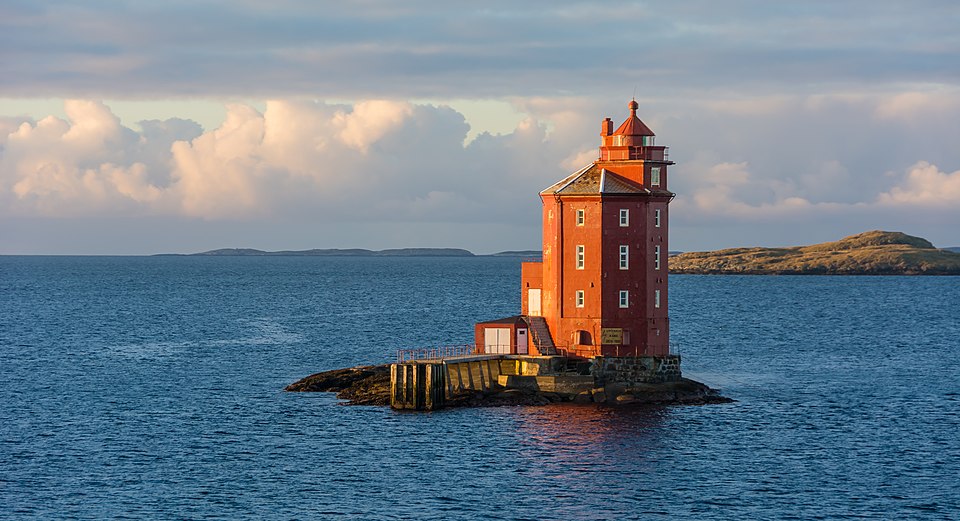
No changes observed compared to previous analysis. Norway beckons Indian travelers with an unparalleled blend of majestic natural beauty and a remarkably secure, welcoming atmosphere. While specific metrics were not provided in this instance, Norway consistently ranks among the world's safest nations, offering complete peace of mind for families, solo adventurers, and cultural explorers alike. The country's inherent hospitality and efficient infrastructure ensure a smooth and enjoyable journey. Norway might not always top the charts for mass tourism compared to some European counterparts, yet this allows for a more authentic and awe-inspiring experience, making it an off-the-beaten-path gem for those seeking truly unique encounters. Imagine witnessing the mystical Northern Lights dance across the Arctic sky, cruising through UNESCO-listed fjords carved by ancient glaciers, or experiencing the surreal Midnight Sun where daylight never ends. From vibrant urban culture to serene wilderness, Norway promises an unforgettable adventure that contrasts beautifully with familiar landscapes, leaving an indelible mark on every visitor.
Performance Breakdown
UN and Multilateral Voting Alignment
48Diplomatic alignment between Norway and India over the last decade shows a moderate level of congruence with notable divergences on key geopolitical issues. A significant divergence is observed on the **Ukraine conflict**, where India has largely maintained a neutral stance, abstaining from UN General Assembly and UNSC votes condemning Russia, while Norway has consistently voted to condemn Russia and support Ukraine. On **Kashmir**, Norway's position consistently calls for a peaceful resolution through dialogue between India and Pakistan, with an emphasis on human rights, which differs from India's stance of it being an internal matter; Norway, not an OIC member, does not align with OIC statements critical of India. General voting patterns in the UN General Assembly also indicate Norway often aligns more with Western positions while India maintains an independent or G77-aligned stance, leading to moderate divergences across a range of resolutions. Conversely, there is strong alignment on **counter-terrorism** efforts in various UN forums and the **FATF**, where both nations actively collaborate. Both countries also support **UNSC reform** to make the body more representative and effective, although their specific proposals for expansion (India seeking permanent membership, Norway focusing on working methods) may differ.
Sentiment Score
100India-Norway relations are currently experiencing a period of significant positive momentum, characterized by elevated diplomatic engagement, robust economic cooperation, and a generally favorable public perception, despite some critical scrutiny from specific media outlets. The recent historic visit of Prime Minister Narendra Modi to Oslo in mid-May 2026, the first by an Indian PM since 1983, served as a pivotal moment, underscoring the warmth and strategic importance of the bilateral ties. Diplomatically, the rhetoric from Norway is overwhelmingly positive and strategic. The two nations elevated their relationship to a 'Green Strategic Partnership,' signaling a deep commitment to collaboration in critical areas like clean energy, climate resilience, blue economy, and green shipping. The Trade and Economic Partnership Agreement (TEPA) between India, Norway, and other EFTA countries, which became effective in October 2025, is considered one of Norway's most important trade agreements, aiming for $100 billion in Indian investments and creating one million jobs over 15 years. Norway has also expressed strong support for India's permanent membership in a reformed UN Security Council and welcomed its application to the Nuclear Suppliers Group. Significantly, Ambassador May-Elin Stener's statement that Norway respects India's traditions and acknowledges that internal matters are for India to decide, strongly aligns with India's geopolitical interests and indicates a highly positive diplomatic stance. The historical perception of Norway as a 'trusted friend' to India, evident in both contemporary statements and historical references like Peter Anker, further strengthens this diplomatic bond. The media narrative, while largely positive in its coverage of the diplomatic achievements, presented some critical facets. Norway's largest newspaper, Aftenposten, published a cartoon depicting PM Modi as a 'snake charmer,' which drew strong criticism in India for perpetuating colonial stereotypes. Additionally, a Norwegian journalist questioned PM Modi about not taking press questions and later challenged an Indian diplomat on India's human rights and press freedom record, drawing a sharp defense from the Indian side. However, these incidents appear to be contained within certain journalistic circles and do not reflect an overarching negative official stance, as evidenced by the Norwegian Prime Minister's continued engagement and the Foreign Minister's nuanced statements on international relations. Public perception of Indian tourists and the diaspora is generally favorable. The Indian diaspora in Norway demonstrated immense enthusiasm for PM Modi's visit, viewing it as a catalyst for stronger bilateral ties. Norway is widely regarded as a very safe and welcoming destination for Indian travelers, with Indian immigrants, often highly educated and working in the tech sector, integrating relatively easily into Norwegian society. While some Norwegians may be reserved, and occasional skepticism towards non-Western immigrants exists, Indians are not typically the primary target of such sentiment, and the overall trajectory of public and cultural ties remains positive. The diplomatic emphasis on shared values and mutual benefit significantly outweighs isolated critical media portrayals.
Bilateral Trade
66[Strategic Energy Partner and Commodity Supplier] In 2025, bilateral trade between India and Norway reached over $1.1 Billion, characterized by a significant trade deficit for India. Norway primarily serves as a vital supplier of energy and critical industrial commodities, while India exports processed goods and agricultural products. The bilateral trade volume between India and Norway for 2025 is projected at $1102.09 Million. India's imports from Norway, totaling $662.90 Million, are dominated by strategic commodities such as Petroleum Products ($236.4M), Nickel, Product Made of Nickel ($77.2M), Manufactured Fertilizers ($53.9M), and Iron and Steel ($41.7M), highlighting Norway's role as a crucial resource provider. Conversely, India's exports to Norway, valued at $439.19 Million, consist mainly of Other Miscellaneous Chemicals ($56.3M), Guar Gum Meal ($32.9M), and Organic Chemicals ($15.5M), with a smaller contribution from Electronics Components ($4.1M). This trade pattern results in a significant trade deficit for India of $223.7M (calculated as India's Exports - India's Imports), implying that India is spending more on goods from Norway than it is earning from exports to Norway, indicating a net outflow of currency and reliance on Norway for key imports.
Defence Ties
5India-Norway bilateral relations are primarily characterized by cooperation in economic sectors, renewable energy, and the blue economy. Direct defence ties between the two nations have historically been very limited. As of 2026, there are no publicly reported significant defence procurement deals (e.g., exceeding $1 million) between India and Norway. Similarly, there have been no publicly announced joint military exercises, indicating a minimal level of formal defence engagement.
Indian Popularity
70Norway's popularity among Indian tourists is on a strong upward trajectory for 2026. Projections indicate that Annual Indian Visitors to Norway are expected to reach approximately 110,000 by 2026. This reflects a robust annual growth rate exceeding 12% in the post-pandemic recovery period, driven by increasing interest in unique experiential travel among Indian travelers. Furthermore, online engagement metrics show a consistent upward trend in search volume for 'Norway travel from India,' indicating its rising status as a highly desirable destination for its natural wonders like the Northern Lights and majestic fjords.
Visa Ease
55As of 2026, Indian citizens are required to obtain a Schengen Visa (Type C) to visit Norway for short stays, including tourism, business, or family visits, for up to 90 days within a 180-day period. Norway does not offer visa-free entry or visa-on-arrival for Indian passport holders. The application process involves several steps: applicants must first complete an online visa application form through the Norwegian Directorate of Immigration (UDI) website. Following this, a mandatory appointment must be booked at one of the VFS Global application centers located across India. During this appointment, applicants are required to appear in person to submit their documents and provide biometric data (fingerprints and a photograph), unless their biometrics have been recorded for a previous Schengen visa application within the last 59 months. The required documentation is comprehensive and includes a valid passport (with at least three months' validity beyond the intended stay, issued within the last 10 years, and with two blank pages), the completed application form, passport-sized photographs, a detailed travel itinerary, proof of accommodation (e.g., hotel bookings or an invitation letter), round-trip flight reservations, and compulsory travel medical insurance with a minimum coverage of €30,000 valid across the entire Schengen area. Applicants must also demonstrate sufficient financial means, typically requiring bank statements from the last six months showing funds equivalent to approximately €45-90 per day of stay. Proof of employment, business registration, or student enrollment, along with a leave approval letter (if employed), and a cover letter (highly recommended), are also essential. The visa application fee for adults is EUR 80, with reduced fees for children. Additionally, VFS Global service charges apply (e.g., EUR 8), and all fees are non-refundable. The standard processing time is approximately 15 working days from the date the complete application is received by the Embassy. However, during peak seasons or periods of high demand, processing can extend to 30 working days or even up to 45 calendar days. It is strongly advised to apply at least 4 to 6 weeks before the planned travel date, and no later than 15 calendar days prior. While the process is thorough, Norway's visa rejection rate for Indian applicants in 2024 was noted to be around 9-10%, which is considered lower than some other Schengen countries. Given the requirement for a standard Schengen visa, mandatory in-person submission of documents and biometrics at a VFS Global center, the multiple-week processing time, and the standard visa fee, the policy falls into the 'Standard Paper Visa (requires embassy visit/courier)' category. It is not visa-free, an instant eVisa, or visa-on-arrival, and while the rejection rate is not exceptionally high, the process is detailed and requires significant preparation and a physical appointment. --- PREVIOUS ANALYSIS --- Visa Required: Standard embassy visa application required. Check official consulate website for 2026 updates.
Safety Index
96Norway consistently ranks among the safest countries globally, and this status is projected to remain stable through 2026. Violent crime against tourists is extremely rare. Petty crime, such as pickpocketing, is very low but can occur in crowded areas of major cities like Oslo, particularly around popular tourist attractions or public transport hubs, although it is not a widespread issue. The primary risks in Norway are related to its natural environment: rapidly changing weather conditions, challenging terrain for hiking (especially in mountains and fjords), and potential hazards during winter driving (ice, snow, animal crossings). Tourists engaging in outdoor activities should be well-prepared with appropriate gear, check weather forecasts, and adhere to local safety guidelines. Emergency services are highly efficient. Travel insurance is highly recommended for medical coverage due to the high cost of healthcare. Overall, Norway offers an exceptionally safe travel experience for all visitors, including Indian tourists, provided standard travel precautions and respect for the natural environment are maintained.
Bonus Considerations
Vegetarian Friendliness
75Norway offers good availability of vegetarian and Indian-friendly cuisine, especially in its major cities like Oslo, Bergen, and Trondheim. The concept of vegetarianism and veganism is well understood and increasingly catered to, with many restaurants clearly labelling plant-based options. Dedicated vegetarian and vegan restaurants are present in urban centers. Indian restaurants are also available in these major cities, providing familiar and suitable vegetarian dishes for Indian tourists. While traditional Norwegian cuisine is not predominantly vegetarian, the modern culinary scene, particularly in urban areas, is accommodating towards plant-based diets. Availability might be significantly lower in smaller towns or rural regions, but overall, tourists will find suitable options in the main tourist hubs.
Budget / Affordability
25Norway is considered Very Expensive for Indian tourists in 2026. The Avg Flight Cost (round trip from major Indian cities like Delhi/Mumbai to Oslo/Bergen) is estimated at ₹75,000. The Daily Budget (per person, covering budget accommodation like hostels/guesthouses, mostly self-catering food with occasional budget meals, local public transport, and a mix of free/paid activities, averaged to include some major experiences like a fjord tour) is estimated at ₹15,200. Both flight and daily expenses are exceptionally high, placing Norway firmly in the 'Very Expensive' category, similar to destinations like the USA or Switzerland, despite flights potentially being just under the highest bracket.
Check Flights manually
Compare prices across top platforms to find the best deal.