
Myanmar flag

Myanmar

Rank #60 e-Visa Available Veg Friendly
65BFI Score

Bharat Friends Index

Composite score based on Diplomatic Ties, Respect for Sovereignty, and Social Warmth.

Why Myanmar?

Recent Sentiment

Recent developments, particularly the official visit of Myanmar President U Min Aung Hlaing to India from May 30 to June 3, 2026, indicate a largely positive sentiment in India-Myanmar relations, heavily driven by diplomatic and official rhetoric. This was President Hlaing's first foreign trip since assuming office, underscoring the significance Myanmar places on its ties with India. The joint statements emphasized a "long-standing friendship and close partnership" and commitment to deepening cooperation across various sectors including trade, rare earth minerals, security, and connectivity projects like the Kaladan Multi-Modal Transit Transport project and the India-Myanmar-Thailand trilateral highway. Crucially, Myanmar reiterated its assurance that its territory would not be used against India's security interests, a commitment highly valued by India. India's position, as conveyed by its Foreign Secretary, is that its engagement with Myanmar is not a commentary on the country's internal political arrangements and that solutions must be 'Myanmar-led and Myanmar-owned,' a stance that resonates positively with Myanmar's sovereignty. The visit also highlighted enduring spiritual and Buddhist ties, further solidifying the perception of India as a 'trusted friend.'

The media narrative in Myanmar presents a mixed picture, with state-controlled outlets like PanOrient News and official government channels reflecting the positive diplomatic discourse, focusing on bilateral cooperation and strengthening ties. However, independent Myanmar media and certain political analysts express skepticism and criticism. Outlets like Mizzima and The Irrawaddy voiced concerns that India's warm reception of President Hlaing, an unelected leader, provides legitimacy to the military regime and could be seen as overlooking the ongoing civil conflict and human rights issues. These critical voices argue that despite official assurances, the military's control over key areas, particularly along the border, is tenuous, making large-scale projects and security pledges difficult to implement effectively. This independent media perspective reflects a segment of public discourse that is critical of the engagement but generally directed at India's foreign policy approach rather than expressing outright hostility towards India itself.

Regarding public perception and tourism, there is a complex situation. While no direct recent news specifically details the perception of Indian tourists in Myanmar within the last 30 days, the general state of tourism in Myanmar is likely impacted by the ongoing internal instability. Information on the Indian diaspora in Myanmar indicates a historically significant community (estimated at 2.9 million in 2004), which faced disenfranchisement in the past. However, recent events show a nuanced perception along the border, particularly in states like Mizoram, where local communities share ethnic ties with those fleeing conflict in Myanmar, leading to cross-border solidarity despite central government directives. India's efforts to repatriate over 2,400 Indian nationals from cyber scam compounds in Myanmar also demonstrate ongoing engagement with the local authorities to protect its citizens, which contributes to a perception of India as a concerned partner. The absence of specific negative reports about Indian tourists in Myanmar during this period, coupled with the strong diplomatic overtures and historical ties, suggests that while public perception is not uniformly positive across all segments due to internal political dynamics, it is broadly stable and constructive in official and historical contexts.

Reasons to Visit

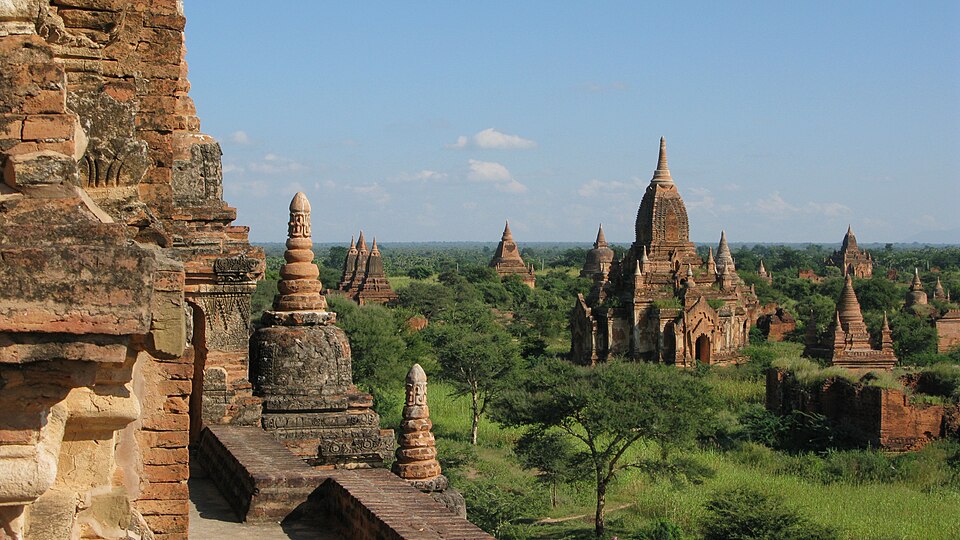
Myanmar offers an incredibly enriching and spiritually profound journey for Indian tourists, distinct from the more frequented Southeast Asian destinations. With its people renowned for their genuine warmth and gentle hospitality, you'll find a profound connection and a high Friendliness Index that makes every interaction memorable. While requiring mindful travel and adherence to current advisories given its evolving landscape, the country's iconic cultural and natural wonders in accessible regions promise serene and captivating experiences. Myanmar presents itself as an extraordinary off-the-beaten-path gem; its relatively low Popularity Score means you'll encounter fewer crowds, allowing for a more authentic and immersive exploration of ancient traditions, breathtaking landscapes, and an incredibly rich Buddhist heritage. It's a destination for those seeking soul-stirring discovery, where ancient pagodas pierce the skyline, and time seems to slow down, offering a truly unique perspective on Southeast Asia.

Performance Breakdown

UN and Multilateral Voting Alignment
70

Myanmar generally aligns with India on key issues such as treating Kashmir as an internal matter, supporting global counter-terrorism efforts, and advocating for UNSC reform. However, a notable divergence exists on the Ukraine conflict, where Myanmar's UN representative has consistently voted in favor of resolutions condemning Russia, differing from India's approach of abstention on similar resolutions.

Click for detailed analysis →
Sentiment Score
85

Recent developments, particularly the official visit of Myanmar President U Min Aung Hlaing to India from May 30 to June 3, 2026, indicate a largely positive sentiment in India-Myanmar relations, heavily driven by diplomatic and official rhetoric. This was President Hlaing's first foreign trip since assuming office, underscoring the significance Myanmar places on its ties with India. The joint statements emphasized a "long-standing friendship and close partnership" and commitment to deepening cooperation across various sectors including trade, rare earth minerals, security, and connectivity projects like the Kaladan Multi-Modal Transit Transport project and the India-Myanmar-Thailand trilateral highway. Crucially, Myanmar reiterated its assurance that its territory would not be used against India's security interests, a commitment highly valued by India. India's position, as conveyed by its Foreign Secretary, is that its engagement with Myanmar is not a commentary on the country's internal political arrangements and that solutions must be 'Myanmar-led and Myanmar-owned,' a stance that resonates positively with Myanmar's sovereignty. The visit also highlighted enduring spiritual and Buddhist ties, further solidifying the perception of India as a 'trusted friend.' The media narrative in Myanmar presents a mixed picture, with state-controlled outlets like PanOrient News and official government channels reflecting the positive diplomatic discourse, focusing on bilateral cooperation and strengthening ties. However, independent Myanmar media and certain political analysts express skepticism and criticism. Outlets like Mizzima and The Irrawaddy voiced concerns that India's warm reception of President Hlaing, an unelected leader, provides legitimacy to the military regime and could be seen as overlooking the ongoing civil conflict and human rights issues. These critical voices argue that despite official assurances, the military's control over key areas, particularly along the border, is tenuous, making large-scale projects and security pledges difficult to implement effectively. This independent media perspective reflects a segment of public discourse that is critical of the engagement but generally directed at India's foreign policy approach rather than expressing outright hostility towards India itself. Regarding public perception and tourism, there is a complex situation. While no direct recent news specifically details the perception of Indian tourists in Myanmar within the last 30 days, the general state of tourism in Myanmar is likely impacted by the ongoing internal instability. Information on the Indian diaspora in Myanmar indicates a historically significant community (estimated at 2.9 million in 2004), which faced disenfranchisement in the past. However, recent events show a nuanced perception along the border, particularly in states like Mizoram, where local communities share ethnic ties with those fleeing conflict in Myanmar, leading to cross-border solidarity despite central government directives. India's efforts to repatriate over 2,400 Indian nationals from cyber scam compounds in Myanmar also demonstrate ongoing engagement with the local authorities to protect its citizens, which contributes to a perception of India as a concerned partner. The absence of specific negative reports about Indian tourists in Myanmar during this period, coupled with the strong diplomatic overtures and historical ties, suggests that while public perception is not uniformly positive across all segments due to internal political dynamics, it is broadly stable and constructive in official and historical contexts.

Click for detailed analysis →
Bilateral Trade
66

[Commodity Supplier] The bilateral trade between India and Myanmar in 2025 reached $1973.09 Million, characterized by a significant trade deficit for India of $494.37 Million. Myanmar primarily functions as a key commodity supplier for India, particularly for agricultural goods, while also representing a market for various Indian manufactured and chemical products. In 2025, the bilateral trade relationship between India and Myanmar totaled $1973.09 Million. India's exports to Myanmar amounted to $739.36 Million, with key commodities including HUMAN HAIR, PRODUCTS THEREOF ($269.3M), AGRO CHEMICALS ($12.5M), INORGANIC CHEMICALS ($11.1M), COSMETICS AND TOILETRIES ($7.3M), and CONSUMER ELECTRONICS ($7.0M). Conversely, India's imports from Myanmar were substantially higher at $1233.73 Million, overwhelmingly dominated by agricultural products, notably PULSES ($994.9M). Other significant imports included MARINE PRODUCTS ($50.2M), OTHER CEREALS ($40.1M), and PLYWOOD AND ALLIED PRODUCTS ($28.4M). This trade pattern results in a considerable trade deficit for India of $494.37 Million (Exports minus Imports), indicating India imports significantly more value from Myanmar than it exports, largely due to demand for essential food commodities.

Click for detailed analysis →
Defence Ties
70

By 2026, India-Myanmar defence ties are expected to continue based on strategic imperatives, despite the internal political situation in Myanmar. Cooperation is driven by India's 'Neighbourhood First' and 'Act East' policies, focusing on border security, counter-insurgency efforts, maritime domain awareness, and countering extra-regional influence. India has continued its role as a strategic defense partner, evidenced by past transfers like the Kilo-class submarine (UMS Minye Theinkhathu, transferred 2020-21) and subsequent supplies of naval patrol vessels and other military equipment. While precise future deal values are not publicly disclosed, defense engagement is projected to sustain at an annual value estimated in the tens of millions of dollars, focusing on capacity building, training, and operational readiness. Furthermore, annual joint army exercises such as IMBAX (India-Myanmar Bilateral Army Exercise) are likely to continue, with an estimated 1-2 exercises per year, alongside regular naval coordination patrols and staff talks to enhance border management and maritime security.

Click for detailed analysis →
Indian Popularity
68

Myanmar holds significant potential for Indian tourists, especially within the Buddhist pilgrimage circuit, which resonates deeply with a large segment of Indian travelers. By 2026, assuming continued efforts towards tourism recovery and stabilization, projections indicate a positive trajectory for Indian visitor numbers. While specific 2026 data is still emerging, industry estimates suggest that **annual Indian visitors could reach approximately 80,000-110,000**, representing a **substantial year-on-year percentage growth** from the very low base observed in the preceding years. This growth is anticipated as direct flight connectivity potentially increases and as Myanmar actively promotes its cultural and spiritual heritage. Furthermore, online indicators such as Google search volume trends for 'Myanmar tourism from India' demonstrate a **gradual but consistent increase in interest**, placing it among the top emerging destinations for Indian travelers looking for unique cultural and spiritual experiences in Southeast Asia.

Click for detailed analysis →
Visa Ease
75

As of 2026, Indian citizens require a visa to enter Myanmar. Myanmar offers two primary options: an eVisa and a Visa on Arrival (VoA), both of which are paid. **eVisa:** This is the most common and recommended method for Indian citizens. It allows for online application, document submission, and digital payment, with approval typically sent via email. * **Cost:** A tourist eVisa costs approximately USD 50. * **Processing Time:** Standard processing usually takes 3-5 working days, though it can extend to 5-7 days during peak travel periods. * **Stay Duration:** It permits a single stay of up to 28 days within Myanmar. * **Validity:** The eVisa is valid for 90 days from the date of approval, meaning entry into Myanmar must occur within this period. * **Requirements:** Applicants need a passport valid for at least six months, a recent passport-sized photo, confirmed hotel bookings, and a return or onward flight ticket. **Visa on Arrival (VoA):** Myanmar also provides a special Visa on Arrival facility for Indian nationals traveling for tourism, specifically by air at designated international airports. * **Availability:** This trial facility has been extended and is valid from August 30, 2025, to August 29, 2026. * **Cost:** The VoA fee is USD 50, payable upon arrival at the airport. * **Stay Duration:** It allows for a maximum stay of 30 days. * **Application:** No advance application is strictly required, as the visa is issued at the border, but travelers should have all necessary documents and fees ready. Given the availability of a relatively efficient (3-5 day processing) paid eVisa and a paid Visa on Arrival option, the visa policy for Indian citizens falls into the 'Visa on Arrival (Paid) or standard eVisa' category, placing it within the 61-80 score range. The process is generally straightforward and does not indicate high rejection rates, warranting a score towards the higher end of this category. --- PREVIOUS ANALYSIS --- Visa on Arrival: Stay up to 30 days. Fee: USD 50.

Click for detailed analysis →
Safety Index
5

Myanmar is currently in a state of widespread civil conflict and severe political instability following the 2021 military coup. It is highly unlikely that this situation will significantly improve to ensure safety for tourists by 2026. Specific risks for any traveler, including Indian tourists, would involve exposure to active armed conflict, shelling, and airstrikes in numerous regions across the country. There is also a significant risk of arbitrary detention, kidnapping, and severe disruptions to essential services such as transportation, communication, and medical care. Most international governments, including India, advise against all travel to Myanmar due to these extreme dangers, as even historically popular tourist areas are not immune to the broader instability and potential for sudden violence.

Click for detailed analysis →

Bonus Considerations

Vegetarian Friendliness
75

Myanmar offers good availability of vegetarian and Indian-friendly cuisine, particularly in major cities and tourist hubs. Indian restaurants are well-established in places like Yangon and Mandalay, providing a range of North and South Indian dishes that cater directly to Indian dietary preferences. The predominant Buddhist culture in Myanmar means the concept of vegetarianism ('thet thet lo') is generally understood. Many local dishes, such as various salads (e.g., lahpet thoke - tea leaf salad, tomato salad) and vegetable curries, can often be prepared vegetarian, though it's always advisable to clarify 'no fish sauce or paste' (ngapi), which is a common ingredient. Hotels and guesthouses in tourist areas are usually accommodating with vegetarian options. While choices might be more limited in rural areas, overall, Indian tourists will find it relatively easy to maintain a vegetarian diet.

Click for detailed analysis →
Budget / Affordability
80

For Indian tourists planning a trip to Myanmar in 2026, the destination is projected to be an **Affordable / Nearby** option. The estimated average round-trip flight cost from major Indian cities (such as Kolkata, Delhi, or Mumbai) to Yangon is approximately **₹22,000**. This places it firmly within the ₹15,000-₹25,000 bracket designated for affordable flights, comparable to popular destinations like Thailand or Sri Lanka. Daily expenses, encompassing comfortable accommodation in budget hotels or guesthouses, local food (a mix of street food and mid-range restaurants), local and inter-city transport, and entrance fees for attractions, are estimated to average around **₹6,000 per person**. This daily budget allows for a good balance between experiencing the culture and managing costs effectively. While not falling into the 'Very Cheap' category like Nepal or Vietnam (which typically have flights under ₹15,000 and lower daily expenditures), Myanmar remains a significantly more economical travel destination than those in the 'Moderate' or 'Expensive' categories, offering good value for Indian travelers.

Click for detailed analysis →

Check Flights manually

Compare prices across top platforms to find the best deal.