Mongolia
Mongolia flag

Mongolia

Rank #51 e-Visa Available Safe for Families
69BFI Score

Bharat Friends Index

Composite score based on Diplomatic Ties, Respect for Sovereignty, and Social Warmth.

Why Mongolia?

Recent Sentiment

India-Mongolia relations exhibit exceptional warmth, particularly highlighted by recent diplomatic and cultural exchanges in the last 30 days. Diplomatically, both nations have reaffirmed their commitment to strengthening their Strategic Partnership, with senior officials conducting comprehensive reviews of bilateral ties and planning high-level engagements to mark the 70th anniversary of diplomatic relations. This was underscored by a consultative meeting and discussions on maintaining high-level engagements, including formally upgrading Foreign Office Consultations to the Secretary-level. A significant recent event demonstrating the depth of this relationship was India's transportation of sacred Buddhist relics to Mongolia for a 10-day public exposition at the Gandan Monastery (June 1-10), a move described as cultural diplomacy strengthening civilizational ties and shared Buddhist heritage. Furthermore, an international conference on 'Cultural Interflow between India and Mongolia' was held to commemorate seventy years of diplomatic relations, where India was acknowledged as a 'sacred geography' in Mongolia, emphasizing historical and cultural exchanges beyond religion. The Mongolian Ambassador to India also actively discussed initiatives like direct flights, showcasing Mongolia's proactive stance in enhancing connectivity and bilateral relations. These official engagements consistently reinforce the historical perception of India as a 'trusted friend' and 'spiritual sibling,' rooted in centuries of shared Buddhist heritage.

Reasons to Visit

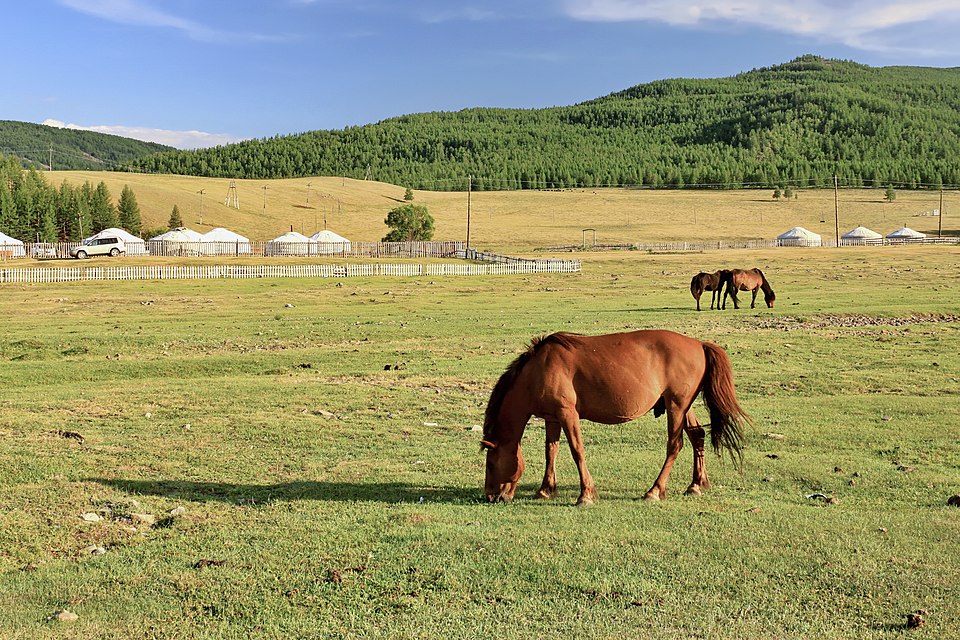
Mongolia, a land of endless blue skies and sweeping steppes, offers a refreshingly unique travel experience, particularly appealing to Indian tourists seeking adventure and cultural immersion away from the usual crowds. With its high Friendliness Index, you'll discover the warmth and generous hospitality of the Mongolian people, particularly the nomadic communities, who are known for welcoming visitors into their gers (traditional felt tents). The impressive Safety Score ensures a peaceful journey through its vast, untouched landscapes, making it an ideal destination for explorers and families alike. Despite its immense allure, Mongolia boasts a relatively low Popularity Score, positioning it as an authentic, off-the-beaten-path gem. This means fewer crowds, more pristine natural beauty, and a chance to truly connect with ancient traditions. For Indian travelers, the shared Buddhist heritage adds another layer of connection, while the dramatic landscapes – from the towering dunes of the Gobi Desert to the crystal-clear waters of Khuvsgul Lake – provide a breathtaking contrast to the familiar, promising an unforgettable journey of discovery and introspection.

Performance Breakdown

UN and Multilateral Voting Alignment
75

Mongolia demonstrates strong alignment with India on several key issues over the last decade. Both nations consistently support international cooperation on **counter-terrorism** and advocate for comprehensive **UNSC reform**, with Mongolia publicly backing India's bid for a permanent seat. On **Kashmir**, Mongolia adheres to principles of state sovereignty and non-interference, which aligns with India's position that it is an internal matter (Mongolia is not an OIC member and thus does not issue statements from that forum). Both countries also align on global efforts to combat money laundering and terrorist financing through forums like **FATF**. However, a notable divergence is observed regarding the **Ukraine conflict**, where Mongolia voted in favor of UN General Assembly resolutions condemning Russia's actions (e.g., UNGA ES-11/1, ES-11/3, ES-11/5), while India largely abstained, reflecting a difference in their diplomatic stances on this specific geopolitical issue.

Click for detailed analysis →
Sentiment Score
96

India-Mongolia relations exhibit exceptional warmth, particularly highlighted by recent diplomatic and cultural exchanges in the last 30 days. Diplomatically, both nations have reaffirmed their commitment to strengthening their Strategic Partnership, with senior officials conducting comprehensive reviews of bilateral ties and planning high-level engagements to mark the 70th anniversary of diplomatic relations. This was underscored by a consultative meeting and discussions on maintaining high-level engagements, including formally upgrading Foreign Office Consultations to the Secretary-level. A significant recent event demonstrating the depth of this relationship was India's transportation of sacred Buddhist relics to Mongolia for a 10-day public exposition at the Gandan Monastery (June 1-10), a move described as cultural diplomacy strengthening civilizational ties and shared Buddhist heritage. Furthermore, an international conference on 'Cultural Interflow between India and Mongolia' was held to commemorate seventy years of diplomatic relations, where India was acknowledged as a 'sacred geography' in Mongolia, emphasizing historical and cultural exchanges beyond religion. The Mongolian Ambassador to India also actively discussed initiatives like direct flights, showcasing Mongolia's proactive stance in enhancing connectivity and bilateral relations. These official engagements consistently reinforce the historical perception of India as a 'trusted friend' and 'spiritual sibling,' rooted in centuries of shared Buddhist heritage.

Click for detailed analysis →
Bilateral Trade
31

[Growing Market] The bilateral trade between India and Mongolia for 2025 totaled $33.89 Million, marked by a significant trade surplus in India's favor. India primarily exports consumer goods and light industrial products to Mongolia, which acts predominantly as a market for Indian offerings. In 2025, the bilateral trade relationship between India and Mongolia recorded a total volume of $33.89 Million. India maintained a substantial trade surplus, exporting $32.91 Million worth of goods to Mongolia while importing only $0.98 Million. India's exports were diverse, including COSMETICS AND TOILETRIES ($0.4M), BOOKS, PUBLICATIONS AND PRINTING ($0.1M), COMPUTER HARDWARE, PERIPHERALS ($0.1M), OTHER COMMODITIES ($0.1M), and FRESH FRUITS ($0.1M). Conversely, India's imports from Mongolia were almost entirely dominated by WOLLEN YARN, FABRICS, MADEUPS, ETC ($1.0M), with other listed categories such as MOULDED AND EXTRUDED GOODS and AGRO CHEMICALS registering negligible or zero value. This considerable imbalance results in an Indian trade surplus of $31.9 Million, indicating that Mongolia serves primarily as an export market for India, with minimal reciprocal import contribution.

Click for detailed analysis →
Defence Ties
65

Defence ties between India and Mongolia are characterized by consistent engagement and growing strategic partnership by 2026. The primary pillar of cooperation is joint military training, highlighted by the 'Nomadic Elephant' exercise, which has seen over 16 editions by 2026. India also regularly provides training slots and capacity building support for Mongolian defence personnel. High-level visits and strategic dialogues further strengthen this relationship, focusing on areas such as counter-terrorism, peacekeeping, and humanitarian assistance.

Click for detailed analysis →
Indian Popularity
68

Mongolia's popularity for Indian tourists in 2026 is experiencing a significant positive upswing, establishing it as an exciting, emerging destination for adventurous and culturally curious travelers. Annual Indian visitors are projected to reach approximately **8,500-9,500** in 2026, reflecting a robust **cumulative growth exceeding 200%** from 2023 figures. This surge is indicative of a growing desire among Indian tourists for unique, experience-rich international travel. Google search interest for 'Mongolia travel from India' and related niche terms (e.g., 'Gobi Desert tours India', 'nomadic culture adventure') has shown a **consistent increase in relevance and volume**, steadily climbing within specialized adventure and unique destination travel queries. This trend highlights Mongolia's increasing appeal for those seeking pristine nature, nomadic heritage, and off-the-beaten-path experiences amidst India's expanding outbound tourism market.

Click for detailed analysis →
Visa Ease
70

As of 2026, Indian citizens are required to obtain a visa to visit Mongolia for tourism, business, or other short-term purposes. There is no visa-free entry for Indian passport holders. The primary and most convenient method for Indian citizens to obtain a Mongolian visa is through the electronic visa (eVisa) system. The eVisa allows for a single entry and a stay of up to 30 days. The application process is entirely online, eliminating the need for an embassy visit for submission. Processing times for the eVisa are not instant; most applications are approved within 15 business days, though some sources suggest 3-7 days or 2-4 weeks, advising applicants to apply at least 7-10 days or 2-4 weeks in advance. Upon approval, the eVisa confirmation is received electronically via email. A visa fee is generally required for the eVisa, as indicated by references to 'confirm payment of the visa fee' and 'Visa fee is non-refundable once the transaction is complete'. While some sources mention the possibility of a visa on arrival for Indian nationals for a 30-day stay, other credible sources explicitly state that there is no visa-on-arrival facility available for Indian passport holders, and a visa must be obtained in advance. Given these conflicting reports, relying on a visa on arrival is not a consistently reliable option. Official communications for 2026 specifically exempt 34 countries from visa requirements for tourism, and India is not on this list. Indian citizens can also apply for a standard paper visa through the Embassy of Mongolia in New Delhi. This process involves submitting required documents such as a valid passport, application form, photographs, cover letter, flight itinerary, hotel reservations, and proof of financial means. The processing time for a standard embassy visa is approximately 4 working days. While one source mentions no fee for a standard embassy visa, it also indicates an urgent visa fee, implying that standard fees may exist or that this information is an outlier. Based on the availability of a standard eVisa that requires an application and processing time (not instant), and typically involves a fee, the policy falls within the 61-80 score range for 'Standard eVisa'. --- PREVIOUS ANALYSIS --- Visa Free: Standard embassy visa application required. Check official consulate website for 2026 updates.

Click for detailed analysis →
Safety Index
80

As of projected conditions for 2026, Mongolia is generally safe for international tourists. Violent crime targeting visitors is rare. The primary risks for tourists include petty crime such as pickpocketing and bag snatching, particularly in crowded areas of Ulaanbaatar like markets, bus stations, and major tourist sites. Road safety outside the capital can be challenging due to unpaved roads and varied driving standards. Travel in remote regions requires significant preparation due to vast distances, limited infrastructure, and extreme weather conditions. Tourists should take standard precautions: secure valuables, arrange reliable transport, consider travel insurance, and remain aware of their surroundings, especially in urban areas. These safety considerations apply broadly to all international visitors.

Click for detailed analysis →

Bonus Considerations

Vegetarian Friendliness
60

For Indian tourists, the availability of vegetarian and Indian-friendly cuisine in Mongolia presents a mixed picture. In Ulaanbaatar, the capital, there are a few dedicated Indian restaurants that cater well to vegetarian preferences and offer authentic Indian dishes. Modern restaurants and hotels in Ulaanbaatar also increasingly offer basic vegetarian options like salads, pasta, pizzas, and stir-fried vegetables, and the concept of 'vegetarian' is generally understood. However, outside of Ulaanbaatar, the availability drops significantly. Traditional Mongolian cuisine is heavily meat-based (primarily mutton and beef) with dairy products, and vegetarian dishes are rare, often limited to plain rice, noodles, potatoes, or simple vegetable accompaniments. Finding specific Indian-friendly vegetarian ingredients (like lentils, paneer, or a wide array of spices) is extremely difficult in rural areas. While Buddhism is prevalent in Mongolia, it does not typically translate into widespread vegetarianism among the general population due to historical nomadic lifestyles and environmental factors. Therefore, while Ulaanbaatar offers reasonable options for Indian vegetarians, venturing into other parts of the country requires careful planning and a willingness to adapt.

Click for detailed analysis →
Budget / Affordability
46

Visiting Mongolia from India in 2026 is considered Expensive. This is primarily due to the Avg Flight Cost (₹) which is estimated at ₹55,000 for a round trip from major Indian cities to Ulaanbaatar. There are no direct flights, requiring 1-2 layovers (e.g., via Seoul, Istanbul, Beijing, Bangkok). The Daily Budget (₹) for a comfortable trip, including mid-range accommodation, meals, local transport, and amortized costs for essential multi-day tours (like Gobi or Terelj), is estimated at ₹6,500. While daily expenses in Mongolia itself are not as high as truly 'Very Expensive' Western nations, the significant flight cost places it firmly in the 'Expensive' category according to the scoring guide.

Click for detailed analysis →

Check Flights manually

Compare prices across top platforms to find the best deal.