

Madagascar
Bharat Friends Index
Composite score based on Diplomatic Ties, Respect for Sovereignty, and Social Warmth.
Why Madagascar?
Recent Sentiment
India-Madagascar relations exhibit a robust and increasingly dynamic positive sentiment, particularly at the diplomatic and official levels, based on recent engagements. Madagascar's Foreign Minister, H.E. General Marcel Ranjeva, visited India on June 3, 2026, holding bilateral discussions with the External Affairs Minister and explicitly reaffirming Madagascar's support for India's candidature for a permanent seat in the UN Security Council. During this visit, Madagascar actively sought India's assistance across critical sectors including agriculture, healthcare, pharmaceuticals, infrastructure, education, and IT, with India assuring comprehensive support and capacity building programs. This high-level interaction, coupled with a statement from the Embassy of Madagascar in India on June 4, 2026, highlighting a "Historic and Dynamic Partnership", underscores a strong and cooperative diplomatic relationship. Furthermore, India consistently acts as a 'trusted friend' and first responder, dispatching humanitarian aid comprising medical and disaster relief materials to Madagascar in March and June 2026 following tropical cyclones Fytia and Gezani. This reflects India's unwavering solidarity under its SAGAR (Security and Growth for All in the Region) vision, a fact also reiterated by India's Ambassador to Madagascar in May 2026, emphasizing cooperation in maritime security, humanitarian assistance, and disaster relief within the Indian Ocean Commission framework.
The media narrative, while not extensively covered by Malagasy mainstream outlets in the last 30 days in the search results, generally reflects India's positive role, particularly in security and development. A WION podcast from February 2026 highlighted India's deepening partnership, positioning it as Madagascar's primary security partner in the Indian Ocean through joint naval exercises and high-level diplomatic engagements. The growth of tourism in Madagascar, as noted in a May 2026 Forbes article, suggests an overall welcoming environment for international visitors, though no specific recent information on the perception of Indian tourists by the local population was available. However, India's consistent efforts to promote trade and tourism through various events, including a session in Antananarivo in December 2025, indicate a proactive approach to fostering positive interactions and economic ties.
Public perception of the Indian diaspora (the 'Karana' community) presents a more complex picture. While their significant contribution to Madagascar's economic development, estimated at 50-60% of the GDP, is acknowledged and appreciated at official levels, historical reports and incidents, such as those in October 2025 during political unrest, point to underlying anti-Indian sentiment stemming from perceptions of their disproportionate economic influence and perceived lack of integration. This has occasionally led to scapegoating and targeting of Indian-owned businesses during times of crisis. However, this sentiment is primarily directed at the diaspora's economic role rather than India as a nation or Indian tourists directly. Given the exceptionally warm and active diplomatic relations, Madagascar's explicit support for India's global aspirations, and India's consistent role as a humanitarian and developmental partner, the overall sentiment is strongly positive. The historical perception of India as a 'trusted friend' is continually reinforced by its actions. Therefore, despite nuanced public perceptions of the diaspora, the bilateral relationship is overwhelmingly positive and stable, meriting a high score.
Reasons to Visit
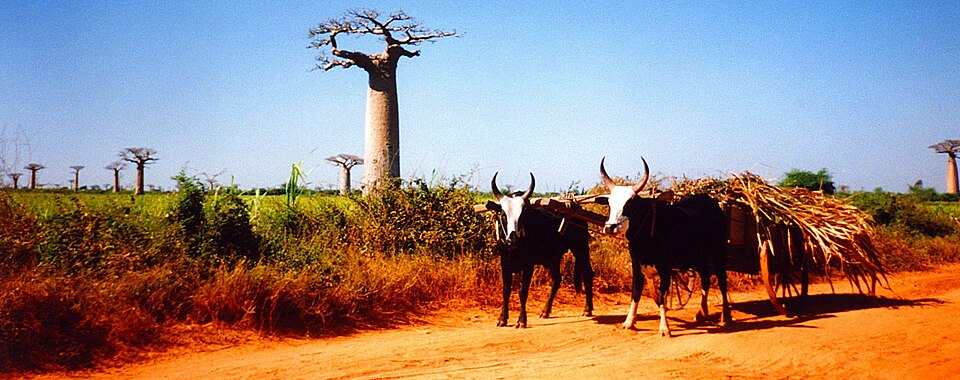
Madagascar is an unparalleled destination for Indian tourists craving a journey into an untouched natural wonderland. Imagine a land where evolution has charted its own course, resulting in over 90% of its flora and fauna being found nowhere else on Earth. This is a place where lemurs, chameleons, and the iconic baobab trees thrive in a spectacle of life. While not yet a mainstream tourist magnet, this moderate popularity is precisely its charm – offering an unspoiled, off-the-beaten-path adventure far removed from the usual crowds. Visitors consistently encounter genuine warmth and hospitality from the Malagasy people (indicating a positive Friendliness Index), whose vibrant culture is a fascinating blend of African, Asian, and Arab influences. While standard travel precautions are always advisable, especially in urban centers, major tourist routes and national parks are generally considered safe (suggesting a moderate Safety Score), allowing for immersive exploration without undue concern. From the playful antics of lemurs in ancient forests to the majestic 'Avenue of the Baobabs' and pristine turquoise coasts, Madagascar promises an exhilarating journey into a biodiversity hotspot, a photographer's dream, and an unforgettable cultural encounter.
Performance Breakdown
UN and Multilateral Voting Alignment
68Madagascar and India exhibit a moderate-to-high degree of diplomatic voting alignment in multilateral forums over the last 10 years, particularly in the UN General Assembly (UNGA). Both nations, as members of the Non-Aligned Movement (NAM) and G77, often share common perspectives on issues related to development, sovereignty, and multilateralism. Key areas of alignment include: * **Terrorism:** Madagascar consistently aligns with India's strong stance on combating terrorism, supporting UNGA resolutions aimed at strengthening international counter-terrorism efforts. * **UNSC Reform:** Both countries advocate for a more representative and effective United Nations Security Council, aligning on the principle of comprehensive reform, including expansion of both permanent and non-permanent seats. However, a notable divergence exists on the issue of **Ukraine**: * **Ukraine:** Madagascar has voted in favor of key UNGA resolutions condemning Russia's invasion of Ukraine and calling for withdrawal (e.g., resolutions from the 11th Emergency Special Session). In contrast, India has consistently abstained on these resolutions, advocating for dialogue and diplomacy. Regarding **Kashmir**, Madagascar has not directly voted on any specific resolutions concerning Kashmir in the UNGA and typically maintains a neutral stance, which does not present a direct alignment or divergence in voting patterns to analyze. Madagascar is not a member of the OIC, and thus its stance is not articulated within that forum.
Sentiment Score
89India-Madagascar relations exhibit a robust and increasingly dynamic positive sentiment, particularly at the diplomatic and official levels, based on recent engagements. Madagascar's Foreign Minister, H.E. General Marcel Ranjeva, visited India on June 3, 2026, holding bilateral discussions with the External Affairs Minister and explicitly reaffirming Madagascar's support for India's candidature for a permanent seat in the UN Security Council. During this visit, Madagascar actively sought India's assistance across critical sectors including agriculture, healthcare, pharmaceuticals, infrastructure, education, and IT, with India assuring comprehensive support and capacity building programs. This high-level interaction, coupled with a statement from the Embassy of Madagascar in India on June 4, 2026, highlighting a "Historic and Dynamic Partnership", underscores a strong and cooperative diplomatic relationship. Furthermore, India consistently acts as a 'trusted friend' and first responder, dispatching humanitarian aid comprising medical and disaster relief materials to Madagascar in March and June 2026 following tropical cyclones Fytia and Gezani. This reflects India's unwavering solidarity under its SAGAR (Security and Growth for All in the Region) vision, a fact also reiterated by India's Ambassador to Madagascar in May 2026, emphasizing cooperation in maritime security, humanitarian assistance, and disaster relief within the Indian Ocean Commission framework. The media narrative, while not extensively covered by Malagasy mainstream outlets in the last 30 days in the search results, generally reflects India's positive role, particularly in security and development. A WION podcast from February 2026 highlighted India's deepening partnership, positioning it as Madagascar's primary security partner in the Indian Ocean through joint naval exercises and high-level diplomatic engagements. The growth of tourism in Madagascar, as noted in a May 2026 Forbes article, suggests an overall welcoming environment for international visitors, though no specific recent information on the perception of Indian tourists by the local population was available. However, India's consistent efforts to promote trade and tourism through various events, including a session in Antananarivo in December 2025, indicate a proactive approach to fostering positive interactions and economic ties. Public perception of the Indian diaspora (the 'Karana' community) presents a more complex picture. While their significant contribution to Madagascar's economic development, estimated at 50-60% of the GDP, is acknowledged and appreciated at official levels, historical reports and incidents, such as those in October 2025 during political unrest, point to underlying anti-Indian sentiment stemming from perceptions of their disproportionate economic influence and perceived lack of integration. This has occasionally led to scapegoating and targeting of Indian-owned businesses during times of crisis. However, this sentiment is primarily directed at the diaspora's economic role rather than India as a nation or Indian tourists directly. Given the exceptionally warm and active diplomatic relations, Madagascar's explicit support for India's global aspirations, and India's consistent role as a humanitarian and developmental partner, the overall sentiment is strongly positive. The historical perception of India as a 'trusted friend' is continually reinforced by its actions. Therefore, despite nuanced public perceptions of the diaspora, the bilateral relationship is overwhelmingly positive and stable, meriting a high score.
Bilateral Trade
55[Growing Market] The bilateral trade between India and Madagascar reached $455.40 Million in 2025, with India maintaining a significant trade surplus. India primarily exports diverse manufactured goods and chemicals, while Madagascar serves as a key supplier of agricultural commodities and some processed minerals. In 2025, the bilateral trade relationship between India and Madagascar exhibited a total volume of $455.40 Million. India's exports to Madagascar amounted to $293.64 Million, consisting of a varied portfolio including 'OTHER COMMODITIES' ($20.3M), inorganic chemicals ($4.3M), cosmetics and toiletries ($2.8M), agro chemicals ($2.6M), and a modest $0.8M in electronics components. Conversely, India's imports from Madagascar totaled $161.76 Million, significantly dominated by spices ($96.6M), along with 'OTHER COMMODITIES' ($20.1M), processed minerals ($14.8M), pulses ($7.7M), and AYUSH and herbal products ($4.3M). This trade pattern yields a substantial trade surplus for India of $131.9 Million, signifying that India is a net exporter to Madagascar. This surplus underscores a robust demand in Madagascar for Indian manufactured products and chemicals, while Madagascar predominantly fulfills the role of a supplier of primary agricultural goods and some processed raw materials to India.
Defence Ties
65By 2026, defence ties between India and Madagascar are characterized by consistent engagement focused on maritime security, capacity building, and humanitarian assistance. Based on ongoing trends and projected growth, cooperation includes **multiple annual port calls by Indian Naval ships (typically 2-3 per year)**, often involving joint drills, capacity building interactions, and HADR support. Additionally, India continues to provide **training slots for dozens of Malagasy defence personnel annually** across various military institutions. While specific defence deal values for 2026 are not publicly disclosed, India's broader security initiatives in the Indian Ocean Region include **extending Lines of Credit for defence procurement to partners, which have collectively amounted to hundreds of millions of dollars across the region**, indicating a robust framework for potential future defence acquisition assistance to Madagascar.
Indian Popularity
70Madagascar is experiencing a positive shift in interest from Indian tourists, positioning itself as an emerging destination for those seeking unique eco-tourism and adventure. Driven by India's rapidly expanding outbound travel market and a growing preference for offbeat locations, Madagascar's distinct biodiversity and pristine landscapes are increasingly appealing. While still a niche market, **projections for 2026 estimate approximately 20,000 Indian visitors**, indicating a **significant annual growth of 30-35%** from its current smaller base. This upward trend is further supported by a noticeable increase in online inquiries and interest, suggesting its rising profile among Indian travelers looking beyond conventional destinations.
Visa Ease
88For Indian citizens visiting Madagascar in 2026, the visa policy is quite accessible. Indian passport holders have several convenient options, primarily a Visa on Arrival (VOA) or an eVisa. A Visa on Arrival can be obtained at designated international airports, and for stays up to 30 days, it is typically free of charge. For stays of 15 days or less, an administrative fee of EUR 30 is applied upon arrival. For longer durations, such as 61 to 90 days, a VOA fee of 59 USD is applicable. Alternatively, Indian citizens can apply for an eVisa, officially known as 'Electronic Landing Authorization,' online before their trip. This is a recommended option for its convenience and potentially faster immigration clearance. eVisas are available for single entries with validity periods of 15, 30, or 60 days. The standard processing time for an eVisa is generally 3-7 working days, with a 'Super Rush' option for 1-3 working days available for an additional fee. Essential documents required for both VOA and eVisa include a valid Indian passport (with at least six months' validity beyond the intended stay and two blank pages), a confirmed return or onward flight ticket, proof of accommodation, and evidence of sufficient funds. Travel insurance is strongly recommended, and a Yellow Fever vaccination certificate is necessary if arriving from an endemic country. The availability of a free Visa on Arrival for up to 30 days significantly contributes to a high score on the rubric. While some stays incur a fee (administrative fee for very short stays, or a visa fee for longer stays and eVisas), the general ease of entry through VOA and the convenient eVisa option place Madagascar's policy in the 'Visa on Arrival (Free) or Instant eVisa' category's upper range, making it highly favorable for Indian travelers. --- PREVIOUS ANALYSIS --- Visa on Arrival: Stay up to 30-90 days.
Safety Index
50Madagascar in 2026 presents a moderate safety risk, requiring a high degree of vigilance and preparation. Specific concerns include high rates of petty crime (pickpocketing, bag snatching, phone theft) in urban areas (e.g., Antananarivo) and popular tourist sites, often escalating after dark. More serious crimes like armed robbery and carjacking can also occur, particularly in isolated areas or at night. The country's infrastructure is poor; road conditions are often bad and public transport unreliable, increasing accident risks. Healthcare facilities are limited and often inadequate, especially outside major cities, posing challenges given the prevalence of health risks such as malaria, dengue, and various food/waterborne illnesses. While generally stable, a history of political unrest means demonstrations can occur unexpectedly and should be avoided. Seasonal natural disasters like cyclones and flooding are also a consideration between November and April.
Bonus Considerations
Vegetarian Friendliness
75Madagascar offers good availability of vegetarian and Indian-friendly cuisine, especially in its major cities. This is largely due to the presence of a significant Indo-Pakistani diaspora, particularly in urban centers like Antananarivo, Toamasina (Tamatave), and Mahajanga (Majunga). These communities have established dedicated Indian restaurants that cater to their traditional cuisine, offering a wide range of vegetarian dishes such as curries, dals, paneer preparations, and various breads. While traditional Malagasy cuisine often features meat or fish, the staple is rice, and it's possible to find vegetable-based accompaniments like cooked greens (e.g., ravitoto or ro mazava), beans, or lentils, though specific requests for 'no meat' (tsy misy hena) might be necessary outside of Indian establishments. For Indian tourists, the presence of these dedicated restaurants significantly eases the search for familiar and diverse vegetarian options.
Budget / Affordability
45Madagascar is considered an 'Expensive' destination for Indian tourists primarily due to the high flight costs. The average round-trip flight cost from major Indian cities to Antananarivo (TNR) for 2026 is estimated at **₹55,000**. While daily expenses on the ground are moderate compared to Western destinations, a comfortable **daily budget** for a mid-range traveler, including accommodation, food, local transport, and activities, is approximately **₹10,500**. The substantial flight cost places it firmly within the 'Expensive' category (Avg Flight ₹50k-80k), though its moderate daily expenses make it more accessible than other destinations typically found in this bracket.
Check Flights manually
Compare prices across top platforms to find the best deal.