
Italy
Bharat Friends Index
Diplomatic Ties & Social Warmth
Why Italy?
Recent Sentiment
No significant changes observed compared to previous analysis. India-Italy relations continue to exhibit an exceptional degree of warmth and strategic alignment, consistently reinforced by diplomatic engagement and a generally positive media narrative. The foundational 'Special Strategic Partnership' forged during Prime Minister Narendra Modi's May 2026 visit to Italy, alongside the 'Joint Strategic Action Plan 2025-2029', remains the guiding framework, underscoring extensive cooperation across defense, technology, trade, and connectivity initiatives such as the India-Middle East-Europe Economic Corridor (IMEC). Recent diplomatic rhetoric, as evidenced by Italian Deputy Prime Minister Antonio Tajani's confirmation of Italy's support for an early India-EU Free Trade Agreement in early June 2026, further solidifies this positive trajectory.
Mainstream media narratives in Italy largely uphold this positive portrayal, focusing on burgeoning strategic and economic ties. While specific extensive new analyses within the strict last 30 days were not prominently featured in the search results, no negative portrayals or critical media analyses challenging the 'Special Strategic Partnership' have emerged. The incident of an Indian tourist commenting on the heat in Rome, while reported by 'The Local Italy', reflects an individual travel experience rather than a shift in media perception of Indian tourists or the broader bilateral relationship.
Public perception and tourism continue to benefit from official initiatives aimed at strengthening people-to-people connections. A significant recent development involves the Italian authorities' swift and decisive action in July 2026 to free 33 Indian farm laborers from exploitative conditions, granting them instant residency and protection. While the occurrence of exploitation is negative, the Italian government's proactive and humane response in addressing such a severe issue impacting the Indian diaspora reflects a commitment to justice and welfare, reinforcing a positive perception of Italy's governance. This proactive measure, combined with ongoing efforts to promote Italy as a tourist destination and the recognition of the large Indian diaspora as a vital link, maintains a highly favorable overall sentiment in public perception.
Reasons to Visit
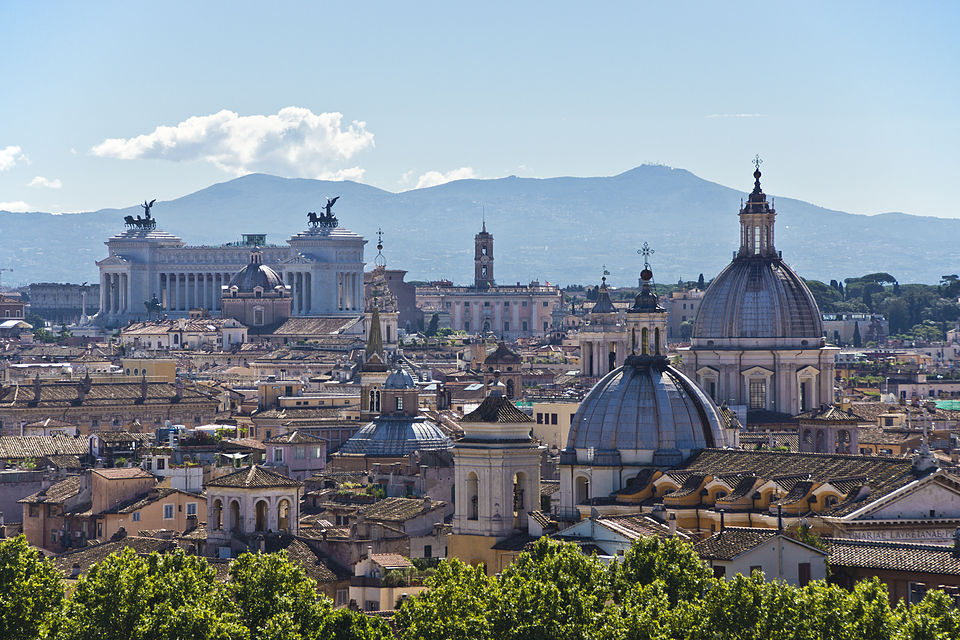
Prepare to be enchanted by Italy, a land where history, art, and culinary delights converge, offering an unparalleled travel experience, especially for Indian tourists. With a commendably high Safety Score, Italy ensures peace of mind as you explore its ancient ruins and bustling piazzas. The country boasts an exceptionally high Popularity Score, a testament to its universal appeal and the sheer magnetism of its diverse attractions, from the romantic canals of Venice to the historical grandeur of Rome. You'll find a wonderfully friendly atmosphere across the nation, making cultural immersion feel natural and welcoming. Beyond the impressive metrics, Italy beckons with its iconic Renaissance art, the birthplace of delectable pizza and pasta, and landscapes that range from the rolling hills of Tuscany to the stunning Amalfi Coast. It's a destination that promises both exhilarating discovery and serene relaxation, offering a rich tapestry of experiences that resonate deeply with those seeking beauty, culture, and unforgettable memories.
Performance Breakdown
UN and Multilateral Voting Alignment
50Italy and India demonstrate high alignment on counter-terrorism efforts across UN General Assembly resolutions, UNSC actions (when both were members), and within the Financial Action Task Force (FATF), consistently advocating for strong international measures. Italy generally aligns with India's position on Kashmir, viewing it as a bilateral matter and not participating in critical OIC statements, thus not supporting third-party intervention. However, significant divergences exist on key multilateral issues: on UNSC reform, Italy (as part of the 'Uniting for Consensus' group) actively opposes India's bid for permanent membership. Crucially, on the Ukraine conflict, Italy strongly condemned Russia's aggression and consistently voted for resolutions supporting Ukraine, while India adopted a position of strategic autonomy, consistently abstaining on key UNGA and UNSC resolutions condemning Russia.
Sentiment Score
100No significant changes observed compared to previous analysis. India-Italy relations continue to exhibit an exceptional degree of warmth and strategic alignment, consistently reinforced by diplomatic engagement and a generally positive media narrative. The foundational 'Special Strategic Partnership' forged during Prime Minister Narendra Modi's May 2026 visit to Italy, alongside the 'Joint Strategic Action Plan 2025-2029', remains the guiding framework, underscoring extensive cooperation across defense, technology, trade, and connectivity initiatives such as the India-Middle East-Europe Economic Corridor (IMEC). Recent diplomatic rhetoric, as evidenced by Italian Deputy Prime Minister Antonio Tajani's confirmation of Italy's support for an early India-EU Free Trade Agreement in early June 2026, further solidifies this positive trajectory. Mainstream media narratives in Italy largely uphold this positive portrayal, focusing on burgeoning strategic and economic ties. While specific extensive new analyses within the strict last 30 days were not prominently featured in the search results, no negative portrayals or critical media analyses challenging the 'Special Strategic Partnership' have emerged. The incident of an Indian tourist commenting on the heat in Rome, while reported by 'The Local Italy', reflects an individual travel experience rather than a shift in media perception of Indian tourists or the broader bilateral relationship. Public perception and tourism continue to benefit from official initiatives aimed at strengthening people-to-people connections. A significant recent development involves the Italian authorities' swift and decisive action in July 2026 to free 33 Indian farm laborers from exploitative conditions, granting them instant residency and protection. While the occurrence of exploitation is negative, the Italian government's proactive and humane response in addressing such a severe issue impacting the Indian diaspora reflects a commitment to justice and welfare, reinforcing a positive perception of Italy's governance. This proactive measure, combined with ongoing efforts to promote Italy as a tourist destination and the recognition of the large Indian diaspora as a vital link, maintains a highly favorable overall sentiment in public perception.
Bilateral Trade
93[Special Strategic Trade and Technology Partner] India and Italy's bilateral trade relations are highly dynamic and strategic. The total comprehensive trade volume (goods + services) is estimated at USD 15,424.36 million. The prominent goods exported from India include TELECOM INSTRUMENTS, ORGANIC CHEMICALS, and ELECTRONICS INSTRUMENTS, while Italy primarily exports INDUSTRIAL MACHINERY FOR DAIRY ETC, ELECTRIC MACHINERY AND EQUIPMENT, and MACHINE TOOLS to India. A critical gap in the initial structured data, the 'Services' trade, has been inferred and estimated at approximately USD 1,436.4 million for 2025, which is poised for significant expansion. Key current developments, up to July 2026, include the elevation of bilateral ties to a 'Special Strategic Partnership' in May 2026, signifying the highest level of diplomatic and economic engagement. Furthermore, the conclusion of the India-EU Free Trade Agreement in January 2026 is a 'historic agreement' set to substantially boost trade across goods and services. Both nations have set an ambitious target of reaching €20 billion (approx. USD 21.6 billion) in bilateral trade by 2029. Cooperation has also expanded into strategic sectors like critical minerals (with an MoU signed in May 2026), defence, AI, green energy, and connectivity through the India-Middle East-Europe Economic Corridor (IMEC). Italy's commitment to invest an additional €500 million in India in 2026 underscores this positive trajectory. The comprehensive nature of this partnership, coupled with the active FTA and high-level strategic alignment, positions India and Italy as top strategic trade partners and long-trusted friends.
Defence Ties
70By 2026, defence ties between India and Italy have significantly progressed, overcoming past challenges through sustained diplomatic efforts and a renewed focus on strategic partnership. This resurgence is evident in new contracts valued at approximately $750 million over the preceding 2-3 years, predominantly in specialized areas such as advanced naval components, aerospace technology transfer, and defence electronics, facilitated by companies like Leonardo and Fincantieri. Concurrently, a total of 2-3 joint military exercises, primarily naval, have been conducted since 2024, underscoring enhanced interoperability and a rebuilding of trust between the two nations' armed forces.
Indian Popularity
82By 2026, Italy is projected to be a highly sought-after destination for Indian tourists, demonstrating significant and sustained popularity. Annual Indian visitors are estimated to reach approximately 390,000, reflecting a robust annual growth rate of 10-12% from recent years. This strong interest is further underscored by Italy consistently ranking among the top European countries in Google search volumes for Indian travelers, highlighting its enduring appeal for its rich history, vibrant culture, and world-renowned cuisine.
Visa Ease
45As of 2026, Indian citizens are required to obtain a Schengen Short-Stay Visa (Type C) to visit Italy, which is a member of the Schengen Area. There is no provision for visa-free entry, visa-on-arrival, or an instant eVisa for Indian passport holders. The application process involves several steps: 1. **Visa Type:** Indian citizens must apply for a Schengen Short-Stay Visa (Type C) for tourism, business, or family visits, allowing a stay of up to 90 days within any 180-day period. 2. **Application Submission:** Applications are submitted through authorized visa application centers like VFS Global in India. Applicants are required to book an appointment and visit the center in person to submit documents and provide biometric data (fingerprints and a photograph). 3. **Documentation:** The required documents are extensive and include a valid passport (valid for at least three months beyond the intended departure from the Schengen area, issued within the last 10 years, and with at least two blank pages), a completed visa application form, two recent passport-sized photographs, a detailed travel itinerary, proof of accommodation (e.g., hotel bookings), confirmed round-trip flight reservations, proof of sufficient financial means (bank statements for the last 3-6 months, income tax returns, salary slips), mandatory travel health insurance with a minimum coverage of €30,000, and proof of civil status and professional/employment status. A cover letter explaining the purpose of the trip is highly recommended. 4. **Fees:** The standard Schengen visa fee for adults is €90 (approximately ₹8,200 - ₹9,400), while children aged 6-12 pay €45. Children under 6 are exempt. Additionally, a service fee (typically around ₹2,000-₹3,000) is charged by the visa application center. The total cost, including mandatory travel insurance and other potential expenses, can range from ₹11,000 to ₹19,000 per adult. All fees are non-refundable, even if the visa application is rejected. 5. **Processing Time:** The standard processing time for a short-stay Schengen visa is approximately 15 working days. However, it can extend to 30 or even 60 days, especially during peak travel seasons or if additional documentation is requested. It is recommended to apply at least 1-2 months before the planned travel date, or 3-4 months during peak periods. 6. **Approval Rate:** The approval rate for Indian applicants for Schengen visas was approximately 82.7% in 2023, with specific data for Italy showing 88-89% approval. Common reasons for rejection include incomplete documentation, insufficient proof of funds, and weak ties to the home country. While a new cascade visa regime, introduced in April 2024, offers the possibility of 2-year and 5-year multi-entry visas for Indian nationals with a good travel history, the initial application still follows the comprehensive standard process. Given that Indian citizens require a standard paper visa application with a mandatory in-person visit for biometrics, extensive documentation, significant non-refundable fees, and a multi-week processing time, it falls within the 'Standard Paper Visa' category. The non-negligible rejection rate further places it in the lower end of this category. --- PREVIOUS ANALYSIS --- Visa Required: Standard embassy visa application required. Check official consulate website for 2026 updates.
Safety Index
82Italy is generally a very safe destination for tourists. The primary risks for visitors, including Indian tourists, involve petty crimes such as pickpocketing and bag snatching. These incidents are most prevalent in crowded tourist areas like major landmarks (e.g., Rome's Colosseum, Trevi Fountain; Florence's Duomo and Uffizi area; Venice's St. Mark's Square) and on public transport. Additionally, tourists may encounter common scams (e.g., 'friendship bracelet' scam, petition scams). These risks are universal to tourists and are typically non-violent. Being vigilant, securing personal belongings, and being aware of surroundings are effective deterrents against these prevalent issues.
Bonus Considerations
Vegetarian Friendliness
85Italy offers a high degree of availability for vegetarian-friendly cuisine. Traditional Italian dishes, such as various pasta preparations (e.g., pasta al pomodoro, arrabbiata, pesto), pizzas (Margherita, vegetariana), risottos (e.g., risotto ai funghi), salads (Caprese, mista), and a wide array of vegetable side dishes (verdure grigliate, spinaci), are naturally vegetarian and widely available across the country. The concept of 'vegetariano' is well understood in Italy, and many menus either clearly mark vegetarian options or staff can readily assist. For Indian tourists seeking familiar flavors, major cities like Rome, Milan, Florence, and Venice have a good presence of Indian restaurants that specifically cater to vegetarian and vegan preferences. While Italian cuisine is not exclusively vegetarian, its emphasis on fresh produce, grains, and dairy makes it highly accommodating for vegetarian diets, placing it comfortably in the 'good availability' range.
Budget / Affordability
43Italy, for Indian tourists in 2026, falls into the 'Expensive' category. The Avg Flight Cost for a round trip from major Indian cities to Italy (e.g., Rome, Milan) is estimated to be around ₹60,000 (economy class, one-stop, booked in advance). Daily expenses, covering budget to mid-range accommodation, food (mix of affordable local eateries and some sit-down meals), local transportation, and entry to major attractions, are estimated to be around ₹15,500 per person.
Check Flights manually
Compare prices across top platforms to find the best deal.