
Hungary
Bharat Friends Index
Composite score based on Diplomatic Ties, Respect for Sovereignty, and Social Warmth.
Why Hungary?
Recent Sentiment
India-Hungary relations, across diplomatic, media, and public dimensions, reflect a sentiment of exceptional warmth, underpinned by a deep historical friendship and active contemporary engagement. Diplomatic rhetoric remains highly positive, exemplified by Prime Minister Narendra Modi's swift congratulations to Hungary's newly elected Prime Minister, Péter Magyar, in April 2026. This underscores a mutual commitment to strengthening bilateral cooperation and leveraging opportunities within the broader India-EU strategic partnership. Historically, Hungary deeply appreciates India's intervention during the 1956 uprising, which saved the life of Dr. Árpád Göncz, later a President of Hungary, solidifying India's perception as a 'trusted friend'. Furthermore, the previous Hungarian government's stance in 2019, supporting India on issues like Kashmir and the Citizenship Amendment Act, significantly contributes to a positive sentiment, aligning with the critical rule concerning 'India's internal matter.' High-level interactions continue, with the 11th round of Foreign Office Consultations in February 2026 reviewing extensive cooperation in areas such as trade, investment, green energy, and cultural ties.
The Hungarian media landscape has undergone a notable transformation in the last 30 days, following the recent elections, with the new government pledging to suspend state media broadcasts and ensure press freedom. While specific mainstream media coverage directly on India or Indian tourists within this immediate period is not prominent, the overall official narrative surrounding bilateral relations remains constructive. This shift towards a more independent media environment is likely to foster more diverse and potentially nuanced reporting in the future, without any indication of a negative leaning towards India. The absence of critical or negative media narratives within the recent past, combined with consistent positive diplomatic reporting, suggests a favorable, or at least neutral and evolving, media environment.
Public perception and the experience of Indian tourists in Hungary are also markedly positive. 'Visit Hungary,' the national tourism authority, is actively promoting Hungary as an attractive year-round destination for Indian travelers, noting a significant 14% increase in Indian visitors between January and July 2024 and actively working to extend their length of stay beyond short stopovers. Hungary is enthusiastically positioned as a budget-friendly European destination for Indians, highlighting affordable accommodation, food, and attractions. While specific recent public discourse is limited, the ongoing efforts to attract and accommodate Indian tourists, coupled with historical data suggesting a generally positive perception of Indian professionals in Hungary, indicate a welcoming local environment. Cultural exchange programs, such as student exchanges and widespread celebrations of International Day of Yoga, further strengthen these people-to-people ties, reinforcing the deep cultural affinity that complements the robust diplomatic and economic relationship.
Reasons to Visit
Hungary beckons Indian travelers with an alluring blend of historic grandeur, vibrant culture, and remarkable value. Boasting a high Safety Score, you can explore its treasures with peace of mind, from bustling city streets to serene natural landscapes. While the Friendliness Index suggests a polite and somewhat reserved populace, visitors often find Hungarians warm and welcoming upon interaction, especially those who appreciate delving deeper into local customs. With a growing Popularity Score, particularly for its capital Budapest, Hungary offers a perfect balance: iconic sights that captivate global audiences alongside hidden gems waiting to be discovered, making it an ideal destination for those seeking both renowned experiences and unique, less crowded adventures. Its rich history, thermal spa culture, and delectable cuisine promise an unforgettable journey, all while being generally more budget-friendly than many Western European counterparts.
Performance Breakdown
UN and Multilateral Voting Alignment
65Hungary generally aligns with India on issues of combating terrorism and upholding international financial standards within forums like the FATF. Both nations also support the principle of UNSC reform. However, a notable divergence in voting alignment is observed on the Ukraine conflict, particularly in UN General Assembly resolutions over the past decade. While Hungary, as an EU member, has consistently voted in favor of resolutions condemning Russia's actions, India has frequently abstained, reflecting differing geopolitical approaches and foreign policy priorities. On Kashmir, Hungary's stance aligns with the broader EU position, which generally calls for dialogue without directly challenging India's sovereignty.
Sentiment Score
100India-Hungary relations, across diplomatic, media, and public dimensions, reflect a sentiment of exceptional warmth, underpinned by a deep historical friendship and active contemporary engagement. Diplomatic rhetoric remains highly positive, exemplified by Prime Minister Narendra Modi's swift congratulations to Hungary's newly elected Prime Minister, Péter Magyar, in April 2026. This underscores a mutual commitment to strengthening bilateral cooperation and leveraging opportunities within the broader India-EU strategic partnership. Historically, Hungary deeply appreciates India's intervention during the 1956 uprising, which saved the life of Dr. Árpád Göncz, later a President of Hungary, solidifying India's perception as a 'trusted friend'. Furthermore, the previous Hungarian government's stance in 2019, supporting India on issues like Kashmir and the Citizenship Amendment Act, significantly contributes to a positive sentiment, aligning with the critical rule concerning 'India's internal matter.' High-level interactions continue, with the 11th round of Foreign Office Consultations in February 2026 reviewing extensive cooperation in areas such as trade, investment, green energy, and cultural ties. The Hungarian media landscape has undergone a notable transformation in the last 30 days, following the recent elections, with the new government pledging to suspend state media broadcasts and ensure press freedom. While specific mainstream media coverage directly on India or Indian tourists within this immediate period is not prominent, the overall official narrative surrounding bilateral relations remains constructive. This shift towards a more independent media environment is likely to foster more diverse and potentially nuanced reporting in the future, without any indication of a negative leaning towards India. The absence of critical or negative media narratives within the recent past, combined with consistent positive diplomatic reporting, suggests a favorable, or at least neutral and evolving, media environment. Public perception and the experience of Indian tourists in Hungary are also markedly positive. 'Visit Hungary,' the national tourism authority, is actively promoting Hungary as an attractive year-round destination for Indian travelers, noting a significant 14% increase in Indian visitors between January and July 2024 and actively working to extend their length of stay beyond short stopovers. Hungary is enthusiastically positioned as a budget-friendly European destination for Indians, highlighting affordable accommodation, food, and attractions. While specific recent public discourse is limited, the ongoing efforts to attract and accommodate Indian tourists, coupled with historical data suggesting a generally positive perception of Indian professionals in Hungary, indicate a welcoming local environment. Cultural exchange programs, such as student exchanges and widespread celebrations of International Day of Yoga, further strengthen these people-to-people ties, reinforcing the deep cultural affinity that complements the robust diplomatic and economic relationship.
Bilateral Trade
69[High-Tech Hub] The bilateral trade between India and Hungary for 2025 reached $1729.00 Million, characterized by a significant trade deficit for India of $629.60 Million. The relationship primarily involves India importing high-value manufactured goods, especially in electronics and machinery, while exporting various tech components and chemicals. In 2025, India's total bilateral trade with Hungary was $1729.00 Million. India's exports to Hungary amounted to $549.70 Million, with key commodities including ELECTRONICS INSTRUMENTS ($47.3M), TELECOM INSTRUMENTS ($41.5M), ELECTRONICS COMPONENTS ($15.3M), and ORGANIC CHEMICALS ($11.0M). Conversely, India's imports from Hungary were considerably higher at $1179.30 Million, dominated by COMPUTER HARDWARE, PERIPHERALS ($747.2M), followed by ELECTRONICS INSTRUMENTS ($45.6M), RAILWAY TRANSPORT EQUIPMENTS, PARTS ($36.5M), and ELECTRIC MACHINERY AND EQUIPMENT ($36.0M). This substantial imbalance results in a trade deficit of $629.60 Million for India, meaning India imports significantly more value from Hungary than it exports, implying a net outflow of funds from India via trade for goods and services. The commodity composition clearly highlights Hungary's role as a key supplier of advanced technological products and industrial machinery to India.
Defence Ties
2Defense ties between India and Hungary are currently negligible and are not projected to significantly change by 2026 without any current foundation. There have been no reported significant defense deals (value $0) or joint military exercises (number 0) between the two nations in recent years. Both countries primarily engage in defense cooperation with other strategic partners, with no discernible active defense procurement or export relationship between them.
Indian Popularity
75By 2026, Hungary is firmly establishing itself as a preferred emerging destination for Indian tourists. Annual Indian visitors are estimated to reach approximately 85,000, reflecting a robust growth rate projected to exceed 18% year-on-year from 2023 levels. This increasing interest is driven by Budapest's captivating blend of historical grandeur, world-famous thermal baths, and vibrant cultural scene, which offers Indian travelers a distinct and enriching European experience. Furthermore, online search analytics indicate a consistent upward trend in Google search volume for 'Hungary from India,' demonstrating its growing recognition and climbing rank among the top sought-after Central European destinations for the Indian outbound market.
Visa Ease
50As of 2026, Indian citizens are required to obtain a Schengen visa (Type C) to visit Hungary; there is no visa-free or visa-on-arrival option available. The application process necessitates a standard paper visa, involving a visit to a VFS Global application center in India for document submission and biometric data capture (fingerprints and facial image). The visa application incurs a mandatory fee of €90 for adults (approximately ₹8,200 to ₹9,100, depending on the consular exchange rate), in addition to VFS Global service charges, which typically range from ₹1,933 to ₹3,111. The total cost, including mandatory travel medical insurance (€30,000 coverage), can range from approximately ₹10,000 to ₹16,000 per applicant. These fees are non-refundable regardless of the application outcome. The standard processing time for a Schengen visa is typically 15 working days. However, processing can extend to 30 days, and in complex cases, up to 60 calendar days. It is strongly recommended that Indian citizens apply at least 30 to 45 days, and preferably 6 to 8 weeks during peak travel seasons, before their intended travel date to account for potential delays. While general Schengen visa rejection rates for Indian applicants are typically below 10%, indicating that it is not an inherently 'strict' visa policy, meticulous documentation is crucial to avoid delays or rejection. Furthermore, a 'cascade regime' implemented in April 2024 allows frequent travelers with a positive visa history to apply for 2-year and subsequently 5-year multiple-entry Schengen visas, offering greater travel flexibility. Given the requirement for a pre-obtained, paid, standard paper visa that necessitates an in-person application at a VFS Global center and typically involves multi-week processing, the policy falls squarely within the 'Standard Paper Visa (requires embassy visit/courier)' category, warranting a score of 50. --- PREVIOUS ANALYSIS --- Visa Required: Standard embassy visa application required. Check official consulate website for 2026 updates.
Safety Index
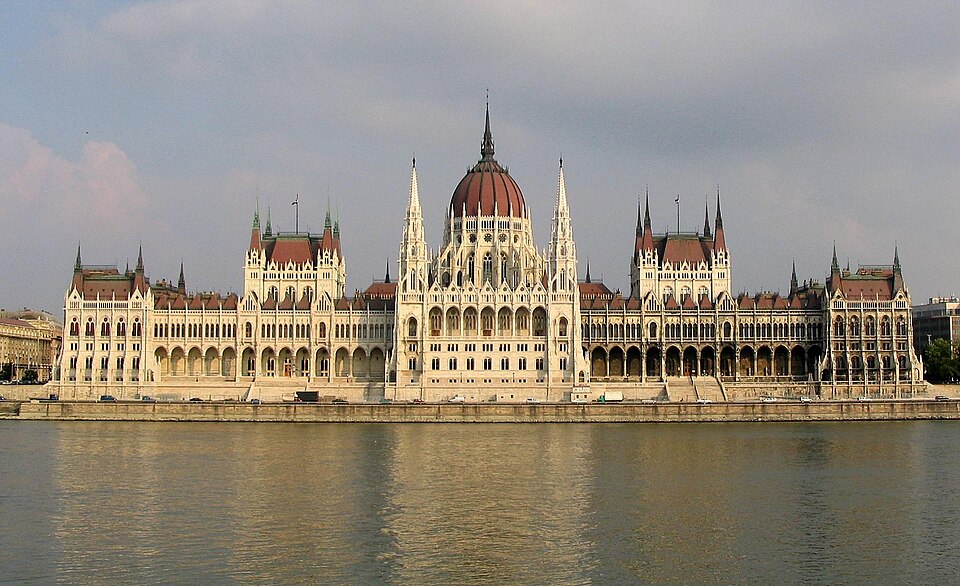
88Hungary, including its capital Budapest, is generally very safe for tourists. The primary risks are petty crimes such as pickpocketing and bag snatching, particularly in crowded tourist areas like Vaci Street, on public transport, and at major attractions such as the Parliament Building and the Castle District. Tourists should also be vigilant against potential scams, including inflated taxi fares from unofficial cabs or overcharging in some bars/restaurants near popular sites. Violent crime against tourists is rare, and the country remains politically stable. Standard precautions like securing personal belongings, using official transport, and being aware of surroundings are advised for all visitors.
Bonus Considerations
Vegetarian Friendliness
75For Indian tourists seeking vegetarian and Indian-friendly cuisine in Hungary, availability is good, particularly in major cities. Budapest, as the capital and primary tourist destination, offers a strong selection of options. You will find several dedicated Indian restaurants in Budapest serving authentic vegetarian and vegan dishes, providing familiar flavors and preparations. Beyond Indian cuisine, many restaurants in Budapest and other larger cities (like Debrecen, Szeged, and Pécs) clearly mark vegetarian (and increasingly vegan) dishes on their menus, reflecting a growing awareness of diverse dietary preferences. Dedicated vegetarian and vegan eateries are also present, especially in Budapest. However, it's important to note that traditional Hungarian cuisine is predominantly meat-based. While finding vegetarian choices is feasible in urban centers, options become significantly more limited when traveling to smaller towns or rural areas. In these regions, you might mostly rely on side dishes, salads, or requesting modifications to existing dishes, which might not always be straightforward or result in a satisfying meal. Learning basic Hungarian phrases like 'vegetáriánus' (vegetarian) or 'húsmentes' (meat-free) can be helpful outside of tourist-heavy areas.
Budget / Affordability
45For Indian tourists in 2026, Hungary falls into the 'Expensive' category. The Avg Flight Cost (₹55,000) for a round trip from major Indian cities (like Delhi or Mumbai) to Budapest typically involves one stop with airlines such as Qatar Airways, Emirates, or Turkish Airlines. While Hungary offers relatively lower on-ground costs compared to Western European counterparts, making it more budget-friendly daily, the flight expense is a significant initial factor. A comfortable Daily Budget (₹10,000) would cover mid-range accommodation (approx. ₹4,000), food (approx. ₹3,000 for a mix of budget and mid-range meals), local transport (approx. ₹500), activities (approx. ₹1,500 for one paid activity), and a buffer (approx. ₹1,000). The high flight cost pulls the overall affordability into the 'Expensive' band despite the moderate daily expenses.
Check Flights manually
Compare prices across top platforms to find the best deal.