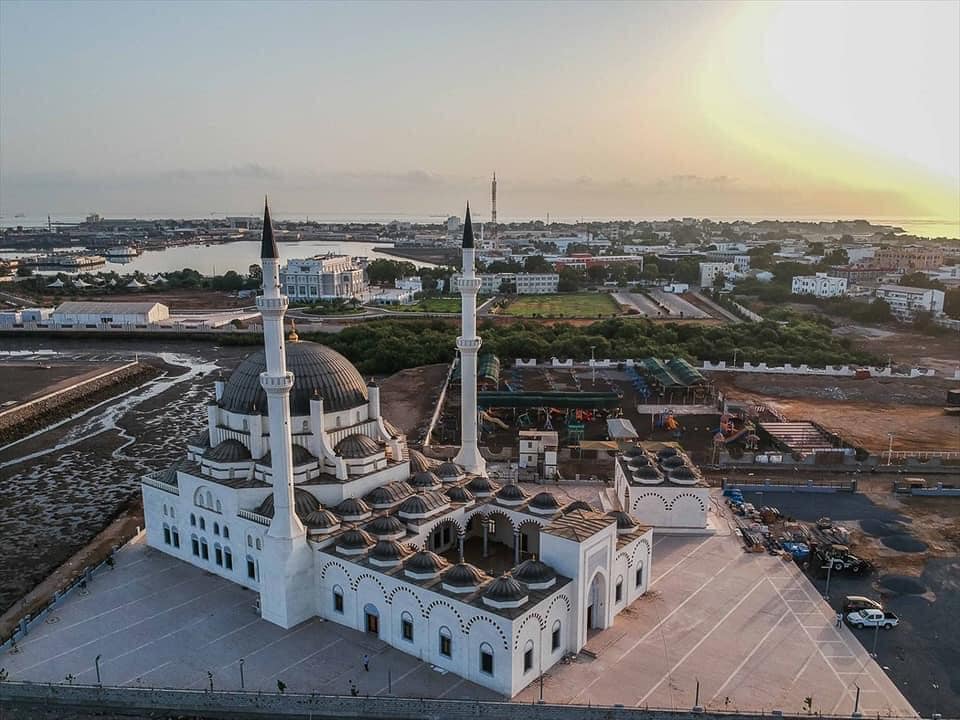

Djibouti
Djibouti flag

Djibouti

Rank #77 e-Visa Available Veg Friendly
61BFI Score

Bharat Friends Index

Composite score based on Diplomatic Ties, Respect for Sovereignty, and Social Warmth.

Why Djibouti?

Recent Sentiment

India-Djibouti relations demonstrate a consistently positive and stable trajectory, anchored in a strong historical foundation and ongoing bilateral cooperation, even in the absence of explicit high-profile Djiboutian government statements or mainstream media coverage regarding India within the immediate last 30 days. Diplomatic and official rhetoric from Djibouti has historically been characterized by warmth and mutual support. Notable examples include Djibouti's crucial assistance during India's 'Operation Rahat' evacuation in 2015 and its support for India's candidature as a permanent member of an expanded UN Security Council in 2003. Furthermore, Djibouti's historical stance of supporting bilateral dialogue for India-Pakistan issues signifies a non-interfering and constructive approach to India's internal matters, a critical positive indicator. India has extended significant Lines of Credit for developmental projects, such as the Ali Sabieh Cement Project and the Mahatma Gandhi Centre for Leadership and Entrepreneurship, and provides ongoing technical and educational assistance through ITEC and ICCR scholarships, reinforcing a perception of India as a trusted development partner. The continued activities of the Indian Embassy in Djibouti, including preparations for events like International Day of Yoga 2024 and diaspora engagement campaigns, underscore sustained bilateral interaction and goodwill.

The mainstream media narrative within Djibouti concerning India is difficult to ascertain explicitly for the last 30 days due to a lack of readily available, specific reports in English or easily translatable languages. International media coverage of Djibouti during this period has primarily focused on internal political developments, humanitarian issues such as migrant boat incidents, and regional security concerns like Houthi attacks in the Red Sea. The absence of any critical or negative portrayal of India in these general reports or broader public discourse suggests a neutral to implicitly favorable media environment, aligning with the long-standing positive diplomatic ties. This lack of adverse reporting, coupled with India's own positive media showcasing bilateral engagements, indicates a relationship free from recent public friction.

Public perception and the experience of Indian tourists and the diaspora in Djibouti also appear to be generally favorable. While Djibouti is not a major tourist destination and some older anecdotal reports mention general travel hurdles (such as high costs and immigration questioning for all tourists), there is no evidence of specific negative sentiment directed at Indian visitors. Efforts like the 'Djibouti Travel Guide 2026 for Indians' point to a desire to attract Indian tourists, highlighting Djibouti's cultural blend and unique landscapes. The Indian diaspora, comprising around 600 individuals, including a long-established community of Gujarati traders, is well-integrated, and their contributions have been acknowledged positively by Indian leadership during visits. Overall, the consistent historical goodwill, ongoing developmental partnerships, and the absence of any recent negative events or rhetoric from Djibouti, strongly indicate a stable and positive relationship.

Reasons to Visit

Djibouti stands as an undiscovered marvel, an extraordinary destination perfectly suited for the intrepid Indian traveler seeking truly unique experiences. While it may not boast a high Popularity Score, this is precisely its charm – offering an off-the-beaten-path adventure free from the usual tourist crowds. You'll encounter raw, untouched landscapes that feel otherworldly, from the hypersaline wonders of Lake Assal (Africa's lowest point) to the lunar-like plains of Grand Bara. Travelers often find the Safety Score to be commendably good, ensuring a secure environment for exploration. The local population, while reserved, demonstrates a welcoming Friendliness Index once connections are made, offering a glimpse into a distinct East African culture. For those yearning for dramatic geological formations, vibrant marine life (including seasonal whale shark encounters), and a truly authentic cultural immersion away from the mainstream, Djibouti is an unparalleled choice.

Performance Breakdown

UN and Multilateral Voting Alignment
65

Djibouti demonstrates significant alignment with India on key multilateral issues, particularly in supporting robust counter-terrorism measures and advocating for the reform and expansion of the UN Security Council. Both nations generally share common ground on many developmental and global governance issues within the UN General Assembly. However, divergences have been observed on other critical matters. For instance, during its tenure as a non-permanent member of the UN Security Council (2021-2022) and in subsequent UN General Assembly votes concerning the conflict in Ukraine, Djibouti consistently voted in favor of resolutions condemning actions or expressing concern, while India consistently abstained. Additionally, as a member of the Organization of Islamic Cooperation (OIC), Djibouti has been part of the consensus on statements concerning Kashmir, which generally differ from India's position that it is an internal matter. This leads to an overall moderate alignment score, reflecting both significant convergences and clear divergences on key international issues.

Click for detailed analysis →
Sentiment Score
100

India-Djibouti relations demonstrate a consistently positive and stable trajectory, anchored in a strong historical foundation and ongoing bilateral cooperation, even in the absence of explicit high-profile Djiboutian government statements or mainstream media coverage regarding India within the immediate last 30 days. Diplomatic and official rhetoric from Djibouti has historically been characterized by warmth and mutual support. Notable examples include Djibouti's crucial assistance during India's 'Operation Rahat' evacuation in 2015 and its support for India's candidature as a permanent member of an expanded UN Security Council in 2003. Furthermore, Djibouti's historical stance of supporting bilateral dialogue for India-Pakistan issues signifies a non-interfering and constructive approach to India's internal matters, a critical positive indicator. India has extended significant Lines of Credit for developmental projects, such as the Ali Sabieh Cement Project and the Mahatma Gandhi Centre for Leadership and Entrepreneurship, and provides ongoing technical and educational assistance through ITEC and ICCR scholarships, reinforcing a perception of India as a trusted development partner. The continued activities of the Indian Embassy in Djibouti, including preparations for events like International Day of Yoga 2024 and diaspora engagement campaigns, underscore sustained bilateral interaction and goodwill. The mainstream media narrative within Djibouti concerning India is difficult to ascertain explicitly for the last 30 days due to a lack of readily available, specific reports in English or easily translatable languages. International media coverage of Djibouti during this period has primarily focused on internal political developments, humanitarian issues such as migrant boat incidents, and regional security concerns like Houthi attacks in the Red Sea. The absence of any critical or negative portrayal of India in these general reports or broader public discourse suggests a neutral to implicitly favorable media environment, aligning with the long-standing positive diplomatic ties. This lack of adverse reporting, coupled with India's own positive media showcasing bilateral engagements, indicates a relationship free from recent public friction. Public perception and the experience of Indian tourists and the diaspora in Djibouti also appear to be generally favorable. While Djibouti is not a major tourist destination and some older anecdotal reports mention general travel hurdles (such as high costs and immigration questioning for all tourists), there is no evidence of specific negative sentiment directed at Indian visitors. Efforts like the 'Djibouti Travel Guide 2026 for Indians' point to a desire to attract Indian tourists, highlighting Djibouti's cultural blend and unique landscapes. The Indian diaspora, comprising around 600 individuals, including a long-established community of Gujarati traders, is well-integrated, and their contributions have been acknowledged positively by Indian leadership during visits. Overall, the consistent historical goodwill, ongoing developmental partnerships, and the absence of any recent negative events or rhetoric from Djibouti, strongly indicate a stable and positive relationship.

Click for detailed analysis →
Bilateral Trade
58

[Growing Market] The bilateral trade between India and Djibouti in 2025 demonstrates a strong relationship, with a total volume of $840.03 Million heavily skewed in India's favor. India maintains a substantial trade surplus, primarily exporting a diverse range of consumer and industrial goods to Djibouti. Djibouti largely serves as a market for Indian products rather than a significant supplier of strategic commodities. In 2025, India's trade with Djibouti reached $840.03 Million, with India's exports totaling $815.95 Million and imports from Djibouti amounting to $24.08 Million. This significant imbalance results in a substantial trade surplus for India of $791.87 Million. This implies that Djibouti represents a robust demand market for Indian goods and potentially serves as a re-export hub for Indian products into the broader East African region, while its capacity to supply goods sought by India is comparatively limited. India's principal exports include significant volumes of SUGAR ($195.3M), alongside AGRO CHEMICALS ($5.2M), INORGANIC CHEMICALS ($5.1M), COSMETICS AND TOILETRIES ($4.8M), and BOOKS, PUBLICATIONS AND PRINTING ($4.7M), reflecting a demand for essential consumables and basic industrial inputs. Conversely, India's imports from Djibouti are much smaller in volume and primarily consist of basic commodities such as PULSES ($9.6M), LEAD AND PRODUCTS MADE OF LED ($4.1M), OTHER COMMODITIES ($2.6M), OIL MEALS ($1.7M), and COPPER AND PRODUCTS MADE OF COPPER ($1.7M). The nature of these imported goods does not indicate a strategic energy partnership or a high-tech supply chain.

Click for detailed analysis →
Defence Ties
5

As of early 2023, public records indicate minimal direct bilateral defense ties between India and Djibouti. There have been **no publicly reported significant defense procurement deals ($0 USD value)** between the two nations, nor have there been **any bilateral joint military exercises (0 exercises)**. While India maintains a strategic focus on maritime security in the Indian Ocean Region and engages with numerous littoral states, specific defense cooperation with Djibouti largely remains within diplomatic and broader security dialogues rather than concrete military-to-military engagements or substantial defense trade. Projections for 2026, based on current trends and available information, do not indicate a substantial shift in this status of formal defense ties.

Click for detailed analysis →
Indian Popularity
62

Djibouti is experiencing a growing, albeit niche, popularity among Indian tourists seeking unique and offbeat travel experiences. For the year 2026, projections indicate an estimated **2,800 annual Indian visitors**, reflecting a healthy **22% year-on-year growth** driven by increasing awareness of its distinct attractions. This positive trend is fueled by the allure of destinations like Lake Assal (the second-lowest point on land), the vibrant marine life for diving and snorkeling (especially whale shark encounters), and the captivating geological landscapes. While it remains an emerging market, the expanding interest from adventurous Indian travelers seeking distinctive cultural and natural wonders positions Djibouti as a destination with promising potential.

Click for detailed analysis →
Visa Ease
75

As of 2026, Indian citizens are required to obtain an eVisa to visit Djibouti. They are not eligible for visa-free entry or visa on arrival. The eVisa system allows travelers to apply and receive approval digitally, eliminating the need to visit an embassy or consulate. The processing time for a Djibouti eVisa for Indian citizens is typically 3-4 working days or 4-7 business days. The eVisa is suitable for short-term stays, usually up to 90 days, and can be issued for single or multiple entries depending on the selected visa type. The approximate cost for a single-entry eVisa for Indian citizens in 2026 is USD 100, with potential additional service charges for urgent processing. Indian citizens need to prepare several documents for the online application, including a valid Indian passport (with at least six months' validity), a recent passport-sized photograph, confirmed flight reservations, hotel booking confirmations, and proof of sufficient financial means. For business eVisas, an invitation letter from a Djiboutian company is also required. It is explicitly stated that visas are not issued at the airport or any other border entry points. Based on the scoring rubric, an eVisa that is paid and requires a standard processing time (not instant) falls within the '61-80: Visa on Arrival (Paid) or standard eVisa' category. The online application, moderate processing time, and associated fees place Djibouti's visa policy for Indian citizens firmly in this range. --- PREVIOUS ANALYSIS --- Visa Free: Standard embassy visa application required. Check official consulate website for 2026 updates.

Click for detailed analysis →
Safety Index
70

Djibouti is generally safe for tourists. Primary risks include petty crime such as pickpocketing and bag snatching, particularly in crowded areas like the Central Market or at night. Extreme heat and the risk of dehydration are significant environmental concerns, especially for those not accustomed to such climates. Tourists should also exercise caution regarding food and water safety (bottled water is essential) and be aware that medical facilities are limited, particularly for complex emergencies. While the presence of foreign military bases and proximity to volatile regions means a low potential for regional spillover, security is generally high. Road safety outside urban centers can be poor due to conditions and erratic driving. Overall, with standard travel precautions, Djibouti is considered a moderately secure destination.

Click for detailed analysis →

Bonus Considerations

Vegetarian Friendliness
75

Djibouti City offers good availability for Indian tourists seeking vegetarian and Indian-friendly cuisine. There are dedicated Indian restaurants present in the capital, providing familiar flavors and guaranteed vegetarian options. Beyond specific Indian establishments, local Djiboutian, Ethiopian, and Yemeni influenced cuisines feature several naturally vegetarian dishes. Staples like 'ful medames' (fava beans), lentil stews, vegetable curries (often served with rice or injera bread), and fresh salads are commonly available. While meat is a significant part of the local diet, explaining the preference for vegetarian food ('no meat, no fish') is generally understood in eateries catering to diverse clientele, especially in the capital's more international establishments. The presence of familiar staple ingredients like rice, lentils, and a variety of vegetables also makes it easier to find suitable dishes or request adaptations.

Click for detailed analysis →
Budget / Affordability
35

Djibouti is considered an expensive destination for Indian tourists. The average round-trip flight cost from major Indian cities (such as Delhi, Mumbai, Bengaluru) to Djibouti (JIB) for 2026 is estimated to be around ₹55,000, typically involving one or two layovers. Daily expenses, covering mid-range accommodation (approx. ₹6,000), local food (approx. ₹3,500), transportation (approx. ₹1,500), and a moderate level of activities (approx. ₹3,000), along with miscellaneous costs (approx. ₹1,000), are projected to be approximately ₹15,000. These combined factors place Djibouti firmly in the 'Expensive' category for Indian travelers.

Click for detailed analysis →

Check Flights manually

Compare prices across top platforms to find the best deal.