

Bhutan
Bharat Friends Index
Composite score based on Diplomatic Ties, Respect for Sovereignty, and Social Warmth.
Why Bhutan?
Recent Sentiment
Recent developments underscore an exceptionally warm and robust relationship between India and Bhutan, spanning diplomatic, media, and public spheres. Diplomatic and official rhetoric from Bhutan consistently emphasizes India's pivotal role, with statements reaffirming India as the 'cornerstone of our foreign policy' and highlighting 'exemplary ties of friendship and cooperation, based on trust, goodwill and mutual understanding at all levels'. This is evidenced by frequent high-level exchanges, including Bhutanese Prime Minister Tshering Tobgay's visits to India in March and again in June 2024 for Prime Minister Modi's swearing-in ceremony, marking his first overseas visits after assuming office. Concurrently, Prime Minister Modi's visit to Bhutan in March 2024, where he was awarded the Druk Gyalpo, Bhutan's highest civilian decoration, further cemented these ties and was met with a warm reception from the Bhutanese King, Prime Minister, and people. Bhutan has also expressed gratitude for India's substantial commitment of USD 11.5 billion in development support for its 13th Five Year Plan (2024-29) and economic stimulus program, alongside ongoing cooperation in critical sectors such as energy, trade, digital connectivity, and infrastructure development, including proposed rail links and the Gelephu Mindfulness City project. This strong bilateral engagement and the explicit reaffirmation of trust and friendship underscore the historical perception of India as a trusted friend.
The media narrative in Bhutan, as observed in recent coverage, is generally neutral to positive, primarily focusing on domestic issues and factual reporting of bilateral events. While Bhutanese mainstream media outlets like Kuensel and Bhutan Times largely cover internal affairs, there is no evidence of critical or negative portrayals of India. Instead, reports related to India tend to highlight cooperative initiatives, such as the upcoming India roadshow to promote tourism, indicating a positive outlook from the Bhutanese perspective.
Public perception and tourism demonstrate a distinctly welcoming stance towards Indian visitors. Bhutan is actively promoting tourism from India, exemplified by the special India Roadshow scheduled for June 2024, a proactive measure to celebrate 50 years of tourism and attract more Indian travelers. The significant increase in Indian tourist arrivals, with 19,212 visitors in May 2024 alone representing a 100% rise over April, attests to the success of these efforts and the appeal of Bhutan's cultural heritage and natural beauty to Indian tourists. Furthermore, Bhutan's Sustainable Development Fee (SDF) policy, while imposing a fee of INR 1200 per person per night on Indian nationals, maintains a significantly lower rate compared to the USD 100 per night for other international tourists. This differentiated fee, framed within Bhutan's 'High Value, Low Volume' tourism strategy, aims to ensure sustainable development while still making Bhutan a more accessible destination for Indian visitors, thereby contributing positively to the local economy and environment. The absence of any negative public discourse or official statements regarding India's internal matters, combined with these robust positive engagements, signals a deeply amicable and cooperative bilateral relationship.
Reasons to Visit
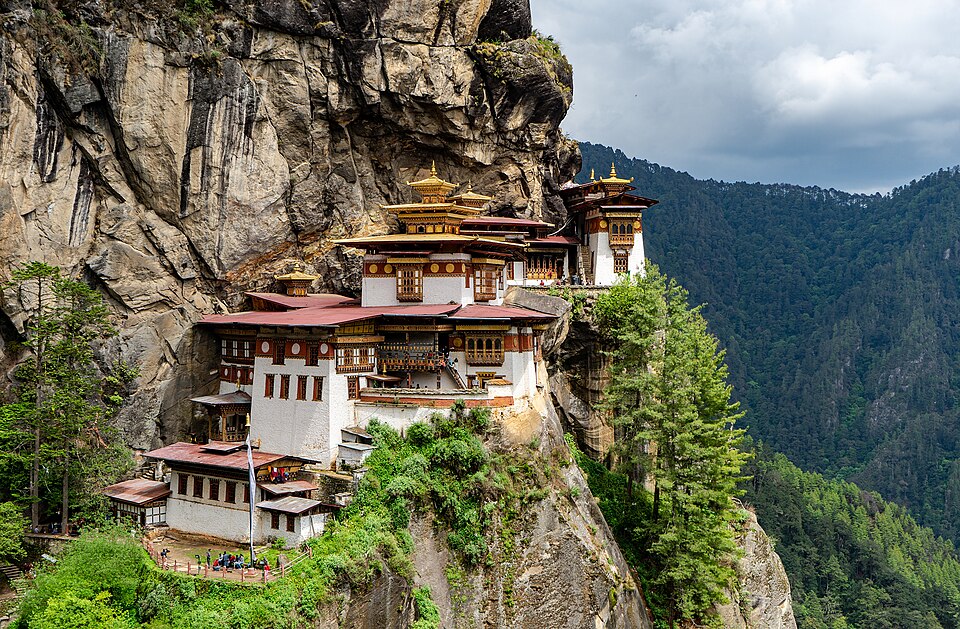
Bhutan, the enchanting Land of the Thunder Dragon, offers an unparalleled escape for Indian travelers seeking both profound serenity and gentle adventure. With an exceptionally high Friendliness Index and an outstanding Safety Score, you are assured a remarkably welcoming and secure journey through this Himalayan kingdom. While its Popularity Score is steadily climbing among discerning travelers, Bhutan still retains its charm as an off-the-beaten-path gem, allowing you to immerse yourself in its pristine landscapes and vibrant culture without the overwhelming crowds often found elsewhere. This is a country where Gross National Happiness is prioritized over Gross National Product, creating an environment of profound peace and contentment. From ancient monasteries perched dramatically on cliffs to lush valleys and majestic snow-capped peaks, Bhutan promises a soul-stirring experience that rejuvenates the mind, body, and spirit, all within a short, convenient flight from India.
Performance Breakdown
UN and Multilateral Voting Alignment
88Bhutan generally exhibits a very high degree of diplomatic alignment with India across various multilateral forums. This is evident in its consistent support for India's positions on key issues such as Kashmir (maintaining it as an internal matter for India), counter-terrorism initiatives, and India's bid for a permanent seat in a reformed UN Security Council. Bhutan is not a member of the OIC, so its stance on OIC statements is not applicable. Its contributions to anti-money laundering and counter-terrorist financing efforts within regional bodies like the Asia/Pacific Group on Money Laundering (APG) also align broadly with India's objectives. However, a notable divergence in voting patterns has been observed in UN General Assembly resolutions concerning the conflict in Ukraine since 2022. While India has consistently abstained from resolutions condemning Russia's actions, Bhutan has voted in favor of these resolutions, aligning with the majority of UN member states. This represents a specific divergence in diplomatic approach on a significant international issue, but it stands amidst a broader pattern of close alignment on issues directly impacting India's core strategic interests and bilateral relationship.
Sentiment Score
100Recent developments underscore an exceptionally warm and robust relationship between India and Bhutan, spanning diplomatic, media, and public spheres. Diplomatic and official rhetoric from Bhutan consistently emphasizes India's pivotal role, with statements reaffirming India as the 'cornerstone of our foreign policy' and highlighting 'exemplary ties of friendship and cooperation, based on trust, goodwill and mutual understanding at all levels'. This is evidenced by frequent high-level exchanges, including Bhutanese Prime Minister Tshering Tobgay's visits to India in March and again in June 2024 for Prime Minister Modi's swearing-in ceremony, marking his first overseas visits after assuming office. Concurrently, Prime Minister Modi's visit to Bhutan in March 2024, where he was awarded the Druk Gyalpo, Bhutan's highest civilian decoration, further cemented these ties and was met with a warm reception from the Bhutanese King, Prime Minister, and people. Bhutan has also expressed gratitude for India's substantial commitment of USD 11.5 billion in development support for its 13th Five Year Plan (2024-29) and economic stimulus program, alongside ongoing cooperation in critical sectors such as energy, trade, digital connectivity, and infrastructure development, including proposed rail links and the Gelephu Mindfulness City project. This strong bilateral engagement and the explicit reaffirmation of trust and friendship underscore the historical perception of India as a trusted friend. The media narrative in Bhutan, as observed in recent coverage, is generally neutral to positive, primarily focusing on domestic issues and factual reporting of bilateral events. While Bhutanese mainstream media outlets like Kuensel and Bhutan Times largely cover internal affairs, there is no evidence of critical or negative portrayals of India. Instead, reports related to India tend to highlight cooperative initiatives, such as the upcoming India roadshow to promote tourism, indicating a positive outlook from the Bhutanese perspective. Public perception and tourism demonstrate a distinctly welcoming stance towards Indian visitors. Bhutan is actively promoting tourism from India, exemplified by the special India Roadshow scheduled for June 2024, a proactive measure to celebrate 50 years of tourism and attract more Indian travelers. The significant increase in Indian tourist arrivals, with 19,212 visitors in May 2024 alone representing a 100% rise over April, attests to the success of these efforts and the appeal of Bhutan's cultural heritage and natural beauty to Indian tourists. Furthermore, Bhutan's Sustainable Development Fee (SDF) policy, while imposing a fee of INR 1200 per person per night on Indian nationals, maintains a significantly lower rate compared to the USD 100 per night for other international tourists. This differentiated fee, framed within Bhutan's 'High Value, Low Volume' tourism strategy, aims to ensure sustainable development while still making Bhutan a more accessible destination for Indian visitors, thereby contributing positively to the local economy and environment. The absence of any negative public discourse or official statements regarding India's internal matters, combined with these robust positive engagements, signals a deeply amicable and cooperative bilateral relationship.
Bilateral Trade
71[Commodity Supplier] The bilateral trade between India and Bhutan is projected at $2086.51 Million for 2025, with India maintaining a significant trade surplus of $385.5 Million. This relationship is characterized by India exporting consumer and technology goods, while importing a diverse mix of specialized industrial components and essential raw materials from Bhutan. For 2025, India's trade relationship with Bhutan is robust, recording a total bilateral trade volume of $2086.51 Million. India's exports to Bhutan reached $1236.02 Million, primarily driven by consumer electronics (Electronics Components at $19.3 Million, Electronics Instruments at $15.6 Million), telecom instruments ($15.3 Million), and cosmetics and toiletries ($12.7 Million), alongside a substantial 'Other Commodities' segment ($46.5 Million). These exports highlight Bhutan as a significant market for Indian manufactured and consumer goods. Conversely, India's imports from Bhutan totaled $850.49 Million, notably comprising high-value items such as Aircraft, Spacecraft and Parts ($285.5 Million), significant quantities of Iron and Steel ($199.5 Million), Processed Minerals ($67.8 Million), and construction materials like Cement, Clinker and Asbestos Cement ($25.2 Million). The resulting trade balance sees India with a surplus of $385.5 Million. This surplus implies that India exports considerably more value to Bhutan than it imports, contributing positively to India's balance of payments and indicating Bhutan's strong demand for Indian goods and technologies.
Defence Ties
92Defence ties between India and Bhutan are exceptionally robust and deeply integrated as of 2026, stemming from a strategic partnership solidified by the 2007 Friendship Treaty. India remains Bhutan's principal security guarantor and defence partner. Key aspects include continuous training of Royal Bhutan Army (RBA) personnel, facilitated by the permanent presence of the Indian Military Training Team (IMTRAT) in Bhutan, which trains hundreds of RBA officers and soldiers annually across various specializations. Furthermore, India consistently provides the majority of Bhutan's military equipment, logistics, and maintenance support. The estimated annual value of India's defence assistance, equipment grants, and strategic support to Bhutan consistently ranges in the tens of millions of dollars, underscoring the substantial and ongoing commitment to Bhutan's national security and defence modernization.
Indian Popularity
80Bhutan's popularity for Indian tourists in 2026 is projected to be strong and on a significant upward trajectory. While initial adjustments were made following the introduction of the Sustainable Development Fee (SDF), the market has largely adapted, recognizing Bhutan's unique appeal and value. Projections indicate Annual Indian Visitors to Bhutan are set to reach approximately 210,000 in 2026, representing a robust recovery and a projected 18% year-on-year growth from 2025. This sustained interest is consistently reflected in high Google search volume for 'Bhutan trip from India,' indicating its continued position among top overseas travel destinations for Indian travelers.
Visa Ease
75As of 2026, Indian citizens do not require a traditional visa to visit Bhutan. However, they must obtain an 'Entry Permit' to enter the country. This permit can be acquired either online in advance or upon arrival at designated entry points such as Paro International Airport or the land border at Phuentsholing. To obtain the Entry Permit, Indian nationals need a valid Indian passport (with a minimum of six months validity) or a Voter ID card issued by the Election Commission of India. For minors, a birth certificate and a valid school identity card are accepted if a passport is unavailable. Two passport-sized colored photographs and details of accommodation are also required. A significant aspect of Bhutan's current policy for Indian citizens is the mandatory 'Sustainable Development Fee' (SDF). Indian tourists are required to pay INR 1,200 per person per night for stays exceeding 24 hours. Children aged 6-12 receive a 50% discount (INR 600 per night), while children under 5 are exempt. Furthermore, the initial Entry Permit typically allows travel only to Thimphu and Paro; visitors wishing to explore beyond these areas must acquire an additional 'route permit' from the Immigration Office in Thimphu. While Indian citizens are not subject to a conventional visa process, the requirement of an Entry Permit and the compulsory daily Sustainable Development Fee make the entry process fall outside of a truly 'visa-free' or 'freedom of movement' category. The ease of obtaining the permit (online or on arrival) prevents it from being a 'standard paper visa', but the mandatory daily payment positions it as a facilitated entry with a significant financial obligation. This aligns with a score reflecting a paid, streamlined entry process rather than a completely free or restrictive one. --- PREVIOUS ANALYSIS --- Visa Free: Stay up to 14 days. Entry permit on arrival. Sustainable Development Fee (SDF) may apply.
Safety Index
96Bhutan is renowned for its exceptionally safe environment, characterized by extremely low crime rates and a welcoming populace. There are no significant crime-related risks like pickpocketing or violent crime targeting tourists. Primary considerations for travelers typically involve road safety due to mountainous terrain and winding roads, and the potential for altitude sickness in higher elevation areas. This highly secure status is projected to remain consistent through 2026.
Bonus Considerations
Vegetarian Friendliness
95Bhutan is exceptionally accommodating for Indian vegetarians. Most restaurants catering to tourists offer extensive vegetarian menus, often including specific Indian dishes. Major towns like Thimphu and Paro also have dedicated Indian restaurants. While traditional Bhutanese cuisine includes meat, it also features numerous delicious vegetable and cheese-based dishes (like various 'Datshi' preparations) that are inherently vegetarian-friendly. The strong cultural understanding, partly due to Buddhism and the high number of Indian tourists, ensures that vegetarian dietary needs are well understood and respected and finding suitable food is generally very easy.
Budget / Affordability
80For Indian tourists visiting Bhutan in 2026, affordability has significantly improved due to the reduction in the Sustainable Development Fee (SDF) for regional tourists. Effective September 1, 2024, the SDF for Indian nationals is Nu. 500 (approximately ₹500) per person per night, down from Nu. 1200. This key change makes Bhutan a much more accessible destination. **Avg Flight Cost:** A round-trip flight from major Indian cities (like Delhi, Kolkata, Mumbai) to Paro is estimated to be around **₹23,000** (factoring in advanced booking and common routes). Flights from closer hubs like Kolkata or Bagdogra might be slightly lower, while those from further cities like Mumbai could be higher. **Daily Budget:** Excluding flights, a comfortable daily budget, including the reduced SDF, is estimated at **₹5,000** per person. This covers: * Accommodation (budget to mid-range hotel/guesthouse): ₹2,000 - ₹3,000 * Food (local to mid-range restaurants): ₹800 - ₹1,200 * Local Transport & Activities (including some entry fees, averaged): ₹1,200 - ₹1,500 * SDF: ₹500 This combination of flight costs and daily expenses places Bhutan firmly in the 'Affordable / Nearby' category, comparable to destinations like Thailand or Sri Lanka for Indian travelers, and notably more affordable than before the SDF reduction.
Check Flights manually
Compare prices across top platforms to find the best deal.