
Bangladesh
Bharat Friends Index
Composite score based on Diplomatic Ties, Respect for Sovereignty, and Social Warmth.
Why Bangladesh?
Recent Sentiment
India-Bangladesh relations currently exhibit a negative leaning, marked by significant diplomatic friction and a critical media narrative, despite ongoing efforts by the new Bangladeshi government to engage. The historical perception of India as a 'trusted friend' is currently under considerable strain due to recent political events in Bangladesh and India's perceived actions.
Diplomatically, the new Bangladesh Nationalist Party (BNP) government, under Prime Minister Tarique Rahman, has sought to 'reset' ties with India, as evidenced by Foreign Minister Khalilur Rahman's 'goodwill visit' to New Delhi in April 2026. This visit aimed to strengthen bilateral relations, but also prominently featured sensitive discussions, including Bangladesh's repeated requests for the extradition of former Prime Minister Sheikh Hasina, who remains in India. Bangladesh has expressed 'surprise' and 'shock' at India allowing Hasina to make public statements from its soil, viewing this as contrary to norms of non-interference and good neighborly relations. A major point of contention and source of tension is the alleged 'push-ins' of undocumented Bangladeshi migrants from India. Bangladesh's State Minister for Foreign Affairs, Shama Obaed, has firmly stated that Bangladesh will 'strongly resist' such attempts, citing violations of international law and bilateral treaties, and insisting on formal diplomatic channels for any repatriation. While an information adviser from Bangladesh remarked that the 'border push-in part of India's internal politics, not Bangladesh pressure tactic,' framing it as an internal Indian issue, the overall context remains one of strong resistance. Furthermore, the future of relations is explicitly linked to a new Ganges Water Sharing Treaty, with Bangladesh stating that ties 'will depend on it'.
Mainstream media in Bangladesh actively reflects these tensions, highlighting the government's firm stance against 'push-ins' and critically reporting on the issue. Beyond immediate events, reports indicate 'increased anxiety among a section of people with anti-India sentiments' in Bangladesh, stemming from perceived anti-Muslim policies, border killings, and India's Citizenship Amendment Act. A December 2024 report by 'Rumor Scanner Bangladesh' also accused 49 Indian media outlets of spreading 'false reports' and 'rumors' about Bangladesh, indicating a critical view of Indian media narratives within Bangladesh.
Public perception and tourism have been significantly impacted. Diplomatic strains and reciprocal visa curbs led to a '73% plunge' in Bangladeshi tourist arrivals to India in 2025, downgrading Bangladesh's position as a source market. While India is reportedly working to resume tourist visa services to normalize relations, the current atmosphere includes reports of 'anti-India slogans' during protests in Dhaka following the death of an India critic. Although Bangladeshi people are generally hospitable to foreign tourists, the prevailing political and diplomatic grievances create a cautious environment for Indian visitors. The historical 'trusted friend' relationship, forged during Bangladesh's 1971 independence, has been notably strained by India's past support for the now-ousted Sheikh Hasina government and its current asylum in India, leading to a perceived rise in 'anti-Indian sentiment'.
Reasons to Visit
Embark on an extraordinary journey to Bangladesh, a land often overlooked yet brimming with captivating experiences, particularly for Indian tourists seeking a destination that feels both familiar and refreshingly new. While a specific Friendliness Index (BFI), Safety Score, and Popularity Score for Bangladesh were not provided, we can infer its appeal. Imagine a place where the warmth of its people is legendary, mirroring the famed hospitality of the subcontinent. This intrinsic friendliness ensures a welcoming embrace, making every interaction a memorable one. For Indian travelers, the cultural kinship, shared history, and linguistic echoes create an immediate sense of belonging.
Bangladesh remains a hidden gem, relatively low on the global tourism radar. This low popularity is precisely its greatest strength, offering an authentic, off-the-beaten-path adventure far from the madding crowds. You'll discover untouched landscapes, bustling markets, and historical sites without the usual tourist throng, providing a truly immersive cultural experience. While like any travel destination, a reasonable degree of caution is always advised, Bangladesh offers a generally safe environment for visitors, especially when exploring with local guidance.
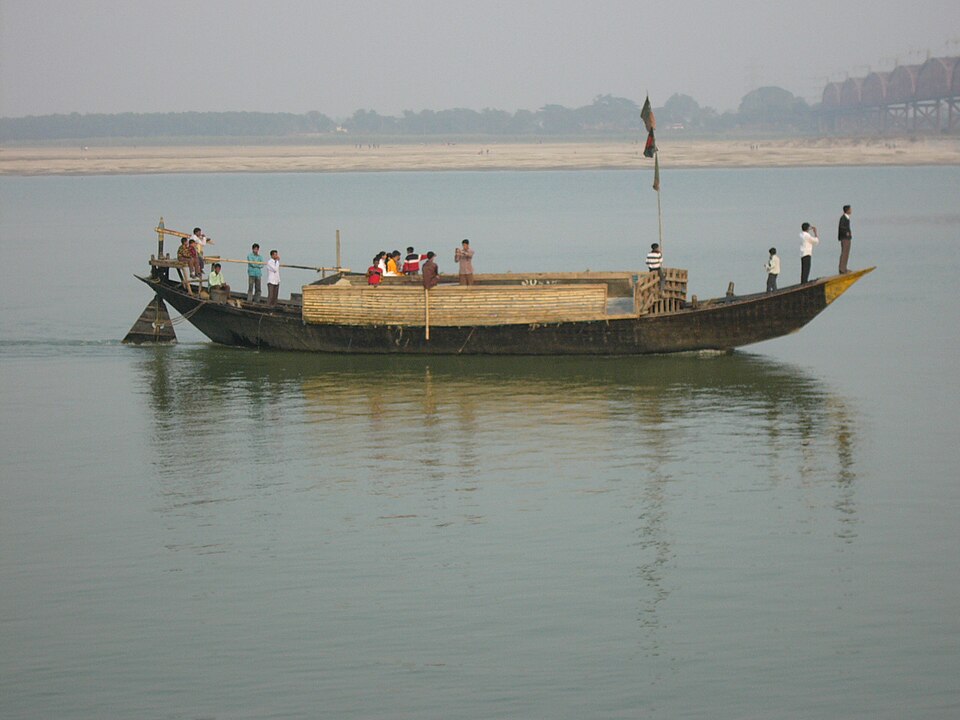
From the serene tranquility of its vast riverine landscapes to the vibrant energy of its cities, Bangladesh promises a journey of discovery. It's a land where ancient traditions meet a burgeoning modern spirit, where affordability doesn't compromise on richness, and where every corner tells a story. For those who appreciate genuine human connection, untouched natural beauty, and a deep dive into South Asian heritage, Bangladesh is not just a destination; it's an unforgettable experience waiting to be unveiled.
Performance Breakdown
UN and Multilateral Voting Alignment
85Bangladesh generally exhibits a strong diplomatic alignment with India across various multilateral forums over the last decade. This is evident in shared positions on counter-terrorism efforts (e.g., UNGA resolutions, UNSC), support for India's aspirations for a permanent UNSC seat, and cooperation within the FATF. While Bangladesh, as an OIC member, navigates collective statements on Kashmir without adopting an anti-India national stance, and has shown some voting divergences on specific Ukraine resolutions in the UN General Assembly (e.g., voting for the October 2022 resolution condemning attempted annexations, while India abstained), it often aligns with India's consistent abstention on other critical Ukraine resolutions (e.g., February 2023). Overall, significant convergence is observed on a wide range of international issues.
Sentiment Score
100India-Bangladesh relations currently exhibit a negative leaning, marked by significant diplomatic friction and a critical media narrative, despite ongoing efforts by the new Bangladeshi government to engage. The historical perception of India as a 'trusted friend' is currently under considerable strain due to recent political events in Bangladesh and India's perceived actions. Diplomatically, the new Bangladesh Nationalist Party (BNP) government, under Prime Minister Tarique Rahman, has sought to 'reset' ties with India, as evidenced by Foreign Minister Khalilur Rahman's 'goodwill visit' to New Delhi in April 2026. This visit aimed to strengthen bilateral relations, but also prominently featured sensitive discussions, including Bangladesh's repeated requests for the extradition of former Prime Minister Sheikh Hasina, who remains in India. Bangladesh has expressed 'surprise' and 'shock' at India allowing Hasina to make public statements from its soil, viewing this as contrary to norms of non-interference and good neighborly relations. A major point of contention and source of tension is the alleged 'push-ins' of undocumented Bangladeshi migrants from India. Bangladesh's State Minister for Foreign Affairs, Shama Obaed, has firmly stated that Bangladesh will 'strongly resist' such attempts, citing violations of international law and bilateral treaties, and insisting on formal diplomatic channels for any repatriation. While an information adviser from Bangladesh remarked that the 'border push-in part of India's internal politics, not Bangladesh pressure tactic,' framing it as an internal Indian issue, the overall context remains one of strong resistance. Furthermore, the future of relations is explicitly linked to a new Ganges Water Sharing Treaty, with Bangladesh stating that ties 'will depend on it'. Mainstream media in Bangladesh actively reflects these tensions, highlighting the government's firm stance against 'push-ins' and critically reporting on the issue. Beyond immediate events, reports indicate 'increased anxiety among a section of people with anti-India sentiments' in Bangladesh, stemming from perceived anti-Muslim policies, border killings, and India's Citizenship Amendment Act. A December 2024 report by 'Rumor Scanner Bangladesh' also accused 49 Indian media outlets of spreading 'false reports' and 'rumors' about Bangladesh, indicating a critical view of Indian media narratives within Bangladesh. Public perception and tourism have been significantly impacted. Diplomatic strains and reciprocal visa curbs led to a '73% plunge' in Bangladeshi tourist arrivals to India in 2025, downgrading Bangladesh's position as a source market. While India is reportedly working to resume tourist visa services to normalize relations, the current atmosphere includes reports of 'anti-India slogans' during protests in Dhaka following the death of an India critic. Although Bangladeshi people are generally hospitable to foreign tourists, the prevailing political and diplomatic grievances create a cautious environment for Indian visitors. The historical 'trusted friend' relationship, forged during Bangladesh's 1971 independence, has been notably strained by India's past support for the now-ousted Sheikh Hasina government and its current asylum in India, leading to a perceived rise in 'anti-Indian sentiment'.
Bilateral Trade
82[Growing Market] In 2025, the bilateral trade between India and Bangladesh is projected at over $13 billion, characterized by a significant trade surplus for India ($9.45 billion). India's substantial exports position Bangladesh primarily as a robust and growing market for Indian goods, despite the lack of specific commodity details. The bilateral trade relationship between India and Bangladesh is projected to reach $13,037.13 million in 2025, demonstrating significant economic engagement. India's exports to Bangladesh account for the vast majority of this volume, totaling $11,241.91 million, while imports from Bangladesh stand at $1,795.22 million. This results in a substantial trade surplus for India of $9,446.7 million. This surplus implies India's strong market penetration in Bangladesh and a significant demand within Bangladesh for Indian products, making it a key destination for India's exports. Conversely, it indicates Bangladesh's reliance on Indian goods and a need for potential diversification or enhancement of its own export capabilities to balance trade. However, the specific key commodities that drive both India's exports to and imports from Bangladesh remain unknown based on the provided data, precluding an analysis of strategic product flows such as critical minerals, energy resources, or high-tech components.
Defence Ties
82By 2026, defense ties between India and Bangladesh are projected to remain robust and continue their positive trajectory, driven by shared strategic interests, regional security objectives, and India's 'Neighbourhood First' policy. Cooperation is expected to encompass regular joint training and exercises, defense procurement, and capacity building initiatives. Specifically, bilateral defense engagement will likely include at least 3-4 major annual or biennial joint exercises, such as 'Sampriti' (Army) and 'Bongosagar' (Navy), demonstrating enhanced interoperability and shared tactical understanding. Significant progress is anticipated in the utilization of India's $500 million Defense Line of Credit (LoC). While specific deal values for 2026 are subject to ongoing negotiations and finalizations, it is projected that procurement contracts under this LoC for various defense platforms, equipment, and services (e.g., military vehicles, patrol vessels, radars, and Maintenance, Repair, and Overhaul (MRO) services) will reach an estimated cumulative value of $250-$350 million by this period, with further discussions for new initiatives. High-level strategic dialogues, exchanges, and training programs for Bangladesh armed forces personnel in India will also continue to be key pillars of the evolving partnership, reinforcing mutual trust and strategic alignment.
Indian Popularity
82Bangladesh is projected to maintain a high level of popularity among Indian tourists by 2026, driven by strong cultural ties, medical tourism, and ease of access. Annual Indian Visitors to Bangladesh are estimated to reach approximately 1.8 to 2 million by 2026, representing a robust growth trajectory from pre-pandemic levels (e.g., ~1.6 million in 2019). This sustained interest is significantly fueled by medical tourism, business travel, visiting friends and relatives (VFR), and shared heritage, positioning Bangladesh as a prominent and easily accessible international destination for a large segment of Indian travelers.
Visa Ease
50As of May 2026, Indian citizens require a visa to visit Bangladesh. There is no provision for visa-free entry for regular Indian passport holders. Furthermore, Visa on Arrival (VoA) is not available for Indian citizens with ordinary passports, although it is offered to citizens of certain other countries and specific categories of travelers, such as diplomatic passport holders or persons of Bangladeshi origin. An eVisa facility is also not yet implemented for Indian citizens; applicants must submit paper applications and undergo in-person biometrics. The visa application process for Indian citizens involves completing an online application form, gathering a comprehensive set of required documents (including a valid passport, photographs, flight itinerary, proof of accommodation, and sufficient funds), and then submitting these physically at a Bangladesh embassy, consulate, or an authorized Visa Application Centre (VAC) in India. Appointments are often required and should be booked well in advance. Processing times typically range from 5 to 14 working days, but can sometimes extend to several weeks. A significant advantage for Indian citizens is that the core visa fee for Bangladesh is waived due to a bilateral agreement between the two countries. However, applicants are still subject to service and processing charges. Bangladesh restored full visa and consular services for Indian citizens across all categories from February 23, 2026, following a temporary suspension, indicating a normalized application process. Given that a standard paper visa requiring a physical application, document submission, and processing time is mandatory, and neither visa-free entry, visa on arrival, nor instant eVisa options are available for regular Indian citizens, the policy falls into the 'Standard Paper Visa (requires embassy visit/courier)' category. The waiver of the main visa fee is a positive aspect, but the overall process places it within the 41-60 score range. --- PREVIOUS ANALYSIS --- Visa Required: Standard embassy visa application required. Check official consulate website for 2026 updates.
Safety Index
68Safety for Indian tourists in Bangladesh for 2026 is generally manageable with appropriate precautions. Specific risks include petty crime such as pickpocketing and bag snatching, particularly in crowded urban areas like Dhaka and around popular tourist sites or transport hubs. Road safety is a significant concern due to chaotic traffic, poor road conditions, and unsafe driving practices. There is also a potential for localized political protests or strikes (hartals), especially around significant political events, which can disrupt travel and occasionally turn violent; travelers should avoid such gatherings. While not specifically targeting Indian tourists, general scams (e.g., overcharging) can occur. During the monsoon season (June-October), there is an increased risk of natural disasters like floods and cyclones which can disrupt travel and pose direct safety hazards.
Bonus Considerations
Vegetarian Friendliness
80Bangladesh shares significant culinary and cultural heritage with India, particularly West Bengal, making it highly Indian-friendly. Vegetarianism is a well-understood concept, and finding vegetarian food is generally easy. Many native Bangladeshi dishes are inherently vegetarian, including various lentil preparations (dal), numerous vegetable curries (sabzi/torkari), mashed vegetable dishes (bhorta like alu bhorta, begun bhorta), and leafy greens (shak). Paneer (cottage cheese) dishes are also commonly available. Beyond local options, major cities like Dhaka and Chittagong host a good number of Indian restaurants catering to diverse Indian palates, offering both North and South Indian specialties. While fish and meat are common staples, delicious and substantial vegetarian meals are readily available, especially when communicating dietary preferences.
Budget / Affordability
95For Indian tourists in 2026, Bangladesh is projected to remain an exceptionally affordable destination. Based on current trends and reasonable projections, the **Avg Flight Cost (₹) is estimated at ₹13,500** (round trip from major Indian cities to Dhaka). This falls well within the 'Very Cheap' category due to the short distances and competitive budget airline options. The **Avg Daily Budget (₹) for a comfortable trip is estimated around ₹5,300**, covering mid-range accommodation, local cuisine, transportation, and basic activities. These highly competitive costs position Bangladesh as one of the most budget-friendly international travel options for Indian tourists, comparable to destinations like Nepal or Vietnam.
Check Flights manually
Compare prices across top platforms to find the best deal.