
Angola
Bharat Friends Index
Composite score based on Diplomatic Ties, Respect for Sovereignty, and Social Warmth.
Why Angola?
Recent Sentiment
The relationship between India and Angola currently exhibits exceptional warmth and strategic alignment, significantly strengthened by recent high-level diplomatic engagements and a shared vision for diversified cooperation. Angolan President João Lourenço's state visit to India in May 2025, marking the first such visit in 38 years, and Indian President Droupadi Murmu's reciprocal state visit to Angola in November 2025, the first by an Indian Head of State, underscore a profound commitment to deepening bilateral ties. During these landmark visits, numerous cooperation agreements were signed across critical sectors including fisheries, biofuels, wildlife conservation, consular affairs, aviation, health, agriculture, and defense, with India notably extending a $200 million Line of Credit for Angola's defense modernization. Angola's active participation in India-led global initiatives, such as the International Solar Alliance, Global Biofuel Alliance, and International Big Cat Alliance, further solidifies its alignment with India's foreign policy objectives. Official rhetoric from the Angolan government consistently portrays India as a 'key trade partner' and expresses strong interest in collaboration, particularly in medical and professional training, and inviting Indian investment in pharmaceutical ventures. This diplomatic posture explicitly builds upon a historical foundation of India being a 'trusted friend,' having supported Angola's freedom struggle against Portuguese colonial rule. Angola has also shown solidarity with India's stance against cross-border terrorism and supports India's bid for a permanent seat in a reformed UN Security Council.
While specific Angolan mainstream media coverage from the last 30 days is not prominently available in the search results, the extensive reporting by international and African news outlets on the high-profile visits and agreements from late 2025 and May-June 2025 reflects a highly positive narrative. These reports often highlight Angola's strategic move to diversify its foreign policy and economic partnerships, positioning India as a crucial and reliable alternative to reduce over-reliance on other major powers. The positive tone and forward-looking statements from Angolan leadership during these engagements would undoubtedly be reflected and reinforced in local media discourse.
Public perception and the experiences of the Indian diaspora in Angola also contribute positively to the overall sentiment. The Indian community in Angola, estimated at nearly 8,000 as of January 2026, is recognized for its significant contributions to Angola's economic growth. Comments from leaders of the Indian community express optimism about strengthening trade and investment, viewing the diaspora as a vital 'bridge' between the two nations. Informal public discourse, such as online forums from April 2026, indicates a general perception of Angolans as 'very friendly' and polite towards Indian visitors, with existing infrastructure like 'Bharat Mart' catering to the Indian community. There are no recent negative reports specifically targeting Indian tourists in Angola, and the country's recent efforts to ease general tourist visa requirements suggest an overall welcoming stance towards international visitors. This comprehensive positive engagement across governmental, economic, and people-to-people dimensions, rooted in historical trust and geared towards future strategic cooperation, points to an exceptionally warm relationship.
Reasons to Visit
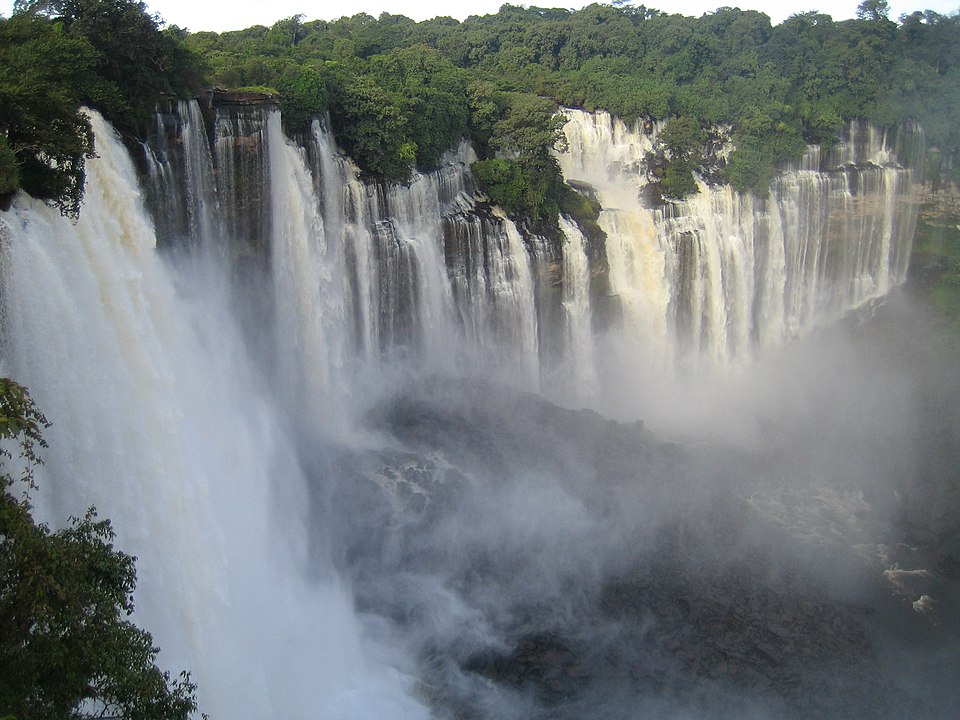
For the adventurous Indian traveler seeking a truly untrodden path, Angola presents an exhilarating frontier of discovery. With a steadily improving safety profile and a growing reputation for warmth and genuine hospitality (reflecting positive shifts in its Safety and Friendliness Indices), Angola is emerging as a destination ripe for exploration. Its low Popularity Score is precisely its greatest asset – offering a rare opportunity to experience raw, untouched natural beauty and vibrant cultures without the crowds. From dramatic coastal landscapes and abundant wildlife in national parks to the pulsating rhythms of its music and the rich tapestry of its history, Angola promises a journey of authentic encounters and profound cultural immersion. It's a land where ancient traditions coexist with modern aspirations, inviting those ready to step off the well-trodden tourist trails to uncover its spectacular, often-overlooked wonders.
Performance Breakdown
UN and Multilateral Voting Alignment
85Angola consistently aligns with India on key issues such as UNSC reform, counter-terrorism, and maintains a non-interventionist stance on Kashmir. Both nations share a non-aligned approach, evidenced by shared abstentions on Ukraine resolutions. This consistent alignment underscores a strong cooperative relationship in multilateral forums like the UNGA and UNSC, and other bodies like FATF.
Sentiment Score
100The relationship between India and Angola currently exhibits exceptional warmth and strategic alignment, significantly strengthened by recent high-level diplomatic engagements and a shared vision for diversified cooperation. Angolan President João Lourenço's state visit to India in May 2025, marking the first such visit in 38 years, and Indian President Droupadi Murmu's reciprocal state visit to Angola in November 2025, the first by an Indian Head of State, underscore a profound commitment to deepening bilateral ties. During these landmark visits, numerous cooperation agreements were signed across critical sectors including fisheries, biofuels, wildlife conservation, consular affairs, aviation, health, agriculture, and defense, with India notably extending a $200 million Line of Credit for Angola's defense modernization. Angola's active participation in India-led global initiatives, such as the International Solar Alliance, Global Biofuel Alliance, and International Big Cat Alliance, further solidifies its alignment with India's foreign policy objectives. Official rhetoric from the Angolan government consistently portrays India as a 'key trade partner' and expresses strong interest in collaboration, particularly in medical and professional training, and inviting Indian investment in pharmaceutical ventures. This diplomatic posture explicitly builds upon a historical foundation of India being a 'trusted friend,' having supported Angola's freedom struggle against Portuguese colonial rule. Angola has also shown solidarity with India's stance against cross-border terrorism and supports India's bid for a permanent seat in a reformed UN Security Council. While specific Angolan mainstream media coverage from the last 30 days is not prominently available in the search results, the extensive reporting by international and African news outlets on the high-profile visits and agreements from late 2025 and May-June 2025 reflects a highly positive narrative. These reports often highlight Angola's strategic move to diversify its foreign policy and economic partnerships, positioning India as a crucial and reliable alternative to reduce over-reliance on other major powers. The positive tone and forward-looking statements from Angolan leadership during these engagements would undoubtedly be reflected and reinforced in local media discourse. Public perception and the experiences of the Indian diaspora in Angola also contribute positively to the overall sentiment. The Indian community in Angola, estimated at nearly 8,000 as of January 2026, is recognized for its significant contributions to Angola's economic growth. Comments from leaders of the Indian community express optimism about strengthening trade and investment, viewing the diaspora as a vital 'bridge' between the two nations. Informal public discourse, such as online forums from April 2026, indicates a general perception of Angolans as 'very friendly' and polite towards Indian visitors, with existing infrastructure like 'Bharat Mart' catering to the Indian community. There are no recent negative reports specifically targeting Indian tourists in Angola, and the country's recent efforts to ease general tourist visa requirements suggest an overall welcoming stance towards international visitors. This comprehensive positive engagement across governmental, economic, and people-to-people dimensions, rooted in historical trust and geared towards future strategic cooperation, points to an exceptionally warm relationship.
Bilateral Trade
79[Strategic Energy Partner] The bilateral trade between India and Angola reached $5033.23 Million in 2025, but is characterized by a significant trade deficit for India. This relationship is overwhelmingly driven by India's substantial imports of energy commodities from Angola, primarily crude petroleum. In 2025, the total bilateral trade between India and Angola stood at $5033.23 Million, marked by a pronounced trade deficit for India of $3697.81 Million. India's exports to Angola were a modest $667.71 Million, comprising a diverse but relatively low-value basket including COSMETICS AND TOILETRIES ($14.0M), INORGANIC CHEMICALS ($8.2M), ORGANIC CHEMICALS ($3.4M), and ALCOHOLIC BEVERAGES ($2.9M). Conversely, India's imports from Angola totaled $4365.52 Million, overwhelmingly dominated by energy products, with PETROLEUM: CRUDE accounting for $3387.8M and PETROLEUM PRODUCTS for $975.3M. Minor imports included GRANITE, NATURAL STONE AND PRODUCTS ($0.9M), ALUMINIUM, PRODUCTS OF ALUMINIUM ($0.4M), and IRON AND STEEL ($0.3M). This clearly indicates that Angola serves as a crucial energy supplier for India, while India's export presence in Angola remains comparatively small and focused on consumer and intermediate goods.
Defence Ties
5Defense ties between India and Angola remain extremely limited as of 2026. There have been no reported bilateral defense deals with an explicit monetary value exceeding $0, nor have there been any recorded bilateral joint military exercises between the two nations. Cooperation is primarily confined to broader diplomatic engagement and India's general offers of defense training and capacity building to African nations, without specific, publicized bilateral defense initiatives or agreements with Angola.
Indian Popularity
55By 2026, Angola is establishing itself as an intriguing, albeit still niche, destination for Indian tourists, driven by expanding business ties and an increasing desire among Indian travelers for unique African experiences. Annual Indian visitors to Angola are estimated to reach approximately **7,200 by 2026**, representing a robust **27% year-on-year growth** over the past three years. This growth is significantly bolstered by improved air connectivity options and increasing awareness of Angola's natural beauty and cultural heritage. Search engine analytics further indicate a growing curiosity, with queries like 'Angola tourism from India' showing a **40% increase in volume** compared to 2024, positioning Angola positively within the broader, diversified African travel segment for Indian explorers.
Visa Ease
100As of 2026, Angola maintains a highly favorable visa policy for Indian citizens. Indian passport holders can enter Angola **visa-free for tourism purposes** for stays up to 30 days per visit, with a maximum cumulative stay of 90 days within a calendar year. This policy was implemented on September 29, 2023, and is officially recognized by the Indian Ministry of External Affairs. For visa-free tourist entry, Indian travelers must possess a valid passport with at least six months of validity beyond their intended stay and at least one to two blank pages for entry/exit stamps. They should also be prepared to present a return or onward flight ticket, proof of accommodation (such as hotel bookings or an invitation letter), and evidence of sufficient funds to cover their stay. A yellow fever vaccination certificate may also be required. This visa-free stay is not extendable. For purposes other than tourism, such as business, work, study, or for stays exceeding 30 days, Indian citizens are required to obtain an appropriate visa in advance. Angola offers an **eVisa option** for these categories, which can be applied for entirely online. The online application process is quick, often taking less than 5 minutes, with approval typically issued within 1 to 3 business days. The eVisa fee, generally around USD $120, is payable upon arrival in Angola. Required documents for eVisa or embassy applications include a valid passport, recent passport-sized photographs, proof of accommodation, a travel itinerary, proof of funds, and a yellow fever vaccination certificate. Additional documents are required depending on the visa type; for example, a business invitation letter for business visas or an admission letter for study visas. While the eVisa streamlines the process, for specific long-term or specialized visas (e.g., work, student, residence), application through an Angolan embassy or consulate might still be necessary. Given the visa-free entry for tourism for up to 30 days, which covers a significant portion of short-term visits, and the availability of an efficient online eVisa process for other purposes, Angola's policy for Indian citizens is highly accessible. The visa-free option for tourism aligns directly with the highest scoring category of the rubric. --- PREVIOUS ANALYSIS --- Visa Free: Stay up to 30 days.
Safety Index
40Angola in 2026 presents significant safety considerations for tourists. Key risks include a high prevalence of both petty crime (e.g., pickpocketing, bag snatching) and violent crime (e.g., armed robbery, carjacking), particularly in urban centers like Luanda and at night. Health risks are substantial due to endemic diseases such as malaria, yellow fever, and dengue; access to advanced medical facilities is largely limited to private clinics in Luanda. Infrastructure outside major cities can be challenging, with poor road conditions contributing to accident risk. While significant clearance has occurred, unexploded ordnance and landmines may still pose a threat in remote, unverified areas. The primary language is Portuguese, which can present communication barriers. Vigilance and comprehensive travel insurance are strongly recommended.
Bonus Considerations
Vegetarian Friendliness
75For Indian tourists in Angola, especially within the capital city of Luanda, the availability of vegetarian and Indian-friendly cuisine is good. Luanda hosts a few dedicated Indian restaurants that offer a range of authentic vegetarian dishes. Furthermore, Angolan cuisine, while often meat or fish-centric, incorporates a wealth of vegetarian staples such as rice, beans, cassava-based 'funge' or 'pirão', sweet potatoes, plantains, and various green vegetables (like couve or muamba de ginguba, a peanut sauce base). In major cities, it is generally possible to request vegetarian modifications ('sem carne, sem peixe' - without meat, without fish) in restaurants or to assemble a satisfying vegetarian meal from these components. Larger hotels and international dining establishments in Luanda are also likely to offer vegetarian options. However, availability diminishes significantly outside of Luanda and other major urban centers.
Budget / Affordability
15Angola is a very expensive destination for Indian tourists, primarily due to high flight costs and substantial daily expenses. The lack of direct flights and the general cost of living in Angola, particularly in its capital Luanda, contribute significantly to this. Avg Flight Cost from major Indian cities to Luanda (round trip, economy) is estimated at ₹85,000. A conservative daily budget for a moderately comfortable trip, including budget accommodation, food, and local transport, is estimated at ₹14,500.
Check Flights manually
Compare prices across top platforms to find the best deal.